Belgium remains dependent on Russian steel and is doing nothing about it
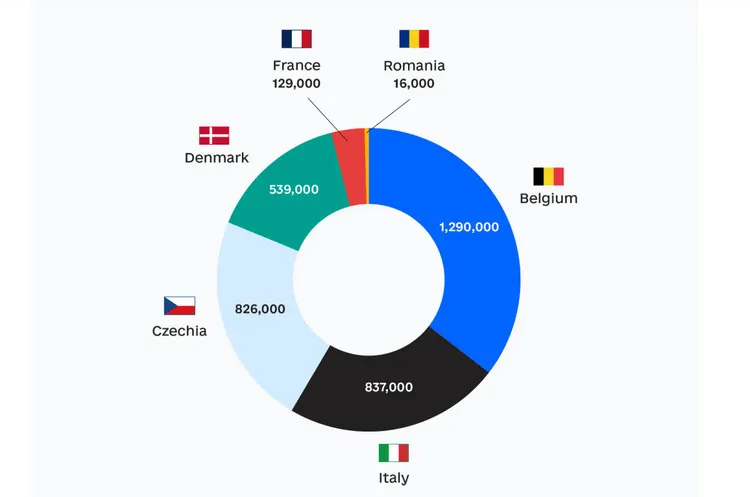
The reason for this is a relaxation of sanctions, which allows the Russian group NLMK to supply semi-finished products to its plants in Europe, reports the Kyiv Independent.
These are steel slabs – the raw materials from which European companies produce finished rolled steel. It is this category of products that has not been subject to a complete EU ban and may be imported until September 2028 as part of a transition period.
Currently, a third of all Russian supplies to the EU end up in Belgium. According to industry organisations, Russia still accounts for around 58% of slab imports into the EU from third countries. At the same time, approximately a third of this total volume goes to Belgium.
The main recipient is the Belgian plants of the Russian metallurgical group NLMK. One of them is located just 22 km from Brussels.
Market experts note that Russian semi-finished products are sold at very low prices, which creates a competitive advantage for companies that continue to use them.
Particular attention is drawn to the Belgian authorities’ stance regarding NLMK’s owner, Russian billionaire Vladimir Lisin.
Lisin is subject to sanctions by Ukraine, Canada and Australia, but is not included on the EU sanctions list.
According to diplomatic sources, his name has been discussed in Brussels on several occasions, but has each time been omitted from the final lists.
The Belgian Foreign Ministry has acknowledged that it opposes sanctions against Lisin because it does not want to lose jobs at steelworks in the French-speaking part of the country.
Brussels justifies its position by arguing that sanctions should not cause more damage to the European economy than to the Russian economy.
This policy has drawn criticism from European politicians. Ukrainian and European MPs stress that Russian oligarchs have a ‘safety net’ against sanctions thanks to their ownership of industrial assets within the EU.
Following the release of new data on the scale of Russian steel imports, some MEPs have openly questioned whether such practices contradict the sanctions against the Kremlin.
At the same time, analysts claim that there is no critical dependence on Russian slabs. Among the possible alternatives, they cite suppliers from China, India and Brazil.
Despite this, NLMK is proposing a different scenario: the company has announced its intention to invest around €1.2 billion in steel production in Belgium, but is counting on financial support from the Belgian authorities and the European Union.
Formally, Russian steel is set to disappear from the European market by autumn 2028. However, the debate surrounding NLMK shows that there is still a noticeable gap between political statements of support for Ukraine and actual economic decisions in Europe, and even years after the start of the war, certain economic ties with Russia remain untouched if they affect local jobs and business interests.
Follow us on Telegram