Hungarian MPs have cut their own salaries following their victory over Orbán

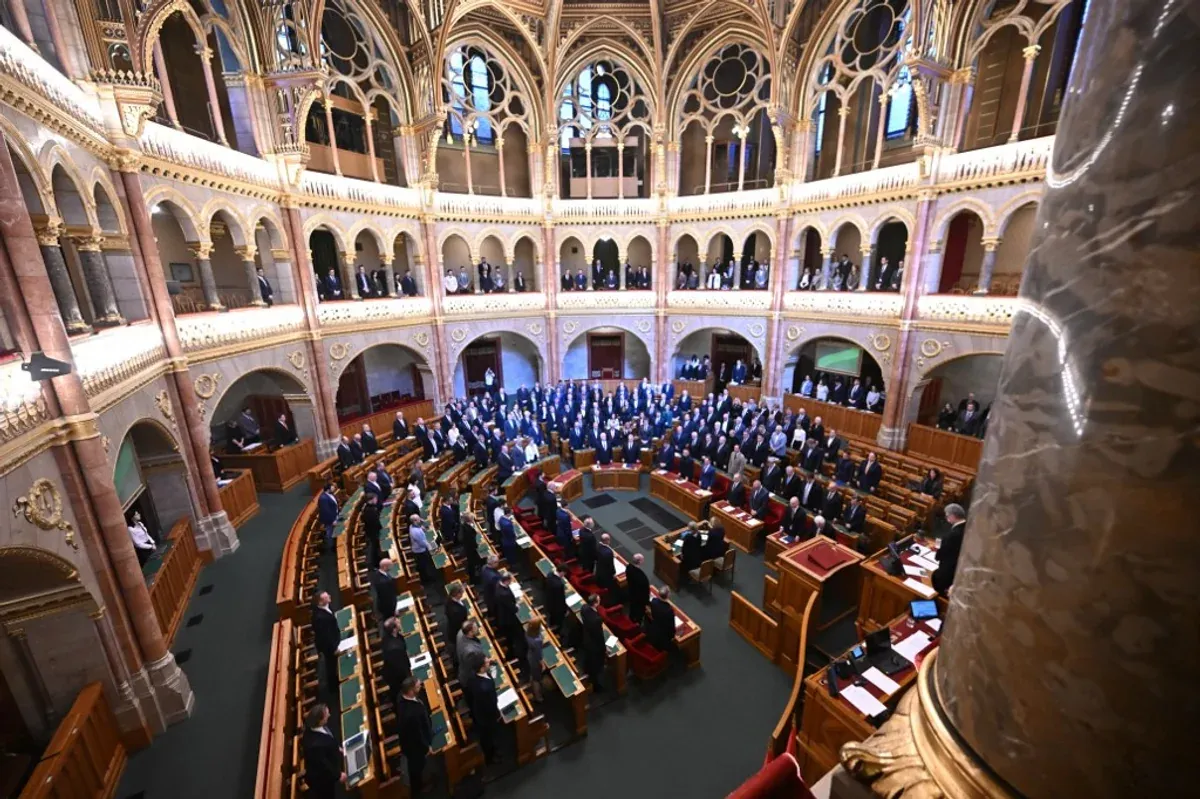
This was reported by Telex. According to the publication, the National Assembly passed the bill with 189 votes in favour, with no votes against or abstentions.
In Hungary, parliament has passed a law reducing MPs’ salaries and state funding for political parties.
The bill was backed by 189 MPs. No one voted against it, and there were no abstentions.
This was the new government’s first significant legislative step towards reforming its own privileges. Even before taking office, Prime Minister Péter Magyar had promised to cut spending on the political apparatus and put an end to the waste of public funds.
What will change for MPs
Under the current rules, the salary of Hungarian MPs was three times the average wage.
Following the changes, a multiplier of 1.8 will be applied instead of 3.
In practice, this means that MPs’ monthly remuneration will decrease from 2,182,488 forints gross to 1,309,493 forints gross. These are pre-tax amounts.
Alongside MPs’ salaries, the law also limits state funding for political parties.
What Magyar promised
The Tisza Party tabled the bill on 28 May.
Mátyás had previously stated that state support for MPs and parliamentary groups should be significantly reduced through amendments to the Parliament Act.
“In difficult times, politicians should serve, not earn,” the Prime Minister said in his first major television interview after taking office.
According to Madyar, he himself will receive only the prime minister’s salary and an MP’s allowance – a total of around €10,500. This is less than half the income declared by his predecessor, Viktor Orbán.
The government estimates that the planned measures will save around €139 million.
Who else will be affected by the cuts
The reform will not be limited to MPs’ salaries.
Ministers, state secretaries, mayors and top managers of state-owned companies are also set to face significant pay cuts.
Until now, MPs could receive up to 7 million forints a month for transport, accommodation and staff. Under the new plan, the maximum amount is set to fall to less than 5 million forints.
Mátyás stated that the state of public finances, which the new government inherited from Orbán’s team, turned out to be “worse than expected”.
He also did not rule out falsifications in the previous government’s budget reports. The new government has already reported finding sacks of shredded documents in the buildings of former ministries. According to Mádár, these may have been left behind during the handover of power.
How “Tisa” came to power
The “Tisa” party won the parliamentary elections on 12 April.
According to the results, it won over 53% of the vote and secured 141 seats in parliament. This gave the party a constitutional majority.
The elections saw a record turnout of around 79% of voters.
On 9 May, the Hungarian parliament elected Péter Magyar as the new head of government. His accession to power brought to an end Viktor Orbán’s 16-year tenure as prime minister.
What this means for Ukraine
The change of government in Hungary is also significant for Ukraine.
Under Orbán, Budapest was one of the EU’s most Russia-friendly partners and repeatedly blocked or delayed decisions crucial for supporting Ukraine.
Tisza’s victory narrows the scope for Russia’s influence operations aimed at undermining European unity. The new government is already demonstrating a willingness to change its political course and review the legacy of the previous administration.
Mátyás has set himself the task of reforming the system of public administration and removing Orbán’s people from key posts. This is a complex process, as the former prime minister shaped the state apparatus over a period of 16 years.
The issue of MPs’ salaries and allowances is a sensitive one, and not just in Hungary.
In Ukraine, over 19 million hryvnias are spent monthly on MPs’ salaries. Currently, an MP’s pre-tax salary stands at around 60–65 thousand hryvnias.
In 2026, compensation for Ukrainian MPs’ expenses related to the performance of their duties will increase from one to three months’ salary. The relevant provision is contained in the budget committee’s conclusions on the draft budget approved by the Verkhovna Rada.
The Hungarian parliament’s decision appears to be a demonstrative political signal: the new government has begun its reforms not by imposing demands on society, but by cutting its own privileges.
Follow us on Telegram