Russian oligarch warns of the risk of 3 million job losses due to the artificial strengthening of the rouble

Boris Bodnar
Boris Bodnar Journalist
Russian oligarch warns of the risk of 3 million job losses due to the artificial strengthening of the rouble
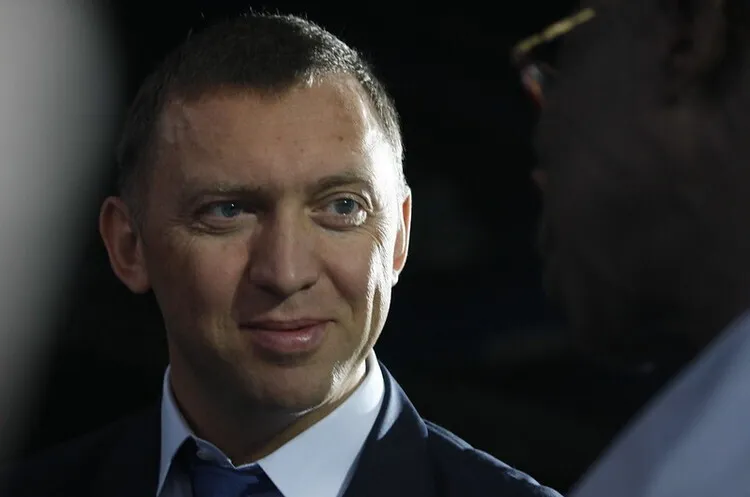
Oleg Deripaska
Russian oligarch Oleg Deripaska has spoken out against the strengthening of the rouble, stating that the current exchange rate is already causing serious problems for the Russian economy

This is reported by The Moscow Times.

According to the report, an overvalued rouble makes Russian goods less competitive on global markets, leads to losses for businesses and could put up to 3 million jobs at risk.

In particular, the metallurgy sector is the export industry suffering most from the overvalued currency.

Deripaska notes that for a country that relies primarily on exports of raw materials and industrial products, a strengthening of the national currency does not lead to economic growth. This is because, for example, if a Russian steelworks sells a tonne of steel abroad for $1,000, at an exchange rate of 100 roubles to the dollar the company receives 100,000 roubles in revenue, but at an exchange rate of 70 roubles to the dollar – only 70,000 roubles.

At the same time, the company pays for wages, taxes, electricity and logistics in roubles, so the stronger the rouble, the less revenue exporters receive.

For the Russian budget, the problem is even more serious. Russia’s main export goods – oil, gas, metals, fertilisers and other raw materials – are sold for dollars or euros.

When the dollar falls against the rouble, the state receives fewer roubles from each export contract.

Deripaska claims that due to the strengthening of the rouble, the budget has already lost trillions of roubles in revenue. Even large Russian corporations have begun to acknowledge the consequences.

Alexey Mordashov, head of the steel company Severstal, recently announced a decline in the sector’s profitability, a reduction in investment and possible staff redundancies. The company has already halted active recruitment and is reviewing its expenditure.

The world’s largest export economies have for years sought to avoid excessive strengthening of their currencies. For example, China has held back the appreciation of the yuan for decades to support exports. Japan traditionally keeps a close eye on the yen’s exchange rate so as not to harm its manufacturers, and South Korea also actively supports the competitiveness of its exporters.

The reason is that a cheaper currency makes a country’s goods more attractive on the global market.

Unlike many developed countries, the Russian economy is heavily dependent on raw material exports. If exporters start earning less, they cut back on investment, slash costs and reduce their workforce.

Follow us on Telegram
Share tittle
Economy
The dollar exchange rate in Ukrainian banks has almost reached 45 hryvnias
Economy

The dollar exchange rate in Ukrainian banks has almost reached 45 hryvnias

Ukrainian banks have updated their exchange rates for 9 June. The average selling rate for the dollar has risen by 21 kopecks and is now approaching the psychological threshold of 45 hryvnias.

09.06.2026
"If institutions fail to do their job, we see the shadow economy flourishing," - says Anna Derevianko
Economy

"If institutions fail to do their job, we see the shadow economy flourishing," - says Anna Derevianko

Anna Derevianko stated that over 40% of Ukraine’s economy operates in the shadow economy. And due to a relaxation of controls, grey-market schemes have even spread to the healthcare sector. Yet it is precisely the formalisation of the economy that would make it possible to avoid tax increases.

09.06.2026
Reports are emerging from Crimea of food shortages and restrictions on sales in shops
Economy

Reports are emerging from Crimea of food shortages and restrictions on sales in shops

In the temporarily occupied Crimea, local residents are increasingly reporting that essential goods are disappearing from shop shelves. A number of retail chains have already introduced restrictions on the sale of certain items to a single customer.

09.06.2026
The government has allocated 2.3 billion hryvnias to prepare schools and universities for winter
Economy

The government has allocated 2.3 billion hryvnias to prepare schools and universities for winter

The Cabinet of Ministers has allocated 2.3 billion hryvnias to support schools, colleges and universities ahead of the 2026/2027 heating season. The funds will be used for backup power supplies, energy independence, utilities, shelter and the restoration of damaged buildings.

09.06.2026
Yemeni Houthis have announced a blockade of the Red Sea — targeting Israel
Economy

Yemeni Houthis have announced a blockade of the Red Sea — targeting Israel

The Iranian-backed Yemeni group Ansar Allah, known as the Houthis, has announced a blockade of shipping in the Red Sea for Israeli vessels.

08.06.2026