NMT 2026: workload, technical issues, testing conditions
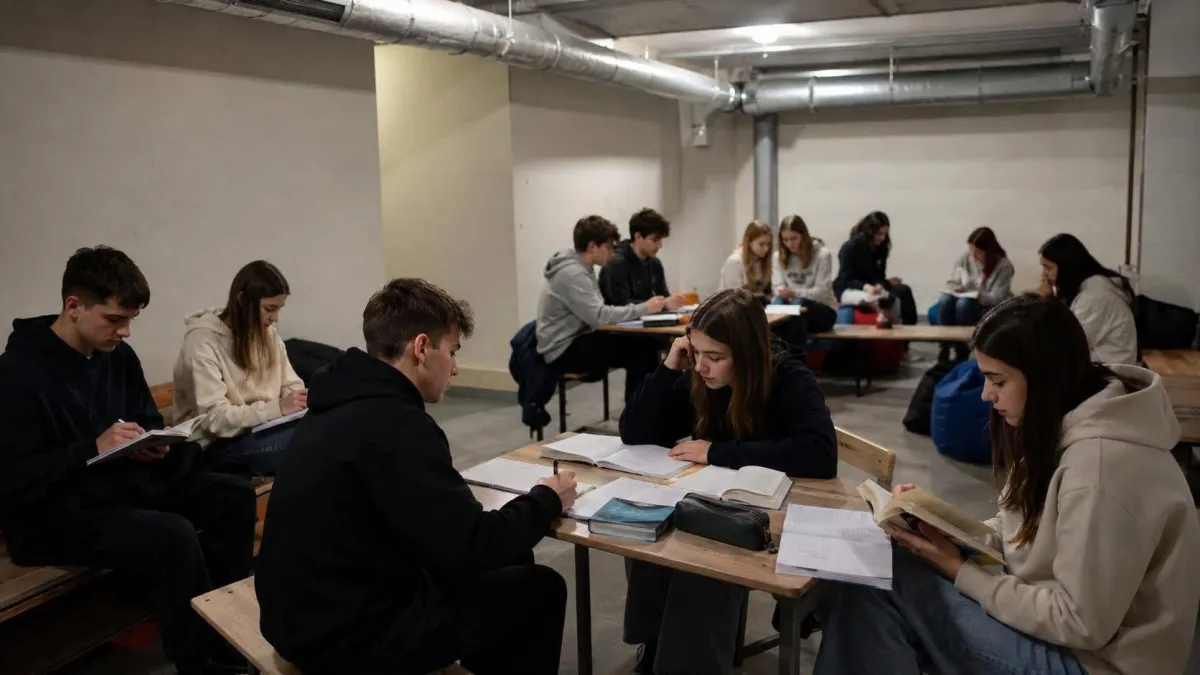
The main sessions of the national multi-subject test are currently underway in Ukraine; admission to higher education institutions depends on the results of this test. At the same time, participants and teachers are raising concerns about the workload involved in sitting the exam and the technical conditions under which it is being held.
An exam with no guarantees: the NMT as a test of one’s nerves
From 20 May to 25 June, the main sessions of the NMT are taking place in Ukraine — a test on which thousands of school leavers’ university admissions and, in effect, their future educational path depend. Formally, it’s about knowledge. In reality, increasingly, it’s about stamina, nerves and technical aptitude.
Four subjects in a row. Four different ways of thinking. Four mental shifts that an adult brain cannot always handle without becoming overloaded — yet we expect this of teenagers who have just finished school.
The result: we are not measuring knowledge — we are measuring resistance to exhaustion.
In theory, the maximum score on the NMT is 200 points. But in practice, the question is increasingly being raised as to whether this threshold is actually achievable even for strong and well-prepared candidates.
A separate set of problems concerns the technical side of the exam. One of the participants, a medallist and prize-winner of the All-Ukrainian Biology Olympiad, took the NMT amidst technical glitches. She noted that the problems began from the very first minutes: a faulty mouse, the computer freezing, tasks not displaying correctly, and wasted time. Despite her complaints, the problem was not resolved during the test. A simple question arises: how was the child supposed to take the exam at all under such conditions?
Years of preparation, victories in Olympiads and the chance to enter medical university were put at risk by a system that demands perfection from children but does not guarantee the perfection of its own work.
After the exam, the girl and her mother appealed to the Vinnytsia Regional Centre for Educational Quality Assessment. However, they were told there that the situation could not be resolved. The girl is asking to be allowed to retake the NMT during the supplementary session — using proper equipment and under normal conditions, where all participants have equal opportunities.
When a student cannot retake an exam due to objective problems, this is no longer about assessing knowledge, but about the absence of fair procedures. This issue requires a direct response from the Ministry of Education.
Equally telling is the story of a history teacher with 18 years’ experience, who sat the NMT for the first time and scored 183 marks. She highlighted the uneven distribution of tasks and questions that went beyond the school curriculum.
According to her, she lost marks due to over-analysis caused by her extensive knowledge: her experience compelled her to analyse, question and verify her answers.
And this once again highlights the problem with the NMT — it often assesses not the depth of knowledge, but the ability to operate within strict time and algorithmic constraints.
Whilst the Minister of Education and Science notes that pupils who are unsure of their readiness and feel stressed by the test should consider an alternative — vocational education — a logical question arises: is this about reform or about shying away from complexity?
Because a paradox emerges: instead of improving the assessment system, a simpler solution is proposed — if you cannot pass the NMT, choose a different educational path.
The NMT increasingly looks less like a tool for equal access to education and more like a test of endurance against systemic flaws. And while these flaws become the norm, the question of fairness in education remains open.
All articles in the "Opinion" section are published in full from their original sources. The editorial team may not share the authors’ views and accepts no responsibility for their statements.