Bulgaria has officially joined the eurozone

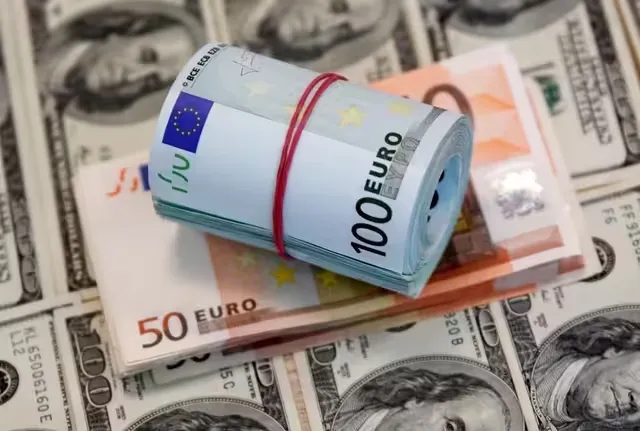
This has been announced by the Council of the European Union. The European Central Bank has also confirmed that Bulgaria will join the eurozone on 1 January 2026.
Bulgaria has officially become part of the eurozone.
On 1 January 2026, the country adopted the euro and became the 21st member of the eurozone.
The Council of the European Union adopted the final decision on this on 8 July 2025.
At that time, the Council approved the three final legal acts necessary for the introduction of the euro in Bulgaria.
This completed the country’s accession procedure to the eurozone.
The European Central Bank confirmed that the euro was officially put into circulation in Bulgaria on 1 January 2026.
The fixed exchange rate was set at 1.95583 Bulgarian leva to 1 euro.
It is at this rate that the national currency is being replaced by the euro.
What the EU decision entails
The decision on Bulgaria’s accession to the eurozone involved several key steps.
The first was the official confirmation of the date of the transition to the euro. This date was set as 1 January 2026.
The second was the fixing of the exchange rate of the Bulgarian lev to the euro.
This is necessary for a controlled and transparent transition to the new currency.
The third step is preparation for the complete replacement of the national currency with the euro.
The ECB noted that following Bulgaria’s transition to the euro, the Bulgarian lev will cease to be the country’s official currency.
The lev will also be removed from the list of euro reference rates published by the ECB.
Why Bulgaria was admitted to the eurozone
Before the final decision, the European Commission and the European Central Bank assessed Bulgaria’s readiness to adopt the euro.
On 3 June 2025, the European Commission announced that Bulgaria met the criteria for adopting the euro from 1 January 2026.
These were the so-called convergence criteria required for entry into the eurozone.
Following this, the process moved on to final political and legal approval at EU level.
The European Central Bank noted that Bulgaria joined the ERM II mechanism in 2020.
Bulgarian banks have also been under the supervision of the ECB since 2020.
The introduction of the euro marked the culmination of many years of preparation for monetary integration with the EU.
What this means for the country
The European Central Bank has described Bulgaria’s entry into the eurozone as a historic milestone.
It notes that the switch to the euro should strengthen economic stability, simplify transactions and deepen the country’s integration with the rest of Europe.
The European Commission also emphasises that the introduction of the euro provides Bulgaria with a stronger foundation for long-term growth and stability.
Following Bulgaria’s switch to the euro, the single currency is now the official currency in 21 EU countries.
Six of the 27 EU countries remain outside the eurozone.
These are the Czech Republic, Poland, Sweden, Hungary, Romania and Denmark.
According to Reuters, none of these countries currently plans to join the eurozone in the near future.
As reported by ThePublic, the “Progressive Bulgaria” coalition, led by Rumen Radev, won the parliamentary elections on 19 April 2026 and secured an absolute majority in parliament. Since then, the media has been discussing the country’s possible political course and the issue of combating corruption.
Follow us on Telegram