Buffer zones in Ukraine: what is the Kremlin’s plan and where does Russia intend to exert pressure?

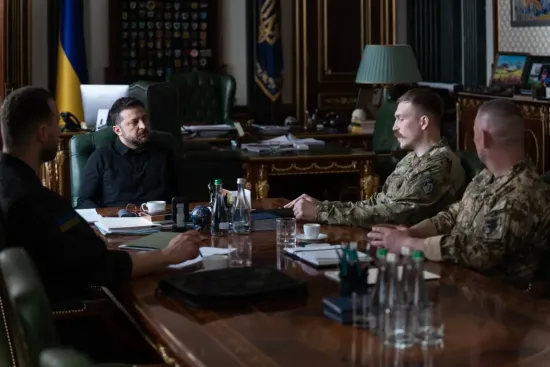
This was mentioned in statements by Pavlo Palisa, Deputy Head of the President’s Office, President Volodymyr Zelenskyy, and Viktor Tregubov, spokesperson for the Joint Forces.
Deputy Head of the President’s Office Pavlo Palisa stated that Russia plans to create a buffer zone not only in the Kharkiv, Sumy and Chernihiv regions, but has also, for the first time, signalled its intention regarding the Vinnytsia region from the side of unrecognised Transnistria. At the same time, he emphasised that there is no cause for panic, as, in his assessment, Russia currently lacks sufficient forces to implement all such plans.
According to Palisa, Russia’s main focus this year remains on the Donbas. Under favourable conditions, Moscow may also step up its efforts in the south, particularly in the Zaporizhzhia region. He added that neither side currently has the capacity to drastically alter the course of the war in the near future.
Later, President Volodymyr Zelenskyy effectively confirmed the general logic of these assessments, but distinguished the risks separately. According to him, Russia wants to create a buffer zone along the entire border – not only the Russian one, but also the Belarusian one. This primarily concerns the Chernihiv and Sumy regions. At the same time, regarding Transnistria, Zelenskyy stated that he does not currently see a direct threat there.
The President also noted that a concentration of Russian forces is being observed in other areas, particularly in the south and the Zaporizhzhia direction. However, he identified the Pokrovsk direction as Russia’s main objective, which remains crucial both for the Russian offensive and for Ukrainian defence.
Viktor Tregubov, spokesperson for the Joint Forces, gave a separate assessment of the situation. According to him, Russian troops have been attempting for over a year to create a 20-kilometre buffer zone in the Sumy and Kharkiv regions, and this attempt will continue in the spring and summer. However, as he emphasised, during this entire period Russia has managed to establish only a few penetration points, and none of them has come close to the stated depth of 20 kilometres.
Tregubov believes that the Russian army will continue to allocate forces to these operations, but he does not expect significant success during the spring-summer campaign. In his assessment, events in the Donetsk and Zaporizhzhia regions remain more important for Russia than attempts to establish a full-fledged zone of control in the border areas of the Kharkiv region.
Thus, a mixed picture emerges from the Ukrainian side’s public assessments. On the one hand, the Kremlin continues to promote the idea of buffer zones as part of its military logic. On the other, Russia’s available resources, according to Kyiv’s estimates, do not yet allow it to implement all these intentions simultaneously. The most realistic threat at present appears to be pressure on the northern border, whilst the scenario involving Transnistria is currently being presented more as a stated intention than as an imminent military prospect.
As reported by ThePublic, ‘The enemy’s goal is a buffer zone in Dnipropetrovsk Oblast’: Syrskyi on the situation at the front
Follow us on Telegram