Church holiday on 15 July 2026: how, according to tradition, to protect your home

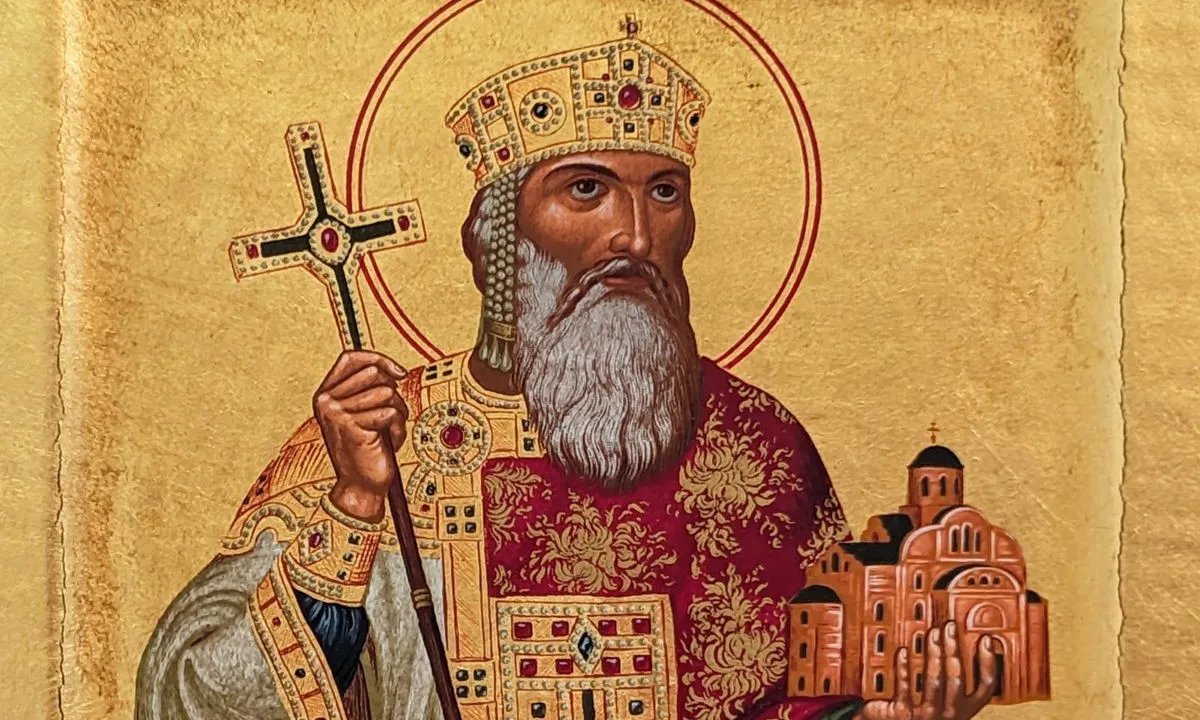
The OCU noted that this day also marks the 1,038th anniversary of the Baptism of Ukraine-Rus’ and Ukrainian Statehood Day.
Prince Volodymyr was the son of Sviatoslav and the grandson of Princess Olga. His reign marked a turning point for Kievan Rus’.
In 988, the prince converted to Christianity, after which the Baptism of Rus’ began. During his reign, the first Christian churches were built, notably the Church of the Tithes in Kyiv, and the new faith gradually spread throughout the realm.
For his contribution to the spread of Christianity, Prince Volodymyr was canonised as an Equal-to-the-Apostles. In church tradition, this title is given to saints whose work is equated with the mission of the apostles.
On this day, the faithful pray for the strengthening of their faith, peace, the protection of Ukraine, assistance in difficult matters, and good health. According to church tradition, Prince Volodymyr lost his sight before his baptism but regained it after embracing Christianity; for this reason, people also pray to the saint for healing from eye ailments.
What ritual was performed to protect the home
In the folk calendar, 15 July was known as St Vladimir’s Day. Our ancestors believed that in midsummer, the sun’s rays possessed a special purifying power.
In the morning, people would drink holy water on an empty stomach and then sprinkle it around the house. Afterwards, they would throw the windows wide open to fill the rooms with sunlight.
According to popular belief, this ritual was meant to purify the home, protect it from ill-wishers and ward off misfortune. However, this is a folk tradition, not a religious rite established by the church.
What to do on 15 July
The day is considered auspicious for prayer, attending church, helping those in need and making amends with loved ones. It is also customary to ask for forgiveness, let go of grudges and give up harmful habits.
In the past, people used to gather medicinal herbs on 15 July. It was believed that plants gathered on this day possessed special healing properties.
Traditionally, women were advised to rest more, whilst men took on the heavy household chores. This was also linked to the day commemorating the martyr Ulita, who was regarded in folk culture as the patron saint of women.
What not to do on 15 July
The Church urges people on this day to refrain from quarrelling, insults, envy, gossip, greed and refusing to help others. One should not abuse alcohol or wish ill upon others.
According to folk beliefs, it was not recommended to start renovations, make large purchases or undertake strenuous physical labour on 15 July. In particular, people avoided working in the fields at midday, when the summer heat could be dangerous.
It was also advised not to discuss personal problems with outsiders or complain about life, so as not to attract further misfortune.
Folk omens for 15 July
Morning rain promised sunny weather in the afternoon. Evening mist was considered a sign of impending bad weather, whilst the loud chirping of grasshoppers was a harbinger of dry and warm days.
If the leaves of the lime tree began to turn yellow, an early autumn was expected. Wilted carrot tops foretold rain, whilst a strong easterly wind signalled a prolonged spell of bad weather.
According to the old church calendar, 15 July marks the Feast of the Deposition of the Holy Robe of the Most Holy Mother of God at Blachernae.
Under the new calendar, men named Volodymyr celebrate their name day on this date.
Follow us on Telegram.