Why is an air-raid siren sometimes sounded after explosions? An adviser to the Minister of Defence explained the specifics of ballistic attacks


Artur Romanchenko
Artur Romanchenko Journalist
Why is an air-raid siren sometimes sounded after explosions? An adviser to the Minister of Defence explained the specifics of ballistic attacks
Air raid alert
During Russian ballistic missile attacks, air raid sirens in Ukraine may sometimes sound only after the explosions have taken place, or, conversely, the danger may be announced but no missiles are actually launched.

Serhiy Beskrestnov, an adviser to the Ukrainian Minister of Defence with the call sign ‘Flash’, explained the reasons for this.

According to him, Ukraine receives information about ballistic missile launches from foreign partners. The main sources of data are satellite surveillance and a launch detection system. The adviser added that the flight time of a ballistic missile to Kyiv is 2–4 minutes. 

“Any system failure will lead to a delay in receiving information. No system can be perfect, so failures do occur, and the alarm may be delayed,” he wrote.

On 11 July, Russia attacked Kyiv with ballistic missiles — on that occasion, too, the alarm sounded only after civilian infrastructure in the city had already been hit, wrote Ukrainian President Volodymyr Zelenskyy.

At the same time, there are instances where the system warns of a ballistic threat, yet no missiles are detected in the airspace, says Beskrestnov. According to him, this happens because satellites detect activity at launch sites prior to the launch of missiles.

As an example, Serhiy Beskrestnov cited the situation with ‘Oreshnik’: reconnaissance satellites repeatedly detected activity at the launch sites, yet no actual launches took place.

Follow us on Telegram
Share tittle
War
The Unmanned Systems Forces have announced that they have struck 20 Russian vessels in the Black Sea
War

The Unmanned Systems Forces have announced that they have struck 20 Russian vessels in the Black Sea

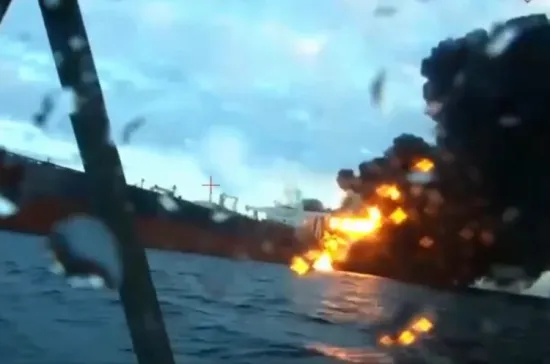
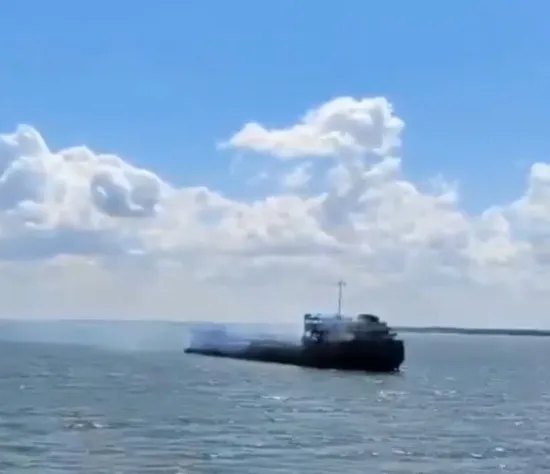
On the night of 15 July, the Ukrainian Armed Forces’ Unmanned Systems Command announced that it had struck 20 Russian vessels in the Black Sea. Robert ‘Madyar’ Brovdi, commander of the Unmanned Systems Forces, also reported on the results of strikes against vessels over the past ten days.

15.07.2026
In the Belgorod region, a Ukrainian drone struck a Russian Mi-28 attack helicopter
War

In the Belgorod region, a Ukrainian drone struck a Russian Mi-28 attack helicopter Video

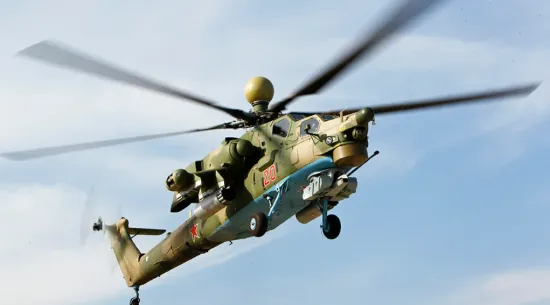
On the morning of 15 July, the Ukrainian military shot down a Russian Mi-28 helicopter whilst it was flying over the Belgorod region.

15.07.2026
The US has continued its large-scale strikes against Iran and set a condition for their cessation
War
  • Important

The US has continued its large-scale strikes against Iran and set a condition for their cessation

The US military carried out a new series of strikes on Iranian military targets, which lasted seven hours. US President Donald Trump stated that the attacks would continue until Tehran returned to the negotiating table.

15.07.2026
Russia could lose 20 per cent of its grain exports due to the Ukrainian blockade of the Sea of Azov
War

Russia could lose 20 per cent of its grain exports due to the Ukrainian blockade of the Sea of Azov

Ukrainian strikes in the waters of the Sea of Azov, which have hit more than 100 Russian vessels over the past nine days, have paralysed operations at the ports of Azov and Taman, through which millions of tonnes of Russian grain were being exported.

15.07.2026
Russia attacked a number of regions in Ukraine overnight; there have been fatalities and dozens of people have been injured
War

Russia attacked a number of regions in Ukraine overnight; there have been fatalities and dozens of people have been injured

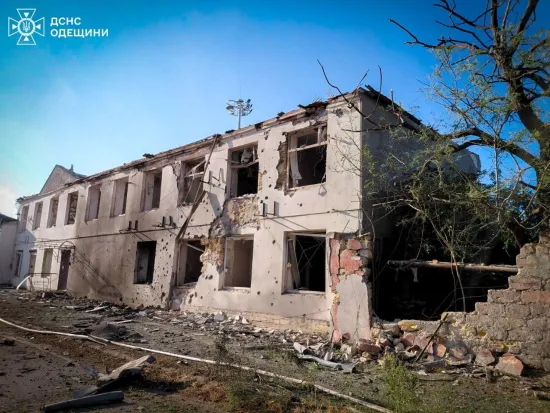
On the night of 15 July, Russian troops launched strikes on several regions of Ukraine. The attacks resulted in fatalities, with dozens injured, and caused damage to residential buildings, infrastructure and businesses.

15.07.2026