Eleven countries have called on the EU to tighten restrictions on the issuance of Schengen visas to Russian citizens

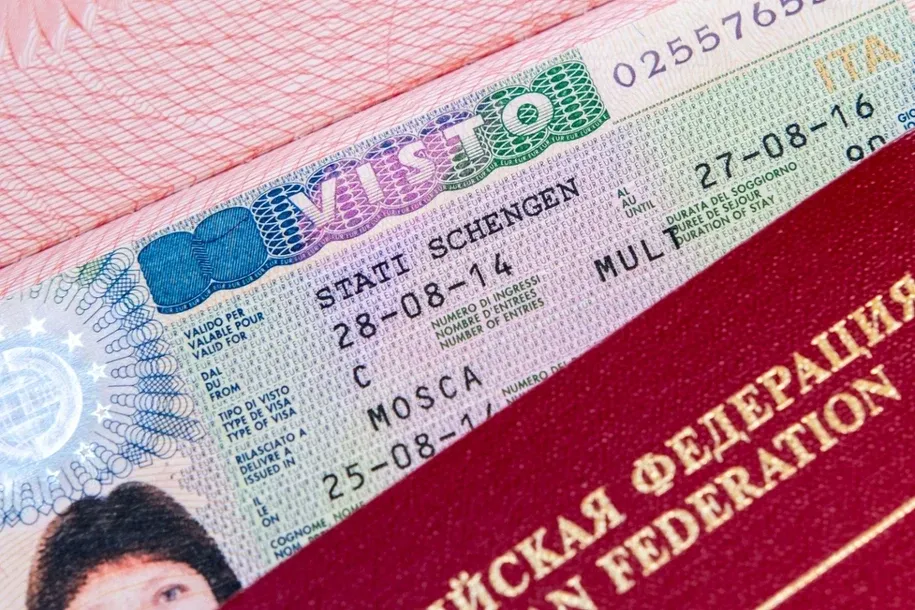
Eleven European countries have sent a letter to the European Commission calling for stricter conditions for issuing Schengen visas to Russian citizens, according to RMF24.
The signatories include the Baltic states, Denmark, the Netherlands, Poland, Finland, the Czech Republic, Sweden, as well as Iceland and Norway, which are part of the Schengen Area but are not members of the European Union.
The authors of the appeal stated that, whilst the war against Ukraine is ongoing, Russian tourists should not be allowed to visit European resorts unhindered. In their view, the current implementation of EU recommendations regarding the thorough vetting of applicants from Russia is inconsistent.
The letter notes that this situation creates opportunities for so-called ‘visa shopping’, whereby Russian citizens obtain visas in countries with a more lenient approach and then move freely within the Schengen Area.
The countries propose amending the EU Visa Code and introducing additional mandatory mechanisms to respond to actions by states they consider a geopolitical threat. The proposals also include restrictions on the issuance of multiple-entry visas to Russian citizens, regardless of their place of residence.
Separately, ministers called for measures to be developed as soon as possible under Estonia’s initiative to identify former and current combatants and prevent their entry into the Schengen Area.
The document notes that the growing number of Russian tourists in European countries is a cause for concern against the backdrop of ongoing hostilities in Ukraine. Ministers also drew attention to the increase in the number of tourist and multiple-entry visas issued.
According to the ‘Schengen Barometer’, Russian citizens were issued 623,451 tourist visas in 2025. France, Italy and Spain issued the highest number of such visas. In 2024, this figure stood at 565,719 visas.
The letter notes that this practice contradicts the European Commission’s recommendations regarding a strict approach to the consideration of applications from Russian citizens travelling for non-essential reasons.
The Baltic states and Poland have almost completely stopped issuing tourist visas to Russian citizens. The appeal emphasises that states bordering Russia bear the main risks and costs, whilst other countries continue to benefit from the tourist flow.
The issue is set to be discussed at a meeting of European Union justice and home affairs ministers to gauge support for the initiative.
At the same time, not all states support this approach. Some diplomats believe that trips by Russians to Europe give them the opportunity to see life in European countries first-hand. There are also reservations regarding the interpretation of statistics, as some states have greater administrative capacity to process visa applications, but do not necessarily apply more lenient rules.