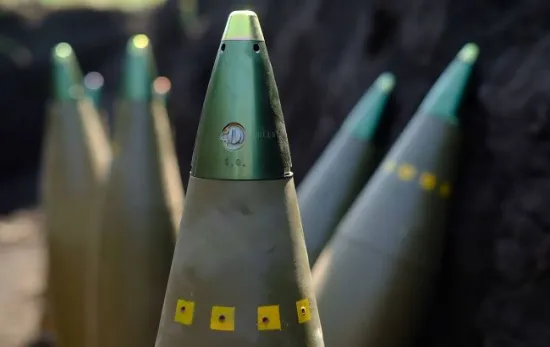
Following his meeting with Rutte, Zelenskyy called on partners to strengthen Ukraine’s defence against ballistic missiles

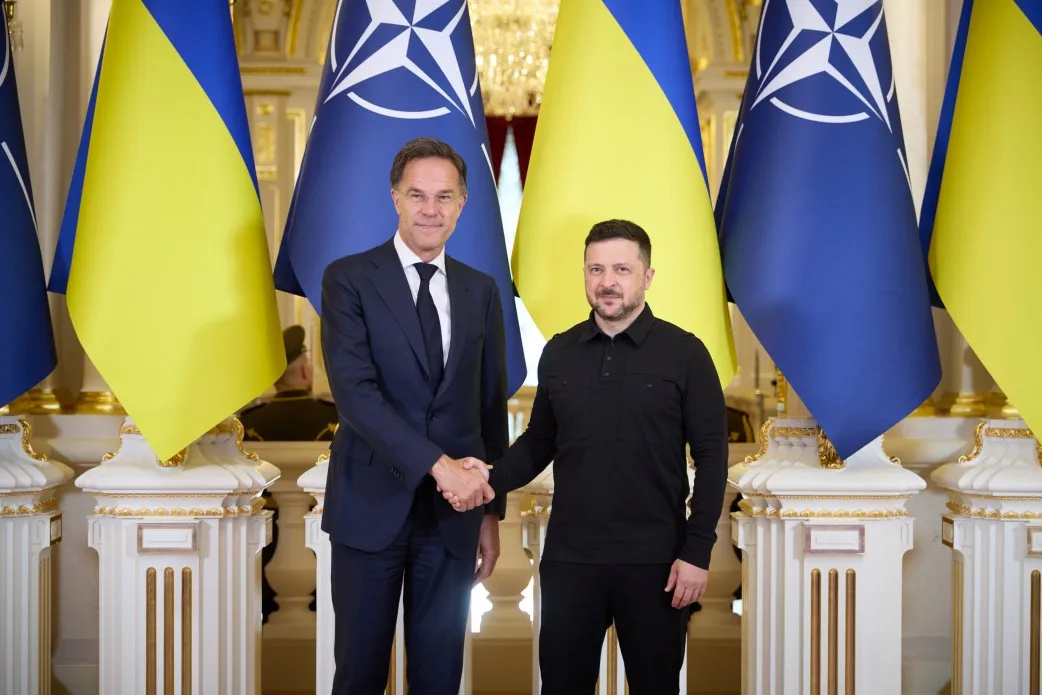
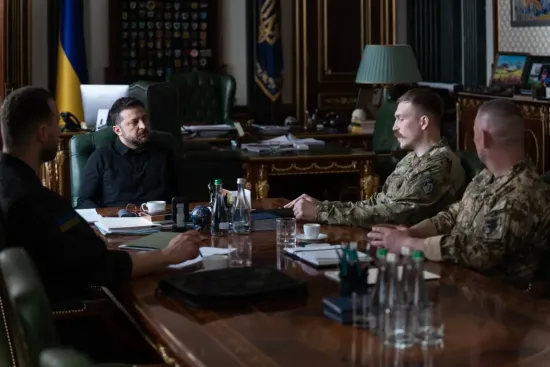
During a meeting in Kyiv, President Volodymyr Zelenskyy and NATO Secretary General Mark Rutte identified key areas for strengthening Ukraine’s air defences against the backdrop of escalating Russian air attacks.
Zelenskyy stated that partners should focus primarily on protection against ballistic missiles, which Russia has begun to use more frequently and which are more difficult to shoot down.
“It would be very helpful if our partners focused particularly on defence against ballistic missiles – we discussed this at length today – ballistic missiles that Russia has begun to use more frequently and which are objectively more difficult to shoot down. Ballistics is Russia’s last resort in the war against Ukraine, and we must find an adequate response,” the President emphasised.
The Head of State thanked the partners and Mark Rutte for the work on the PURL programme. According to him, contributions were made in May and are expected in June, and six countries have already confirmed their readiness to join the programme.
At the same time, Zelenskyy noted that the speed and volume of supplies via PURL remain insufficient, so further steps are needed. The President named PURL as one of the priorities alongside the new Drone Deals format.
The meeting also discussed the development of Europe’s own anti-ballistic capabilities. Ukraine is already working on this with France, Norway, Germany, Sweden, Denmark, Italy and other partners.
Separately, talks with the US regarding the possibility of obtaining licences to manufacture Patriot systems in Ukraine or jointly with NATO partners were discussed. Zelenskyy stated that this approach is in line with the policy of strengthening Europe’s capacity for self-defence.
The President also highlighted cooperation with partners who are already developing joint defence production with Ukraine. According to him, Ukraine allocates 45–50 billion dollars a year to arms production.
Zelenskyy emphasised that adequate defence funding is a real guarantee of security for Ukraine, its independence and its citizens. He added that he had discussed with Rutte issues that could provide Ukraine with more long-term financial security guarantees.
The Head of State stated that Ukraine would work on these issues during the G7 summit and the NATO summit in Ankara.
Zelenskyy also thanked representatives of NATO countries for their presence in Ukraine. According to him, following Russia’s demand that ambassadors leave Ukraine, the partners’ participation in the meeting in Kyiv served as a signal of unity among Europe, the US, Canada and other allies in supporting Ukraine.
Mark Rutte stated that partners would continue to support Ukraine and provide it with the most essential types of weaponry, in particular through the PURL. He noted that NATO understands Ukraine’s urgent need for air defence.
The NATO Secretary General also stated that Ukraine is changing the dynamics on the battlefield and employing innovative approaches. According to him, Russia is losing around 30,000 personnel a month, which is more than the USSR lost during 10 years of war in Afghanistan.
“We know that the Russian economy is under significant pressure. We know that Russia is unable to cover all the costs that the war demands. We must force Russia back to the negotiating table so that they end the war they started 12 years ago,” said Mark Rutte.
Zelenskyy emphasised that sanctions against Russia, Ukrainian long-range capabilities, financial support for Ukraine, political cooperation and the resolve of partners must create pressure that will push Russia towards diplomacy.