How the war affects Russia's economy: an analysis of Putin's possible concessions

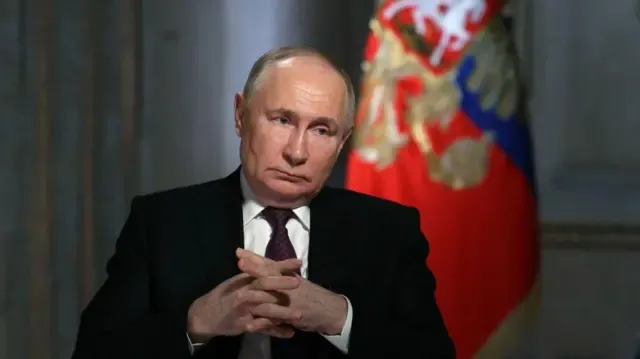
The latest report by the Institute for the Study of War (ISW) highlights that Russian society is increasingly affected by the Kremlin's decisions to support the defence industry. At a meeting with Vladimir Putin on 12 January 2026, First Deputy Prime Minister Denis Manturov noted that in 2025, the industrial sector saw growth, in particular due to the active development of the defence industry base.
According to him, investments in production in 2025 increased by 23%, which equates to about 5 trillion rubles (approximately $64 billion) in the first nine months of the year. Despite the fact that the economy as a whole experienced a cooling, the industry was able to show growth of around 3% at the end of the year.
However, ordinary citizens are also feeling the pressure of defence spending. Manturov noted that Russia's defence industry provides jobs for 3.8 million people, of which 800,000 new jobs have been created over the past three years.
ISW emphasises that the Russian government is forced to look for new sources of funding to support the defence base, as tough Western sanctions are making access to capital more difficult. The government has introduced measures to stimulate investment, including through industrial development funds and soft loans.
In addition, the Central Bank of Russia has cut its key interest rate four times in 2025, hoping to ease access to finance for the OPS industry. However, such decisions lead to higher prices and inflation, as the burden of costs is often passed on to consumers.
Analysts note that competition between the defence and civilian sectors has led to higher salaries, which in turn has affected inflationary processes. Under the pressure of market conditions, some civilian enterprises have even introduced a four-day working week due to lower demand.
Russians are currently facing rising housing prices, which is forcing them to adapt to new financial realities, as well as to feel the effects of the VAT increase that came into effect in November 2025. This is a testament to the fact that the Kremlin's financial policy is increasingly being borne by ordinary citizens.
ISW believes that increased economic pressure from the West, along with support for Ukraine, may force Putin to rethink his military ambitions and seek compromises that take into account the lives of the Russian population.