Which films about the war in Ukraine are worth watching?

Over the past few years, films about the war in Ukraine have become an important part of the global conversation on war, memory and accountability.
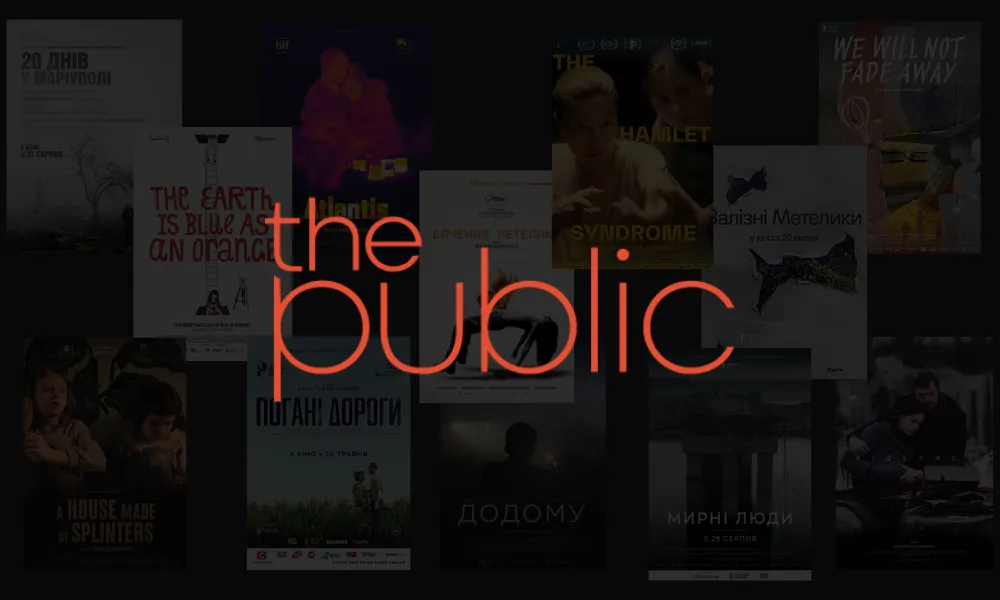
This is most evident in documentary filmmaking, which increasingly functions both as art and as testimony and evidence. A symbol of this is the film ‘20 Days in Mariupol’ (directed by Mstislav Chernov), which won an Oscar and effectively brought the Ukrainian perspective on the war to the forefront for an international audience.
War films about Ukraine are not limited to documentaries. Feature films of recent years have also significantly changed the discourse on war. Whereas films used to be built around the front line, battles and heroism, the focus is now increasingly on captivity, returning home, trauma, loss, civilian life and everyday existence against a backdrop of violence. Ukrainian cinema has begun to speak about the war in a far more nuanced, precise and humane way.
As of 2026, war cinema about Ukraine is developing in two directions. The first is the urgent documentation of events, where the camera literally captures crime, destruction, human deaths and the very course of history. The second is a longer, more complex reflection, where the film attempts to understand how war changes people, society and the very language of cinema itself. This is precisely why the most powerful Ukrainian films of recent years do not reduce war merely to the trenches or the battlefield. They show hospitals, roads, children’s shelters, ruined houses, telephone conversations, the silence after shelling, and life amidst the catastrophe.
One of the most important films of this period was Valentin Vasyanovich’s *Atlantis*. It is a film about the future after a great war, where trauma no longer explodes, but seems to grow into the earth, into the body, into silence. The film demonstrated that Ukrainian cinema can address the war both literally and through imagery, atmosphere and a sense of desolation.
Another important film is Nariman Aliev’s ‘Home’. Here, the war is revealed through the journey of a father and son as they transport the body of a deceased relative to Crimea. It is a story of loss, of home, of roots and of the Crimean Tatar experience. The film is significant because it shows that war also means the destruction of a person’s connection to their home.
In documentary cinema, a special place is held by Iryna Tsilik’s film *The Land Is Blue Like an Orange*. It is the story of a family living in Donbas who try to survive the war by making their own film. It is precisely this perspective—where war is present as if on the edge of the frame, yet defines their entire lives—that has become very important for Ukrainian documentary cinema.
Natalky Vorozhbyts’ *Bad Roads* also left a strong emotional impact. This is a film about Donbas, where war is depicted as a space of broken rules, humiliation and moral disorientation. The film shows the harsh reality without offering the viewer any comfortable distance.
Valentin Vasyanovich’s *Reflection* deserves special attention. In this work, war is portrayed through the experience of captivity, torture and the difficult return to life after enduring violence. It is a film about how a person tries to learn to be themselves again after an extreme experience of dehumanisation.
A similar theme is explored in Maxim Nakonechny’s ‘The Butterfly’s Vision’. The film tells the story of a female soldier returning from captivity. Here, war is experienced through the body, shame, inner struggle and an attempt to reclaim the right to one’s own story. This is one of those films that have expanded Ukrainian cinema, forcing it to address experiences that previously often remained on the periphery of public attention.
Also crucial for understanding the war are ‘The House of Sticks’ (directed by Simon Lereng Wilmont), which focuses on children in a shelter near the front line, and ‘We Will Not Fade Away’ (directed by Alisa Kovalenko), which portrays teenagers from Donbas growing up in the shadow of war. Both films shift the focus from the front line to civilian life and remind us that war also exerts pressure on children, families and the future.
Films about memory and the information war form a distinct strand in contemporary war cinema. Worth mentioning here is ‘Iron Butterflies’ (directed by Roman Liubyi), which tells the story of the downing of flight MH17 and how, for years, a web of lies, denial and propaganda was woven around this obvious crime.
The film “Intercepted” (directed by Oksana Karpovich) works in a similar way, with telephone conversations between Russian military personnel superimposed over footage of destroyed Ukrainian landscapes. Here, sound becomes as much evidence as the images. This is an example of a new kind of cinema that seeks a different way of talking about violence — restrained, yet very powerful.
Another significant trend of recent years is the emergence of hybrid forms. For example, Elvira Nevera and Piotr Rosolowski’s film *Hamlet Syndrome* combines documentary filmmaking and theatre, showing how people with wartime experience work through their trauma via the stage.
The international status of Ukrainian war cinema has also changed. In just a few years, Ukrainian films have gone from attracting festival interest to achieving full recognition at the world’s most important venues. Cannes, Venice, the Berlinale, Sundance, the European Film Academy, and the Oscars — all these institutions have included films about Ukraine in their programmes and awards in recent years. This means that stories about the war in Ukraine are no longer local but have become part of global cultural memory.
At the same time, it is important that the Ukrainian film industry continues to operate even amidst the war. Production of new projects is ongoing, the state and international partners are supporting the industry, and Ukraine is gradually strengthening its presence on global film markets.
The films themselves have also become more accessible. Some of them are released not only at festivals but also on streaming and VOD platforms. Thanks to this, war films about Ukraine are watched not only by film critics or festival audiences but also by a wider international audience.
Overall, the main shift between 2019 and 2026 lies in the fact that films about the war in Ukraine have learned to be not only emotional but also accurate. They are seeking a new language in which there is room for direct testimony, for silence, for trauma, for memory, and for everyday life amidst catastrophe. That is precisely why these films are important not only now. They are already becoming part of how Ukraine and the world will remember this war.