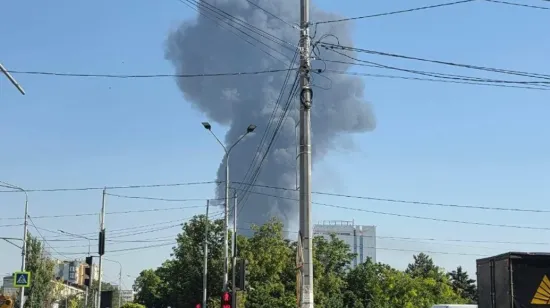
Iran's Supreme Leader Mojtaba Khamenei has ordered that enriched uranium not be exported from the country

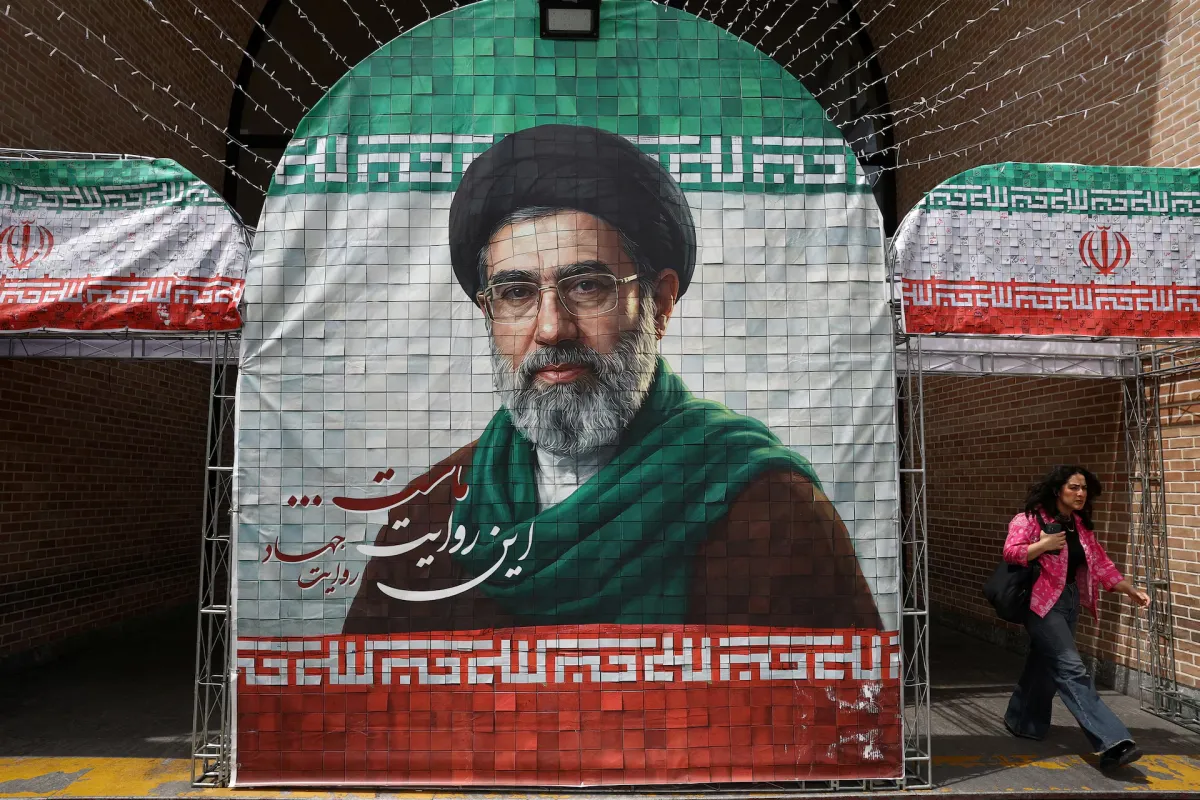
Iran’s Supreme Leader, Ayatollah Mojtaba Khamenei, has issued a directive stipulating that Iran’s stockpile of uranium enriched to a level close to that required for nuclear weapons must not leave the country. Two senior Iranian sources told Reuters of this.
According to the agency’s sources, the decision strengthens Tehran’s position regarding one of the US’s key demands during peace talks.
One of the sources noted that Iran’s leadership considers the export of uranium abroad to be a factor that could make the country more vulnerable to future attacks by the US and Israel.
“The Supreme Leader’s directive and the consensus within the leadership is that stocks of enriched uranium must not leave the country,” the source told Reuters.
Trump’s statements and Israel’s position
US President Donald Trump has stated that Washington will not allow Iran to retain stocks of highly enriched uranium.
“We’ll get it. We don’t need it and we don’t want it. We’ll probably destroy it once we get it, but we won’t let them have it,” Trump told reporters at the White House.
Israeli officials told Reuters that Trump had assured Israel that the stockpiles of highly enriched uranium would be removed from Iran, and that a provision to this effect must be included in the peace agreement.
Israeli Prime Minister Benjamin Netanyahu stated that he would not consider the war over until the enriched uranium had been removed from Iran, Tehran had ceased its support for proxy groups, and its ballistic capabilities had been eliminated.
Israel, the US and other Western states have long accused Iran of seeking to develop nuclear weapons. In particular, they point to the enrichment of uranium to 60%, which significantly exceeds the level required for civilian use. Iran denies any intention to develop nuclear weapons.
Negotiations and mutual mistrust
A fragile truce between the parties has held since the war began on 28 February with US and Israeli strikes on Iran. Following this, Iran launched strikes against countries in the Persian Gulf where US military bases are located, and fighting also broke out between Israel and the Iran-backed ‘Hezbollah’ in Lebanon.
Despite this, no significant breakthrough has been achieved in the negotiations. The negotiation process is complicated by the US blockade of Iranian ports and Iran’s control of the Strait of Hormuz.
Two Iranian sources told Reuters that there is deep mistrust of the US among the Iranian leadership. In Tehran, it is believed that the pause in hostilities may be a tactical move by Washington ahead of new air strikes.
Iran’s chief negotiator, Mohammad Bagher Ghalibaf, stated on Wednesday that “the enemy’s overt and covert actions” indicate that the US is preparing for new attacks.
Meanwhile, Trump has stated that the US is ready to launch new strikes on Tehran if Iran does not agree to a peace deal.
Disputes over uranium reserves
According to Reuters sources, the parties have begun to narrow their differences on certain issues, but key disputes remain regarding Iran’s nuclear programme, particularly the future of enriched uranium stocks and Tehran’s demand for recognition of its right to enrichment.
Iranian officials state that the country’s priority is a permanent end to the war and guarantees that the US and Israel will not launch further strikes.
Before the war, Iran had signalled its readiness to remove half of its stockpile of uranium enriched to 60%. However, following repeated threats by Trump to attack Iran, Tehran’s position has changed.
At the same time, the agency’s sources claim that the parties are still discussing possible compromise solutions.
“There are options, such as diluting the stockpile under the supervision of the International Atomic Energy Agency,” said one of Reuters’ sources.
According to the IAEA’s estimates, at the time of the Israeli and US strikes on Iranian nuclear facilities in June 2025, Iran had 440.9 kg of uranium enriched to 60%.
Exactly how much material remained after the attacks is currently unknown.
IAEA Director General Rafael Grossi stated in March that the bulk of the stockpile is stored in a tunnel complex at the nuclear facility in Isfahan. According to the agency’s estimates, just over 200 kg of uranium may remain there.
According to the IAEA, some of the material is also located at the nuclear complex in Natanz, where Iran has two uranium enrichment plants.
Tehran claims that some of the highly enriched uranium is needed for medical purposes and for a research reactor in the capital, which runs on uranium enriched to around 20%.