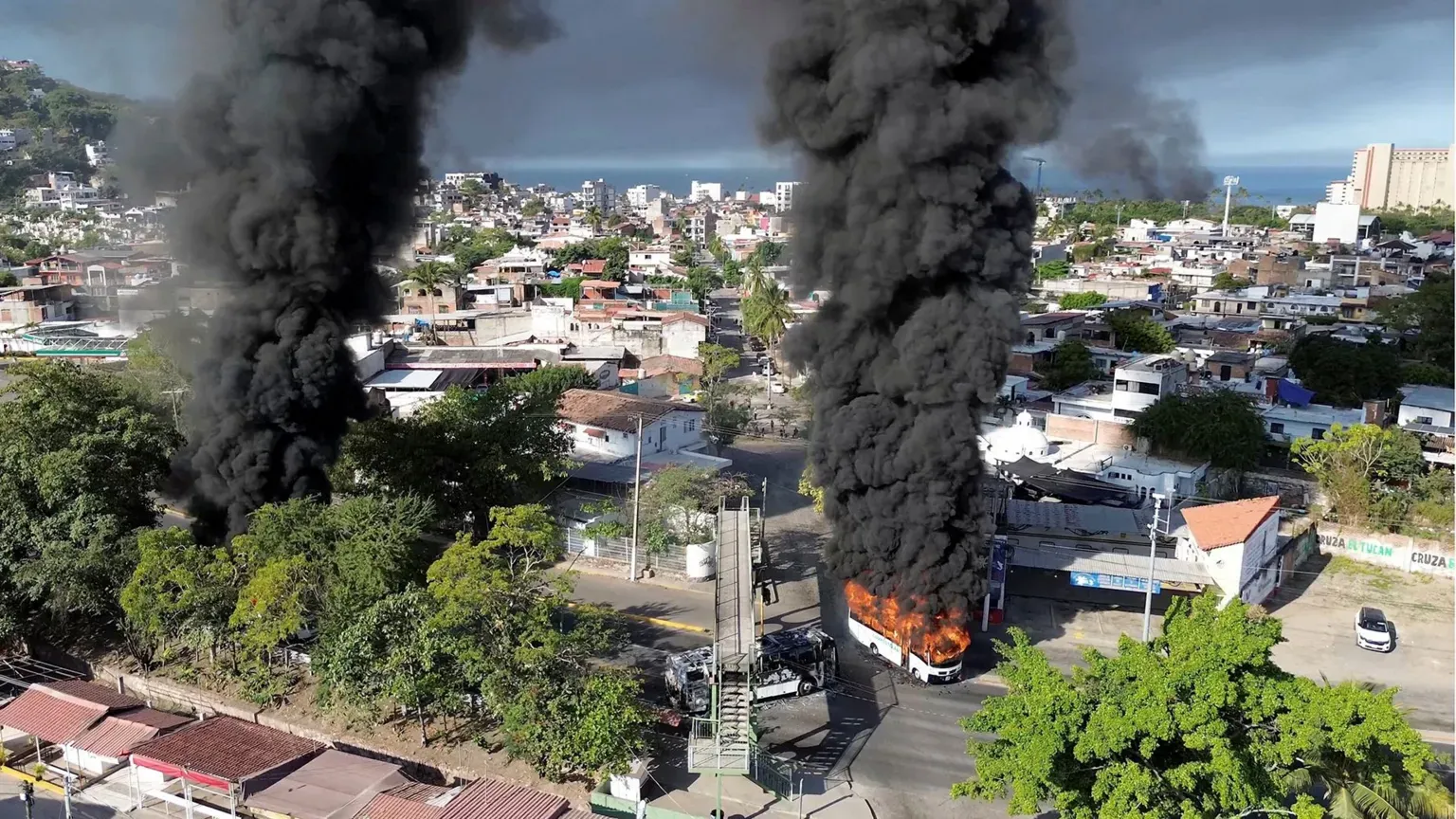
A wave of violence swept through Culiacán after the death of drug lord El Mencho.

The President of Mexico commended special forces for their operation to capture Nemesio Ochoa Cervantes, known as El Mencho. He died on Sunday in custody after being arrested in the state of Jalisco during an armed clash.
At the same time, in Culiacán, another hub of drug cartel activity in the state of Sinaloa, the removal of the influential leader only intensified the confrontation between the groups. The internal conflict within the Sinaloa cartel has been going on for a year and a half after the son of one of the leaders betrayed another. Ismael el Mayo Zambada is currently in prison in the United States. During this time, violence has engulfed the region.
Paramedic Hector Torres says that fear has become a constant in the city. According to him, the number of ambulance calls increased by more than 70 per cent last year. Most of the calls end in a death certificate. Schools, hospitals and even funerals have been attacked.
Julio Cesar Vega, who works with Hector Torres, notes that medics are forced to wear 14-kilogram bulletproof vests due to the risk of being caught in crossfire. There are numerous checkpoints in the city, manned by thousands of soldiers.
In one case, after the murder of a garage owner, three men were kidnapped from the same premises. The bodies of the victims, bearing signs of torture, are found in the streets. Messages from one group to another are left next to them, threatening to continue the killings.
Journalist Ernesto Martinez, who has been covering events in the region for 27 years, says that even with the increased presence of security forces, the average number of murders remains at five or six per day. Among the victims are teenagers.
During a meeting, representatives of one of the groups stated that the violence would continue until only one faction remained. One of the interlocutors admitted that innocent people, including children, were being killed. Another stated that the war would not end.
The number of missing persons is also growing. Reynalda Pulido is searching for her son, Javier Ernesto, who disappeared in December 2020. She heads the group Mothers Fighting Back. The women, accompanied by military escorts, search the fields for possible graves. During one of their searches, they found only animal bones.
According to Reynalda Pulido, she continues the search because no one else is doing it. She notes that she has already found 250 bodies and more than 30 people alive.
One of the reasons for the conflict is the fentanyl trade. In a basement belonging to the cartel, a man named Roman showed off packages of powder weighing one kilogram each, each costing $20,000. According to him, in New York, the price can reach $28,000 or $29,000. He said that production continues, even despite increased controls.
US President Donald Trump has declared cartels to be terrorist organisations and called fentanyl a weapon of mass destruction, threatening Mexico with direct military action if it fails to control drug trafficking.
The Mexican government claims to have made progress in the fight against drug trafficking and asserts that fentanyl supplies to the United States have been reduced by 50 per cent. Mexican President Claudia Sheinbaum blamed the surge in violence on internal struggles within the Sinaloa cartel and stressed that the government is trying to avoid harming civilians.
During one of their recent calls, Hector Torres and Julio Cesar Vega were helping two injured people in the city centre. Both were random passers-by who were caught in the crossfire. They were taken to hospital, where they survived. According to Hector Torres, these were the first victims to be found alive since November.