Magnetic storms in July 2026: a day-by-day calendar

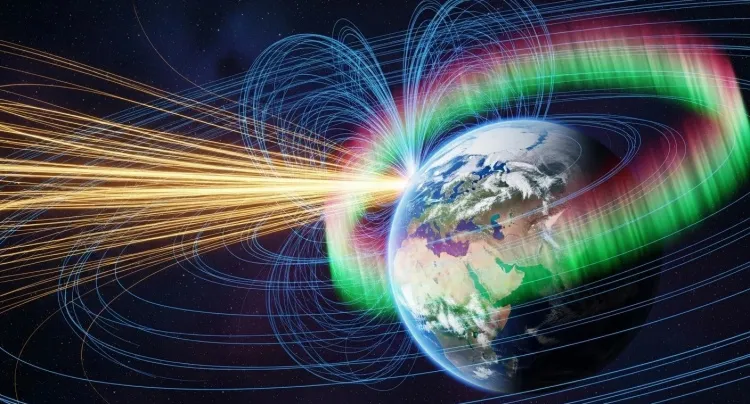
The forecast is based on geomagnetic activity data from the NOAA SWPC.
When will there be magnetic storms in July 2026?
July 2026 will be calmer than June, but complete geomagnetic calm is not expected. Active days will fall on 8–9 July, with the main peak of the month forecast for 22 July.
On 1 July, there was already a brief rise to Kp 5. This corresponds to a weak G1-level magnetic storm. For Ukraine, the most noticeable effects were felt during the morning and daytime hours.
On 8 and 9 July, increased geomagnetic activity up to Kp 4 is expected. This is not yet a full-blown magnetic storm, but for weather-sensitive people, such days may be noticeable.
The strongest geomagnetic peak of the month is forecast for 22 July. The Kp index could reach 5 points, i.e. the level of a weak G1-class magnetic storm.
Magnetic storms in July 2026: daily forecast
1 July — up to Kp 5. A weak G1-level magnetic storm.
2 July — up to Kp 4. Active background activity, but no full-blown storm.
3–7 July — Kp 2. Predominantly calm days.
8 July — up to Kp 4. Active geomagnetic background.
9 July — up to Kp 4. Moderate disturbance; possible discomfort for weather-sensitive individuals.
10 July — Kp 3. Mild disturbance.
11–15 July — Kp 2. A calm period.
16–17 July — Kp 3. Slight increase in activity.
18–21 July — Kp 2. Low geomagnetic activity.
22 July — up to Kp 5. Main peak of the month, a weak G1-class magnetic storm.
23 July — up to Kp 4. Active background following the peak.
24–25 July — Kp 3. Slight disturbance.
26–31 July — the forecast will need updating closer to the dates, as long-term data may change.
Which days in July will be the most challenging
The most important date for those sensitive to weather changes is 22 July. It is on this day that the month’s highest reading — Kp 5 — is expected.
It is also worth keeping a closer eye on how you feel on 8–9 July, when the geomagnetic background will be elevated, although below the level of a magnetic storm.
Activity will not subside immediately after 22 July. A Kp of 4 is forecast for 23 July, and mild disturbances up to a Kp of 3 are expected on 24–25 July.
What does the Kp index mean?
The Kp index indicates the level of disturbance in the Earth’s magnetic field. The higher the reading, the stronger the geomagnetic activity.
Kp 1–2 — calm background.
Kp 3 — mild disturbance.
Kp 4 — active background, but no magnetic storm yet.
Kp 5 — a weak G1-level magnetic storm.
In July 2026, the forecast does not indicate any strong G2 or G3-level storms. The highest expected level is G1.
How magnetic storms can affect your well-being
The direct impact of magnetic storms on health is still being studied, but many people who are sensitive to weather changes complain of similar symptoms on days when the Kp index is elevated.
The most common symptoms include headaches, fatigue, drowsiness, irritability, poor sleep, reduced concentration and fluctuations in blood pressure.
People with cardiovascular disease, high blood pressure, sleep disorders and chronic fatigue should be particularly vigilant.
What to do during a magnetic storm
On days of heightened geomagnetic activity, it is advisable to reduce the strain on your body. The simplest things to do are to get enough sleep, drink plenty of water, avoid overexerting yourself physically and steer clear of unnecessary stress.
It is best to limit alcohol, excessive coffee, heavy meals and intense exercise. If you have blood pressure issues, on such days you should monitor your readings more frequently and not change your prescribed treatment without consulting a doctor.
Will there be the Northern Lights in July 2026?
For Ukraine, the chances of seeing the Northern Lights in July remain low. The forecast does not indicate any strong magnetic storms, which are usually required for the aurora to appear at lower latitudes.
There is a theoretical chance only in the north of the country, provided the storm on 22 July turns out to be stronger than forecast and coincides with clear skies and favourable solar wind conditions.
Magnetic storms in July 2026 will be moderate. The most active days will be 8–9 July and 22 July.
The main peak is expected on 22 July, when the Kp index could rise to 5. This is a weak magnetic storm, which does not appear to be dangerous for most people, but may affect the well-being of those sensitive to weather changes.
Follow us on Telegram.