Russians are flocking to buy petrol: Kazakhstan has restricted cross-border traffic for cars

This was announced by Kazakhstan’s Deputy Minister of Energy, Kayirhan Tutkishbaev, at a government briefing, according to Azattyq Asia.
Under the new rules, passenger cars and lorries from neighbouring countries will not be allowed to enter or leave Kazakhstan more than once a day. According to Tutkishbaev, this should help maintain a balance in fuel consumption on the domestic market.
The restriction applies not only to the border with Russia, but to all of Kazakhstan’s border areas — in the north, east and south of the country. At the same time, officials have singled out the regions bordering the Russian Federation as those where fuel consumption has risen sharply in recent times.
Why is this being linked to Russia?
According to the deputy minister, a noticeable increase in the consumption of fuel and lubricants has been recorded in the West Kazakhstan, Aktobe and Pavlodar regions. All these regions border Russia.
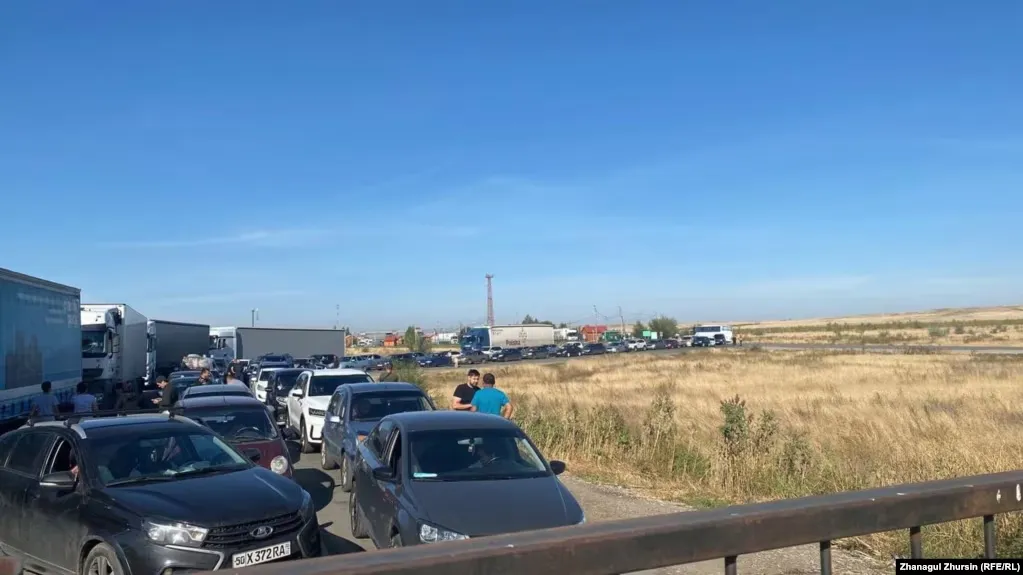
Against this backdrop, queues have begun to form at border petrol stations. Russian drivers have previously reported that they are travelling to Kazakhstan to refuel their vehicles due to a petrol shortage in Russia.
How the ‘grey’ export of petrol is being tackled
Kazakhstani authorities are carrying out separate checks on vehicles fitted with additional fuel tanks. According to Tutkishbaev, it is precisely these tanks that are used to illegally export fuel from the country.
The Ministry of Internal Affairs, the Financial Monitoring Agency, the Border Guard Service and the customs authorities are all involved in the checks. The Kazakhstani authorities state that monitoring is ongoing, and offenders are regularly detected in border regions.
According to the Kazakh government, in just two days, 61 attempts to smuggle out over 3 tonnes of fuel in additional tanks and jerrycans were thwarted at border crossing points. Since the start of the year, there have been 593 such attempts.
Is Kazakhstan facing a fuel shortage?
Kazakhstan’s Ministry of Energy states that the country has built up a fuel reserve and is monitoring the balance of consumption in the domestic market. The ministry assures that Kazakhstan’s oil refineries are operating as normal, and no fuel shortage is expected in the country.
At the same time, the authorities are trying to prevent a situation where cheaper Kazakhstani fuel is exported abroad on a massive scale due to price differences and petrol shortages in neighbouring countries.
What is happening with fuel in Russia
In Russia, the fuel shortage has worsened since late spring. Reuters reported that Ukrainian attacks on Russian refineries had caused production disruptions, queues at petrol stations and restrictions on petrol sales in a number of regions.
According to Reuters, Russia was also considering importing petrol from Kazakhstan against the backdrop of a decline in its own production. Petrol production at some Russian refineries had fallen by around 25 per cent year-on-year following attacks on oil refining infrastructure.
Separately, Reuters reported that Russia had begun importing fuel by sea, although it is usually one of the major exporters of oil and petroleum products itself.
Kazakhstan’s decision shows that the fuel crisis in Russia is already putting pressure on neighbouring countries. If Russian drivers or hauliers flock across the border in search of cheaper petrol, this could lead to shortages and queues at Kazakh petrol stations.
Astana is therefore effectively trying to protect its domestic market: it is restricting the frequency of border crossings, inspecting auxiliary fuel tanks and monitoring abnormal increases in sales in border regions.
Follow us on Telegram.