Nine European countries are calling for biometric checks on tourists to be relaxed

Politico reports this, citing a joint letter from the countries to the European Commission.
According to the publication, the letter to Magnus Brunner, the European Commissioner for Home Affairs, was sent by Belgium, France, Germany, Greece, Italy, Malta, the Netherlands, Portugal and Switzerland.
In the document, the countries stated that ‘significant difficulties’ had arisen at the borders during the first few months of the EES system’s operation. They are not asking for the new system to be scrapped entirely, but wish to retain the option of temporarily suspending the collection of biometric data at peak times.
What exactly are the countries calling for?
The countries are asking the European Commission to extend the emergency mechanism beyond 6 September 2026. This mechanism allows border guards, in exceptional cases, to temporarily suspend the collection of travellers’ fingerprints and facial photographs.
The aim is to avoid long queues, flight delays and overcrowding at border crossings during the tourist season.
What is the EES?
The Entry/Exit System is a new digital system for entry into and exit from Schengen Area countries. It replaces passport stamps with digital registration of border crossings.
According to the European Commission, the system records the traveller’s name, travel document details, the date and place of entry or exit, as well as biometric data — a facial photograph and fingerprints. It applies to nationals of non-EU countries on short-term visits.
The EES came into operation on 12 October 2025 and was fully rolled out at the external borders of the Schengen area from 10 April 2026. The European Commission explained that the system is designed to help detect breaches of stay limits, forged documents and attempts to enter under a false identity.
Why problems have arisen
The main problem is the time taken to clear the border. Whereas previously a border guard would stamp a passport, travellers must now complete digital registration. On their first entry after the system’s launch, border guards take a photograph of the person’s face and may scan their fingerprints.
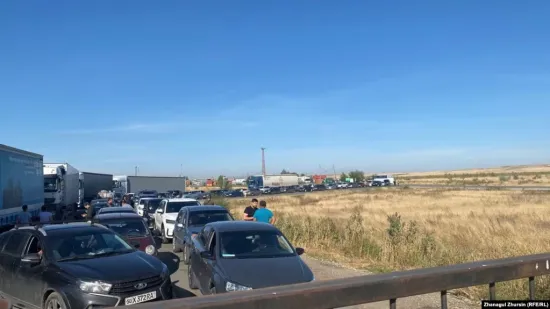
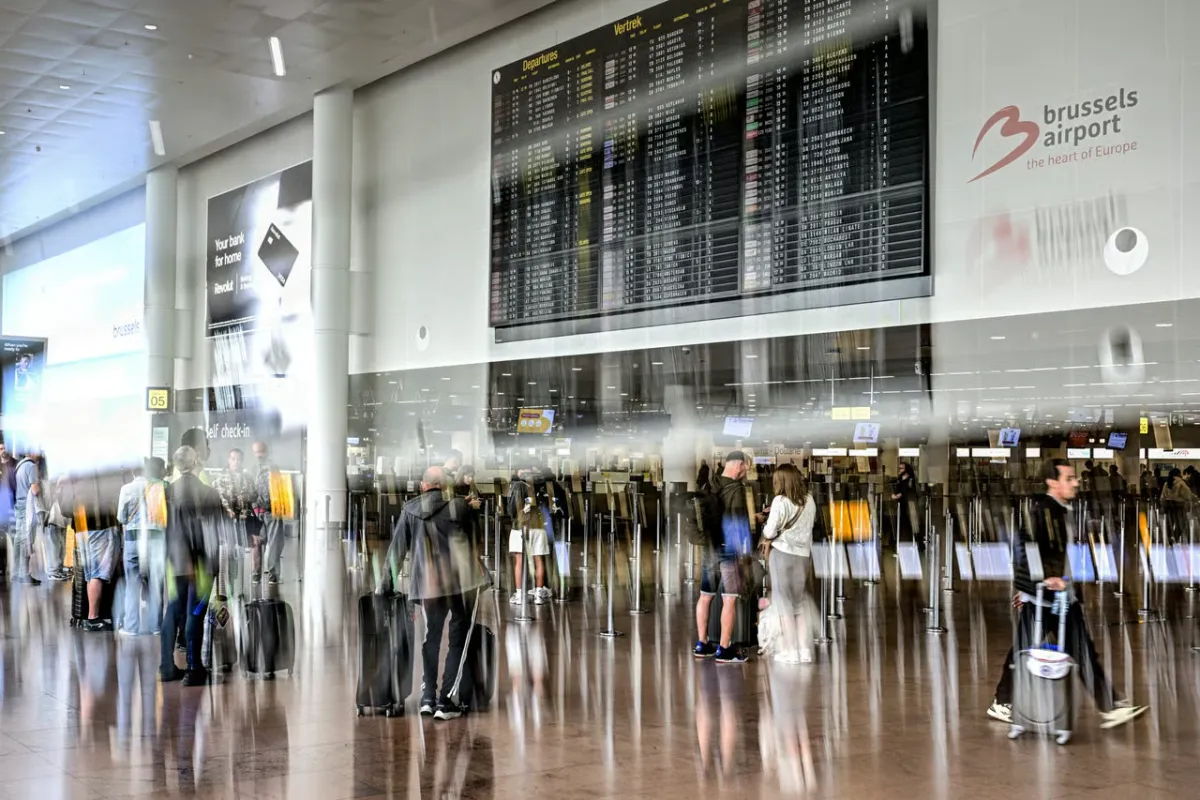
As a result, queues have started to form at certain border crossing points. The system has proved particularly challenging for airports and ports, which see a large influx of tourists during the summer.
The Guardian reported that the EU has identified around 20 problem points where the new checks have caused significant delays. At the same time, Brussels has not yet agreed to suspend the system entirely.
What the European Commission is saying
The European Commission states that it supports the full implementation of the EES and the registration of all travellers from non-EU countries. At the same time, they emphasise that the legislation already provides for flexibility, in particular the possibility of temporarily suspending the collection of biometric data during peak periods.
EU representatives also explain that Frontex can assist the busiest border crossing points with staff, but the system itself must remain part of the new external border control regime.
According to Politico, Greece has already suspended biometric checks for British tourists until September to avoid disruption during the summer season. In France, the police temporarily halted additional checks at the port of Dover, whilst in Italy, the management of Rome’s airports warned of the risk of a ‘catastrophe’ this summer due to the system being overloaded.
Separately, the head of Fraport Greece, which manages 14 Greek airports, stated that the system needs to be reviewed. According to him, seasonal airports are not designed for such lengthy procedures, and the flexibility of temporarily suspending checks effectively saves them from collapse on peak days.
What this means for Ukrainians
Ukrainians are not EU citizens, so they are also subject to the EES rules during short trips to the Schengen Area. This applies to tourist, private and business trips under the visa-free regime — up to 90 days within a 180-day period.
In practice, this means that on their first entry after the system is launched, Ukrainian travellers may be asked to provide their fingerprints and have their photograph taken. On subsequent trips, the procedure should be quicker, as the data will already be in the system.
However, during periods of high passenger traffic, longer queues are possible at airports, seaports and road border crossings. This is precisely why countries that receive large numbers of tourists are asking the European Commission not to remove the mechanism for temporarily easing checks.
The EES is intended to strengthen controls on entry to the Schengen Area, but its launch has created a practical problem: border crossings have become slower. For tourists, this could mean allowing more time before a flight, longer queues at passport control and the risk of delays on peak days.
For the EU, this represents a conflict between security and border capacity. The countries do not object to the system itself, but want border guards to have the right to swiftly simplify procedures if biometric checks bring border crossings to a standstill.
The final decision is to be made by the European Commission. If the countries’ request is supported, border authorities will be able to temporarily suspend the full collection of biometric data in exceptional circumstances even after 6 September 2026.
If not, countries will have to apply the EES in full, even during periods of peak tourist traffic.
Follow us on Telegram.