Mass protests against Vučić have broken out in Belgrade, with clashes occurring with the police

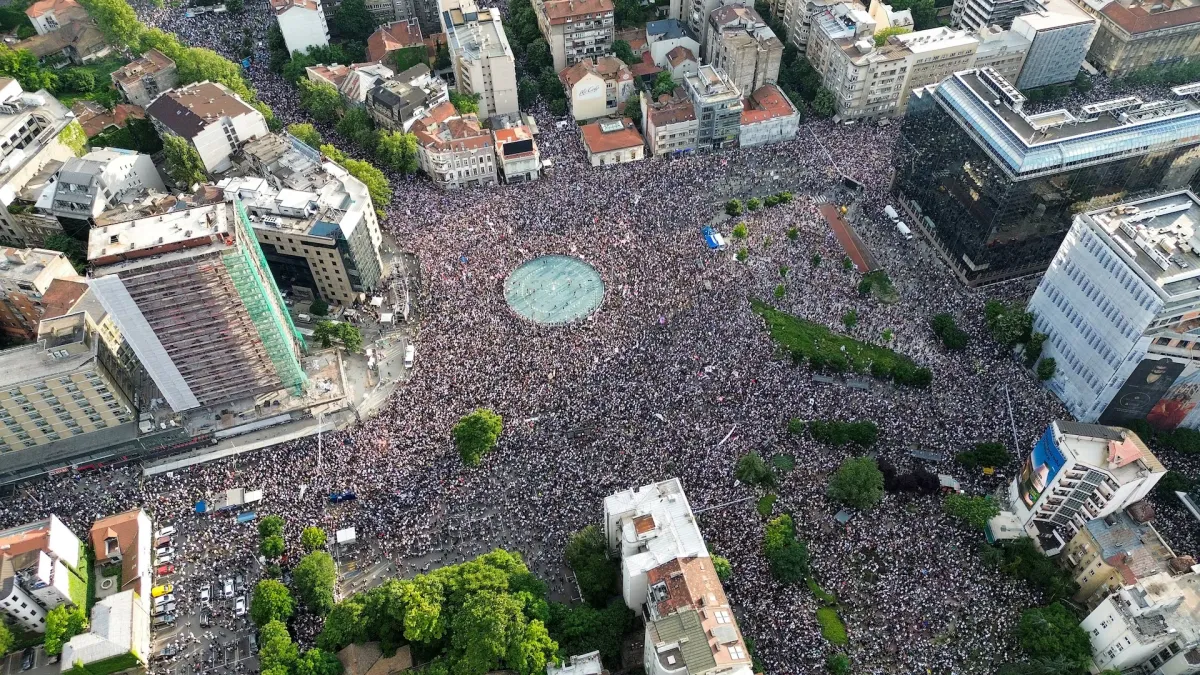
Large-scale protests against Serbian President Aleksandar Vučić took place in Belgrade on Saturday. Protesters demanded early elections and an end to the current head of state’s long-standing rule, according to Reuters.
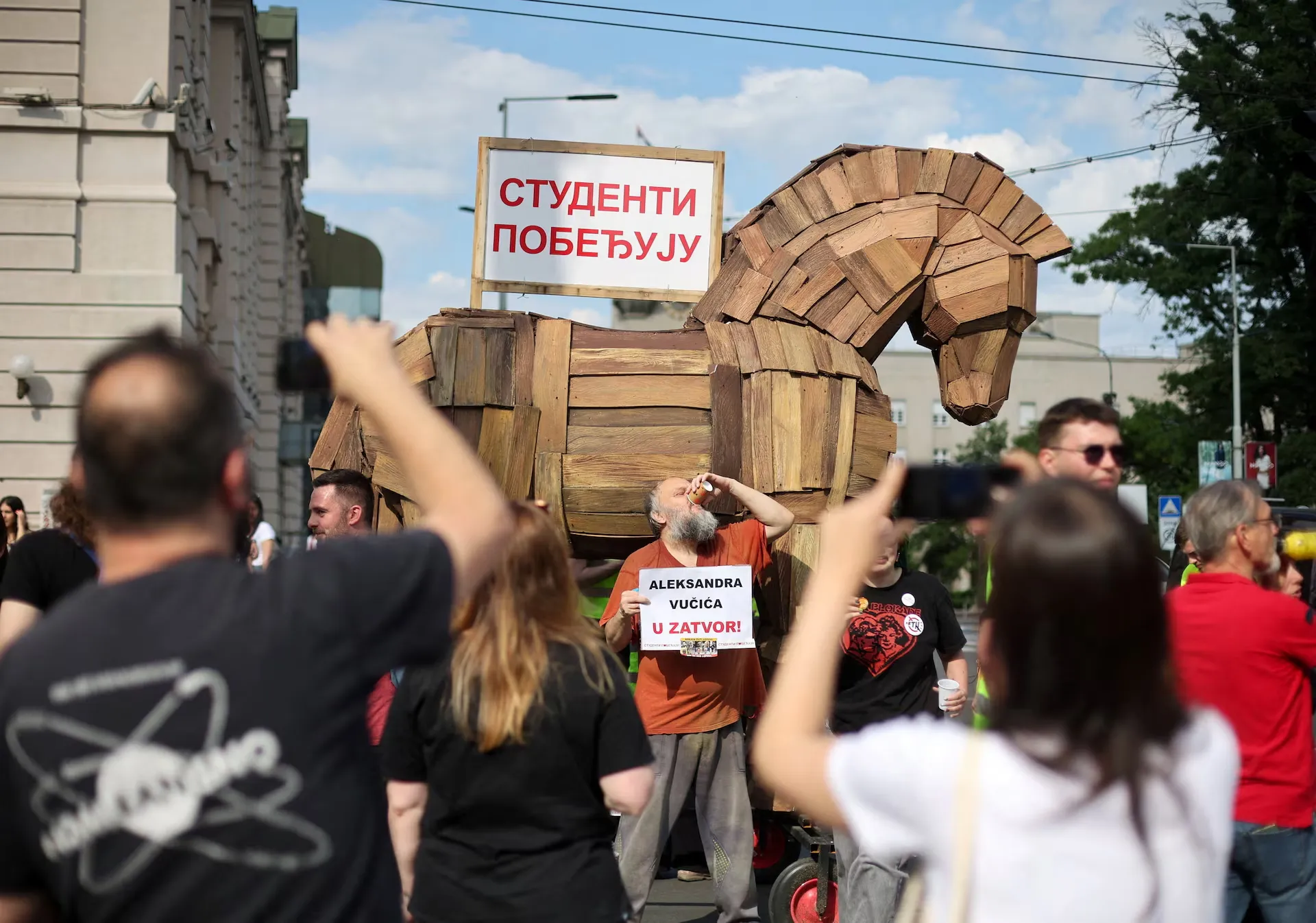
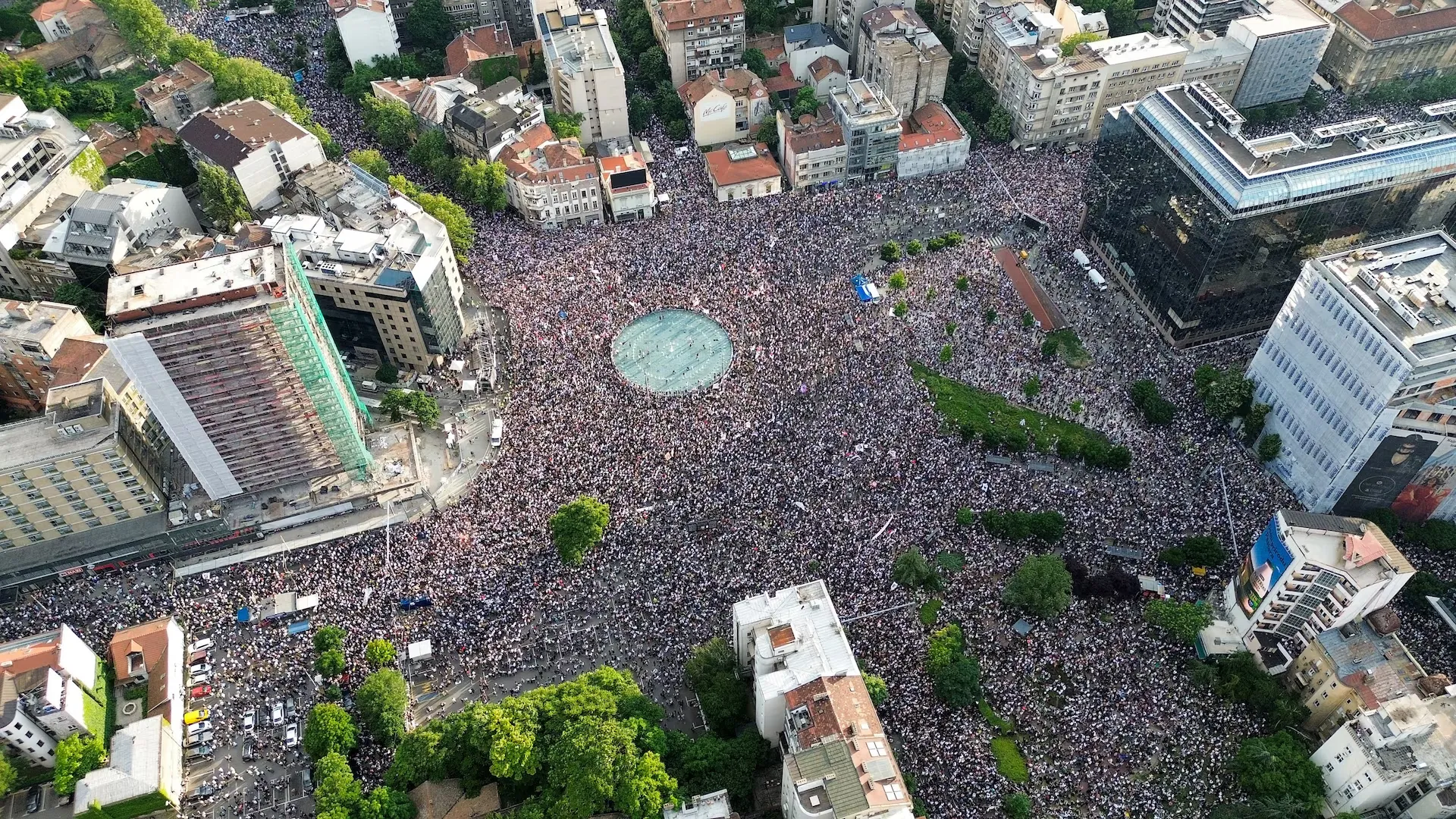
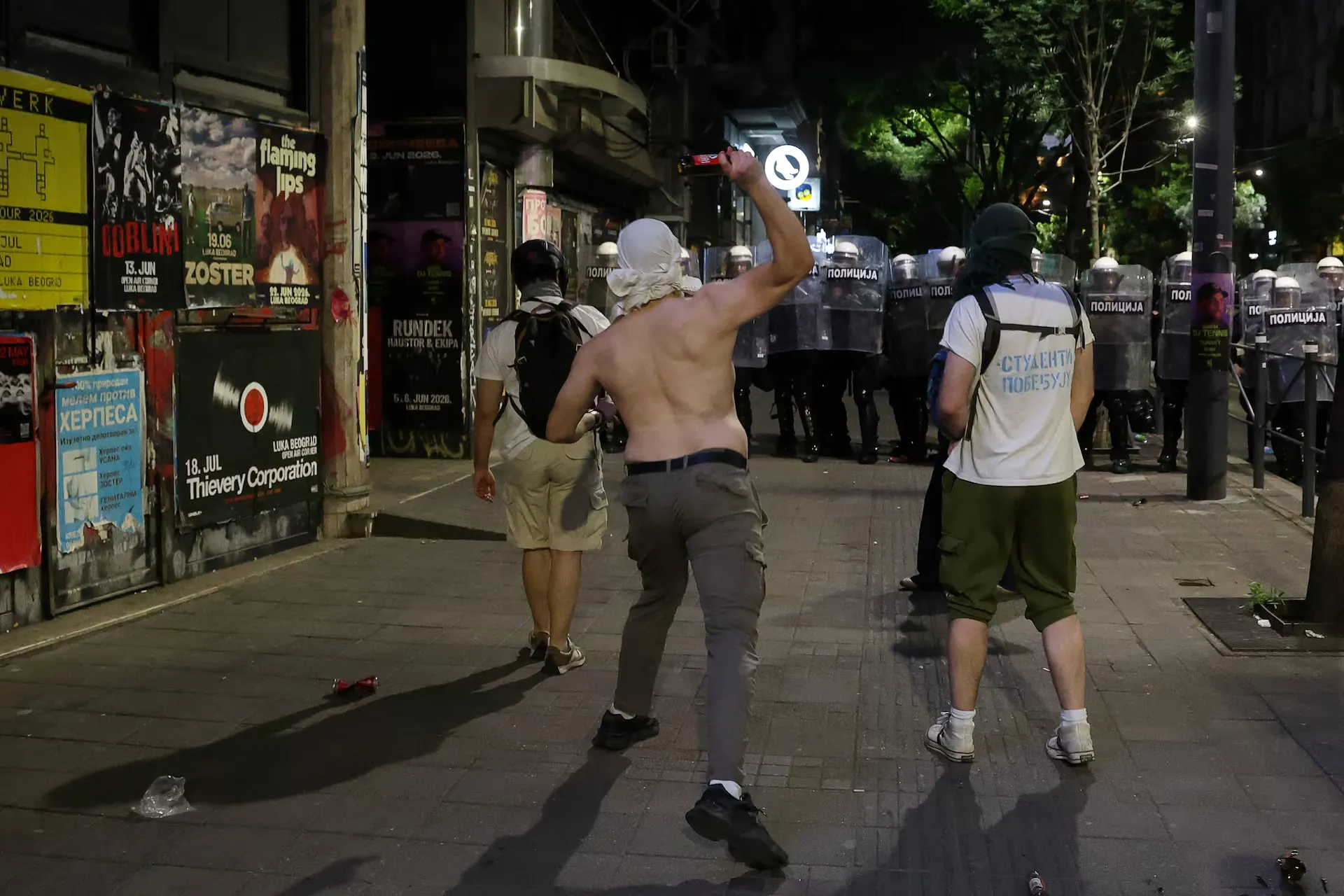
Protesters filled Slavia Square and the surrounding streets in the centre of the Serbian capital. Many held placards reading ‘Your hands are covered in blood’ and ‘Students will prevail’.
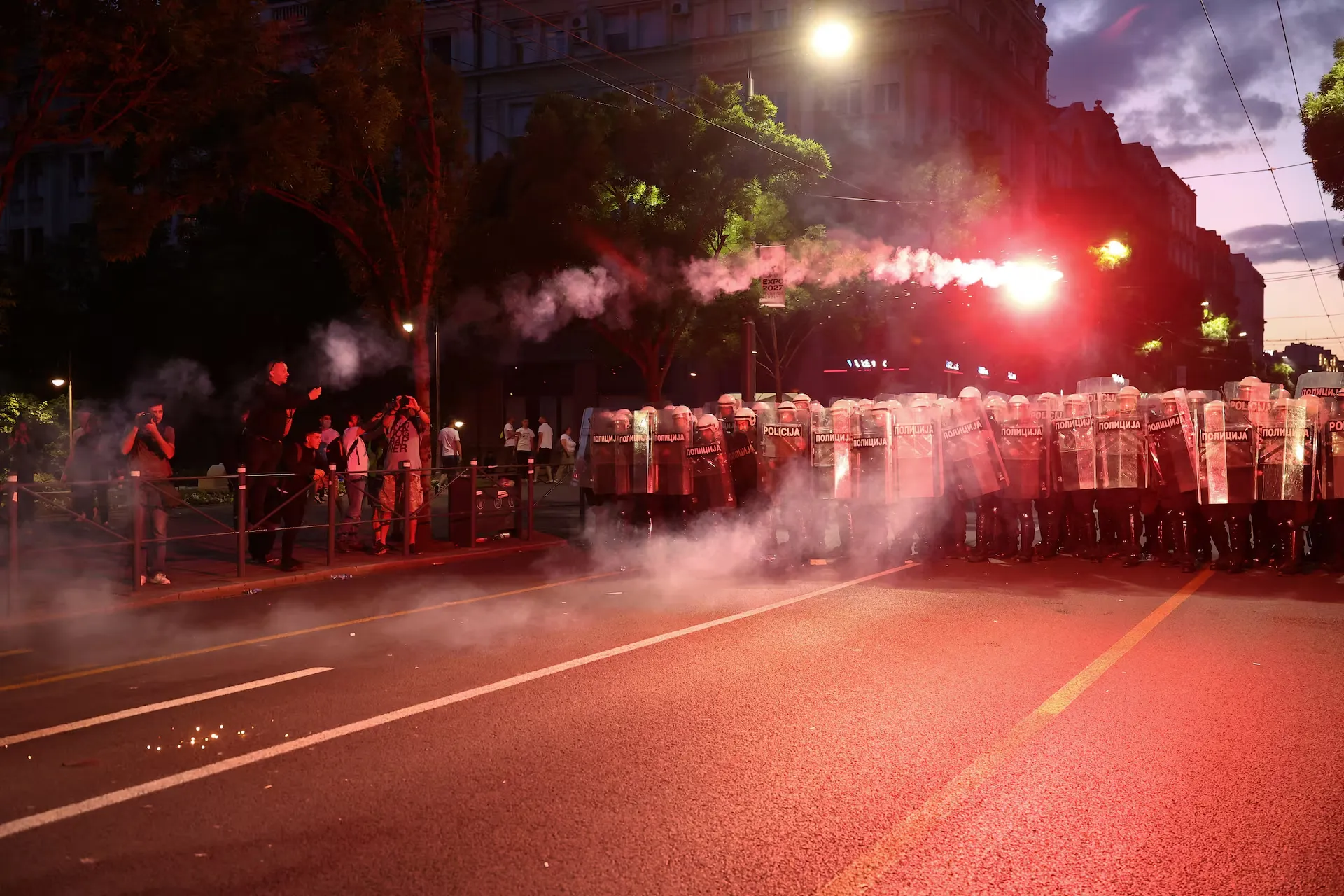
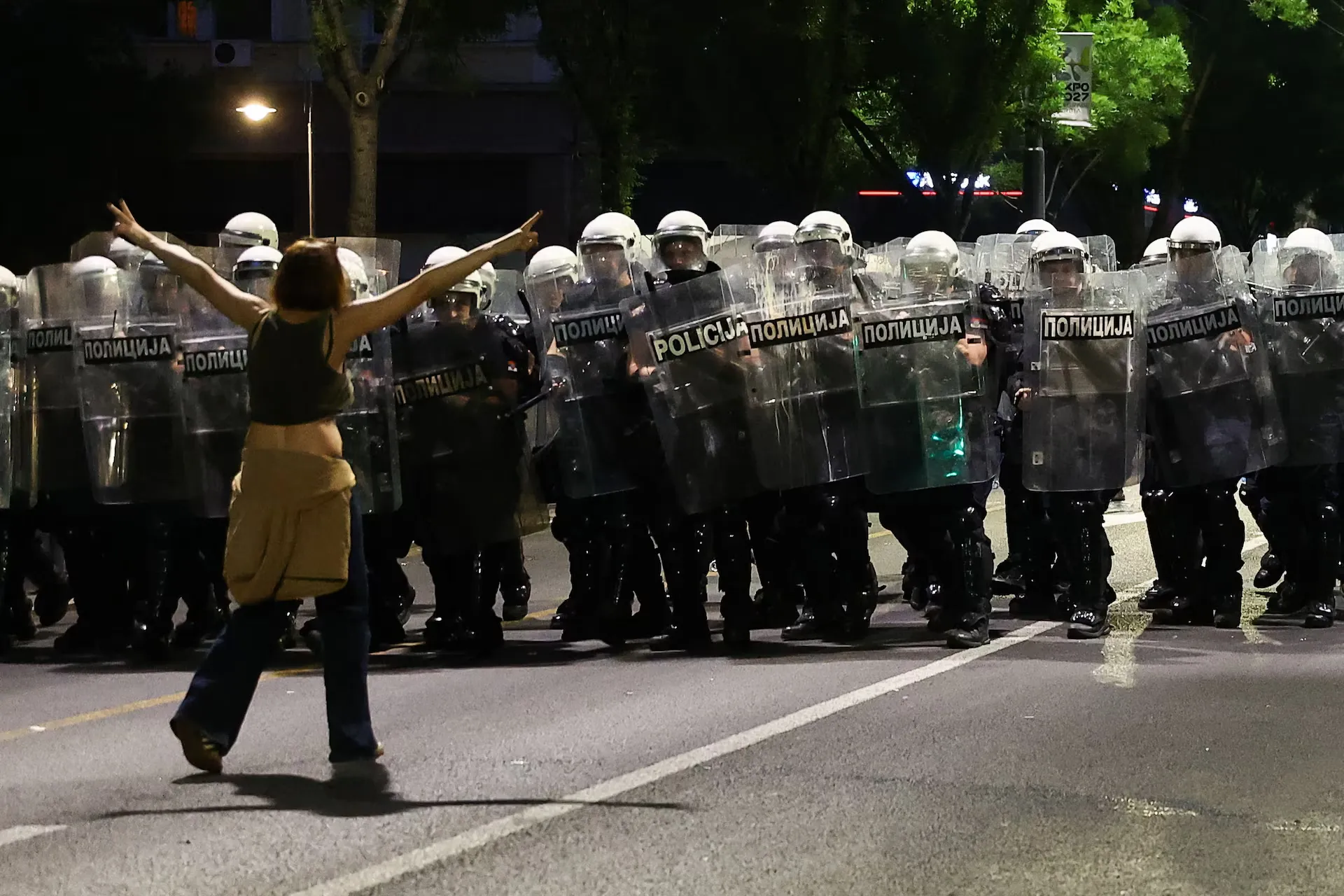
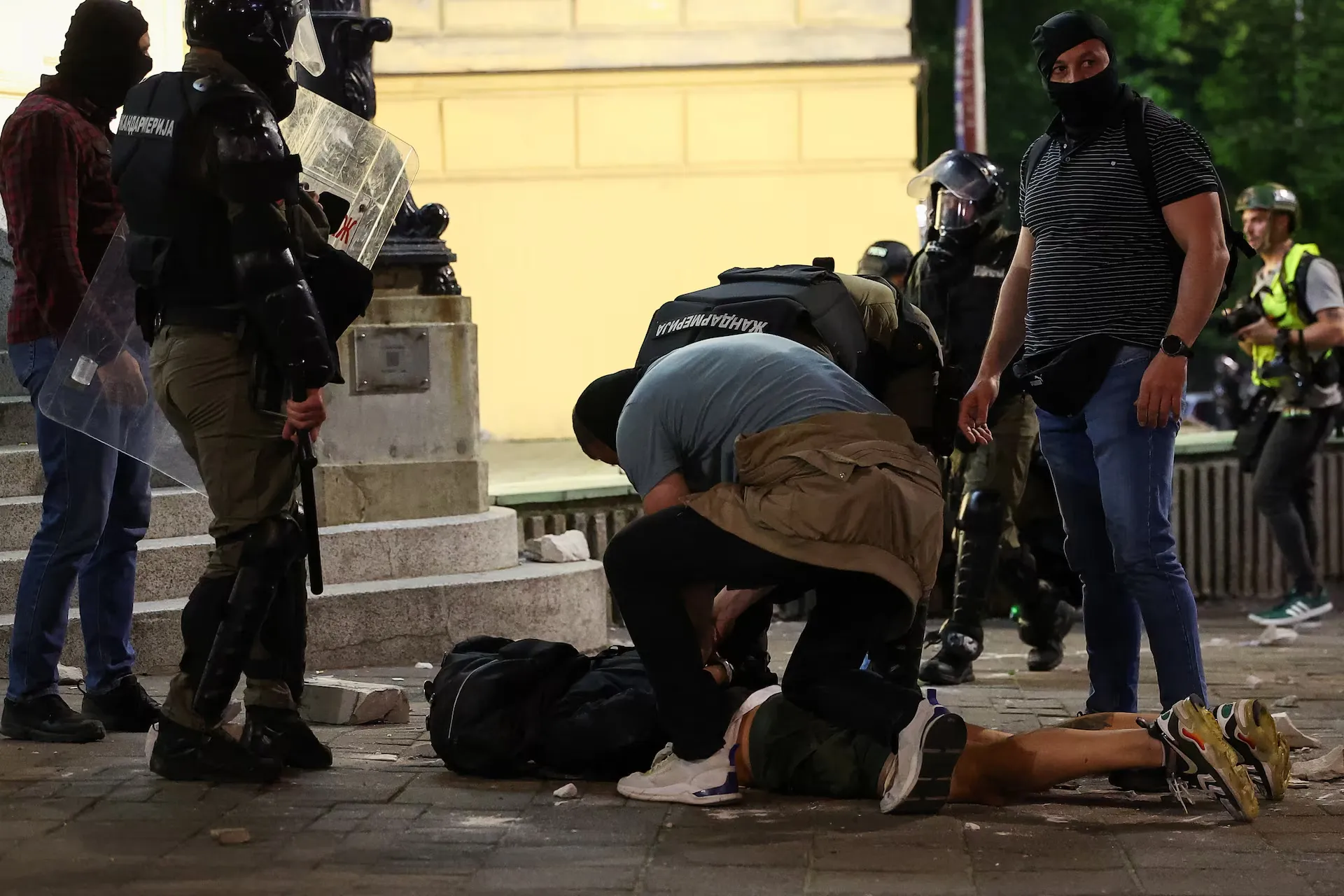
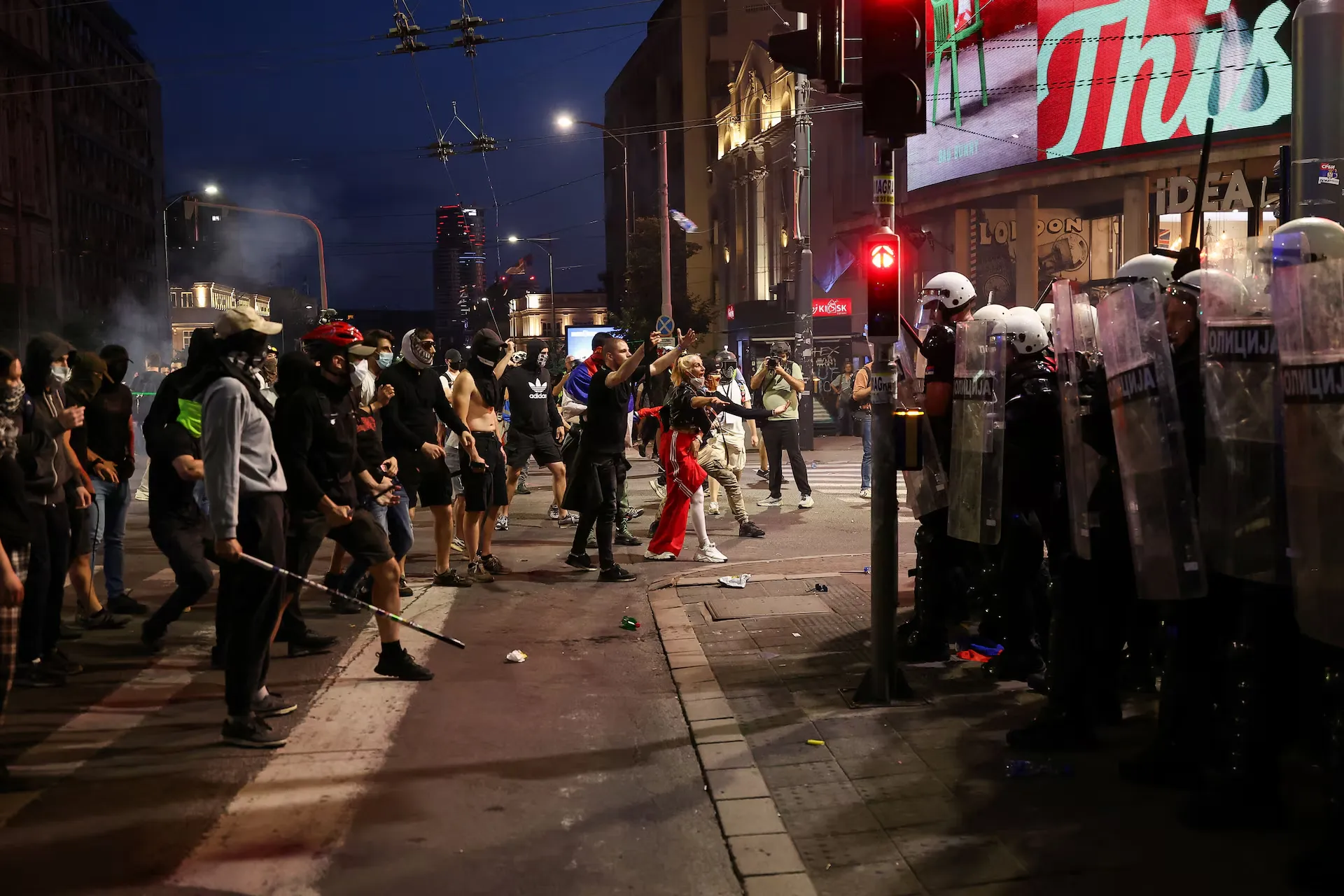
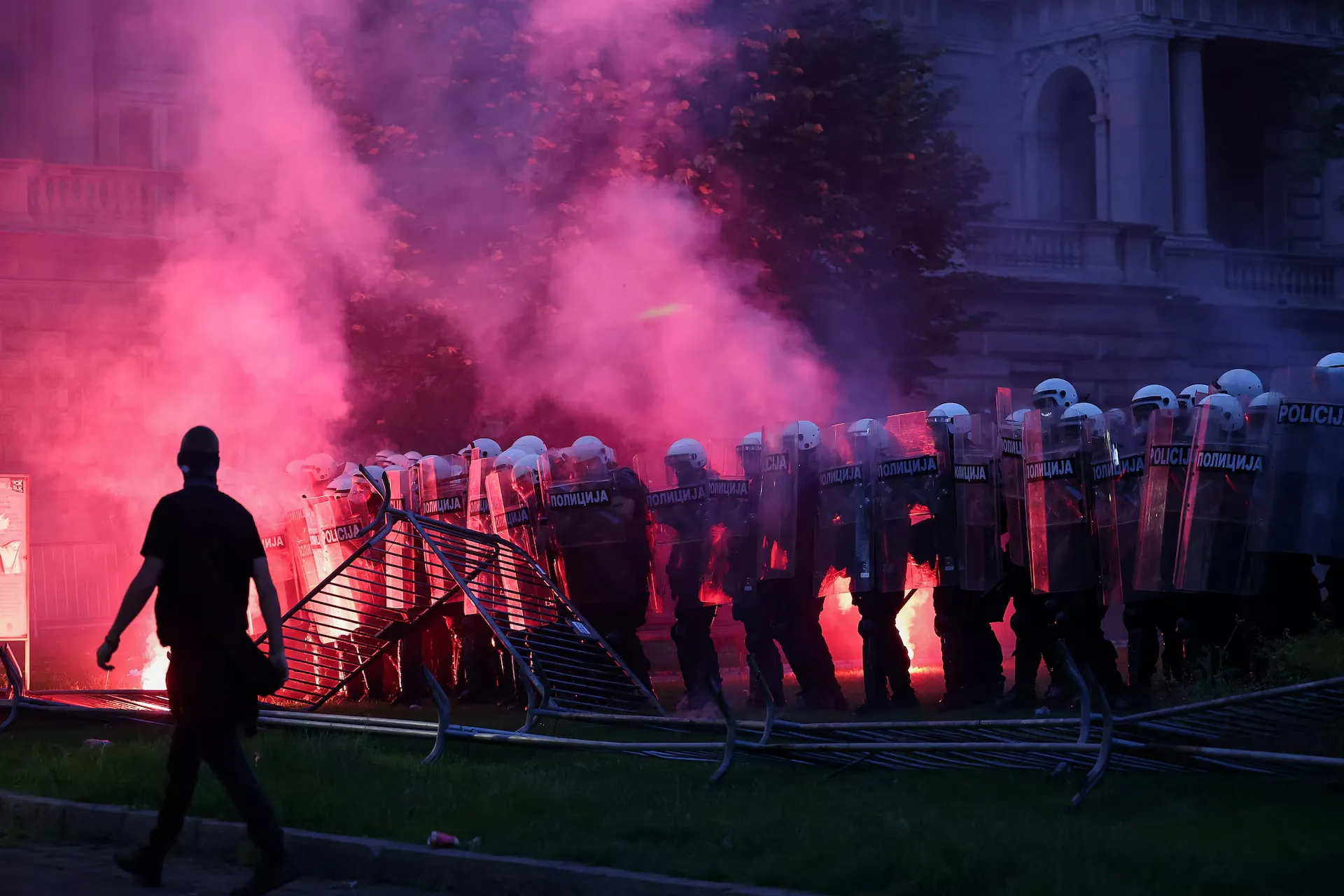
Riot police blocked access to Belgrade City Hall. Clashes between security forces and demonstrators broke out near the presidential administration building and by the park where Vucic’s supporters have been camped since March last year.
Law enforcement officers used tear gas and flashbang grenades to disperse the protesters. Protesters set fire to rubbish bins and put up resistance in the surrounding streets.
Serbian Interior Minister Ivica Dačić reported that 23 people had been arrested. According to him, several police officers were injured during the clashes.
Estimates of the number of protesters vary. According to police, around 34,000 people took part in the protests. The monitoring group ‘Archive of Public Gatherings’ estimated the number of participants at approximately 100,000.
Anti-government protests in Serbia have been ongoing for a year and a half. They began following the collapse of a canopy at the railway station in Novi Sad on 1 November 2024, which resulted in fatalities.
Protesters, opposition politicians and human rights activists blame the tragedy on corruption and mismanagement. Vučić and his allies reject the allegations of corruption and claim that those responsible for the tragedy have been punished.
Before the clashes began, Mirjana Nikolić, rector of the Belgrade Academy of Arts, addressed the protesters.
“This government is afraid of those who defend their dignity and their rights,” she said.
One of the protesters, 55-year-old farmer Dragan Đurić from Šabac, said he had come out to demonstrate to show the number of dissatisfied citizens and the need for elections.
Amid the protests, reports also emerged of cooperation between Serbian security services and Russia’s FSB. It was previously reported that Serbian intelligence, in collaboration with the Russian security service, had conducted tests of sound cannons.