Mykhailo Fedorov has confirmed that he is stepping down as Defence Minister

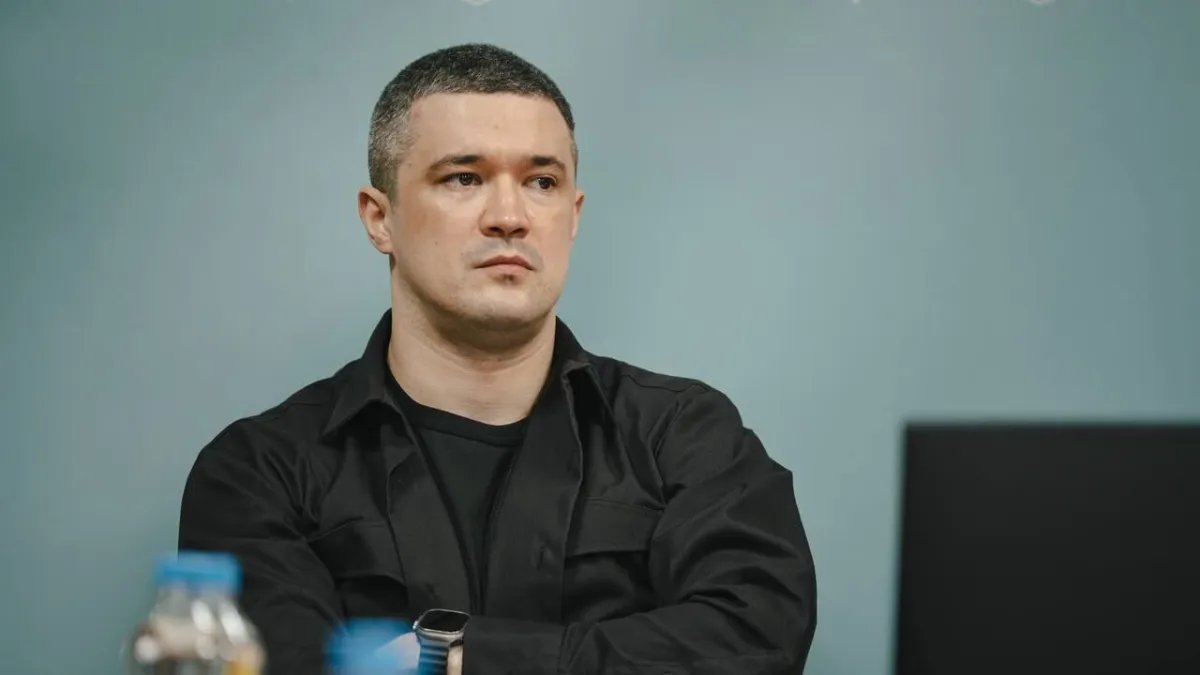
Defence Minister Mykhailo Fedorov has confirmed that he is stepping down from his post. He has published a summary of his team’s work – what they have and have not managed to achieve.
He wrote about this on Telegram.
According to him, the Ministry of Defence team managed to:
- disable the Russians’ Starlink, which drastically reduced their ability to wage an effective drone war;
- despite the Ministry of Defence having no budget, take a risk, draw funds from the year-end cash reserve and effectively invest them in mid-strike drones, fibre-optic FPV drones, low-cost reconnaissance, UAVs, interceptor drones and deep-strike drones; Procure more drones in four months than in the whole of the previous year;
- launch the ‘Logistical Lockdown’ as a separate programme with dedicated funding, which, together with the right procurements and support for elite units, made it possible to cut off the enemy’s logistics and begin the isolation of Crimea;
- continue the ‘Drone Line’ funding programme, which forms the foundation for procuring drones for the Unmanned Systems Forces;
- launch a programme to support modern drone-based assault units, which primarily fight using technology;
- introduce a 70 per cent prepayment scheme for purchases using e-points on the Brave1 Market portal;
- radically overhaul the procurement system. Launch the first tenders for long-range artillery and hundreds of thousands of drones, saving the state budget billions of dollars;
- to procure, for the first time, thousands of pick-up trucks, buggies and quad bikes for the armed forces – and to do so via a tender process;
- integrate Pavlo Lazar into the Air Force and introduce an After Action Review procedure for every large-scale attack. During this time, the interception rate for drones rose from 83 per cent to 91 per cent, and for cruise missiles from 47 per cent to 87 per cent;
- to procure missiles for the Patriot PAC-2 GEM-T for the first time, and to submit an application via a European loan for the purchase of PAC-3 missiles;
- launch a baseline level of drone provision for brigades and corps. From July onwards, all combat brigades and corps will begin to receive scheduled drone deliveries without manual intervention. This enables them to plan their next steps;
- launch a large-scale grant programme for manufacturers of explosives and missiles;
- commence an unpopular but extremely important transformation of the armed forces: contracts for all personnel with fixed terms of service and deferrals; the introduction of some of the world’s highest salaries for infantry and assault troops; and the opening of the foreign recruitment market under transparent and attractive market conditions; new incentives to encourage the return of service personnel who had left their units without authorisation;
- holding three ‘Ramstein’ meetings, where we managed to break free from the Russians’ information trap regarding our alleged defeat and restore our partners’ faith in Ukraine. $40 billion in support was announced for this year (not including the European loan);
- to launch the mechanism for channelling the European loan towards our military priorities. This was a separate and complex bureaucratic challenge, which we managed to overcome;
- to find a way to scale up the production of low-cost missiles to counter jet-powered suicide drones. To sign a record-breaking contract;
- to successfully test the ballistic missiles developed within the Ministry of Defence’s remit. To radically revise the technical specifications and demonstrate maximum accuracy, whilst reducing the price by 30 per cent;
- sign a contract to purchase Gripen aircraft, which will enable us to shoot down SU aircraft carrying guided bombs;
- together with the military, plan and carry out Operation ‘Ashan’, which halted the enemy’s mechanised offensive for half a year;
- launch exports under the Drone Deal programme to attract investment and boost production within the defence industry;
- launch Trophy Lab – to provide partners with the opportunity to study Russian military developments;
- launch the Defense AI Centre A1 to accelerate the deployment of artificial intelligence in warfare.
However, according to Fedorov, his team failed to:
- complete the organisational transformation of the Ministry of Defence in line with NATO standards and common sense. “We needed to be even more decisive in dismissing those who were holding back change,” says Fedorov;
- to switch absolutely all procurement to competitive tendering;
- to foster a culture of accountability for decisions taken.
“I will continue to work towards the mission I came to the Ministry of Defence with – to defeat the enemy through asymmetry, the speed of innovation and the strength of the organisation. There is more to come,” wrote Fedorov.
As a reminder, Ukrainian President Volodymyr Zelenskyy had previously submitted Serhiy Koretskyi’s candidacy to the Verkhovna Rada for the post of Prime Minister.
Follow us on Telegram.