At a session of the UN Security Council, calls were made to step up pressure on Russia

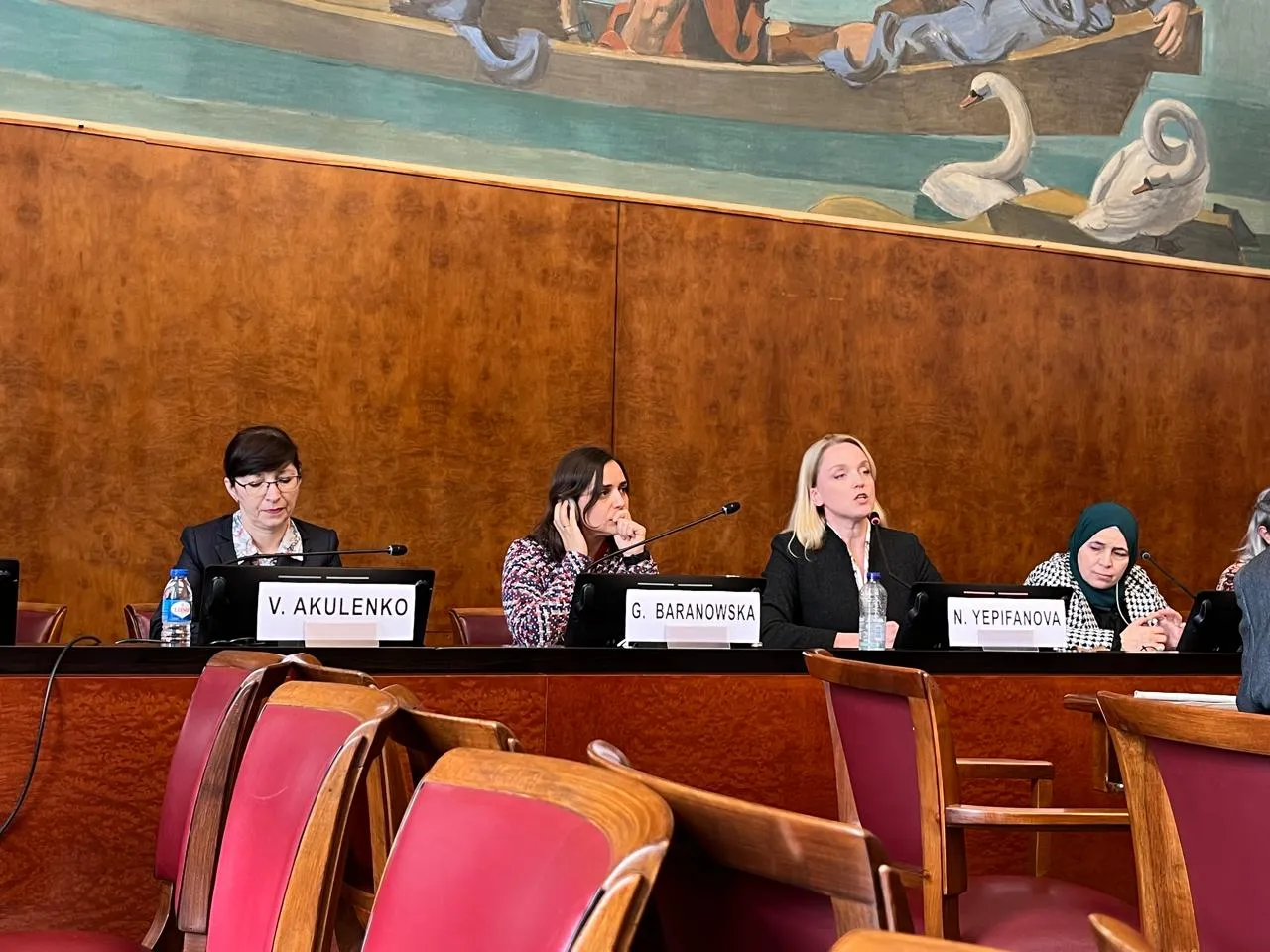
During the 61st session of the UN Human Rights Council in Geneva, calls were made to step up pressure on Russia and to establish an international system for prosecuting war criminals. Natalia Yepifanova, chair of the NGO “Voyatsky Vyzvil”, took part in the panel discussion.
This was reported by the Coordination Headquarters for the Treatment of Prisoners of War.
Natalia Yepifanova, head of the NGO “Voyatsky Vyzvil”, spoke during a panel discussion at the 61st session of the UN Human Rights Council and called on the international community to increase pressure on the aggressor state.
During her speech, she highlighted the systematic and gross violations of international humanitarian law by the Russian Federation.
“Russia’s culture has zero respect for human rights and zero regard for the value of human life. It is precisely for this reason that we have a situation where Russia is holding Ukrainian prisoners in inhumane conditions, torturing them in captivity, starving them, forbidding contact with their families, concealing the Ukrainians it holds captive, unlawfully sentencing them and beating prisoners to death,” emphasised Natalia Yepifanova.
What the international community was called upon to do
Yepifanova called on all states to utilise the existing instruments of international law. In particular, in the context of Russia’s forthcoming report to the UN Committee Against Torture, she called for Moscow to be required to provide full and honest information about what is actually happening to Ukrainian prisoners in Russian detention facilities.
The human rights activist also stressed the need for deeper implementation of the principles of universal jurisdiction into the national legislation of various countries.
“So that every war criminal knows that the time for punishment will come,” concluded the head of the NGO “Voyatsky Vyzvil”.
As noted, the panel discussion was organised by the Permanent Missions of Costa Rica and Sweden in conjunction with the ICJ, with the support of Norway and Finland.
The discussion was attended by politicians, technical experts and representatives of civil society from Europe, the Middle East and Central America.