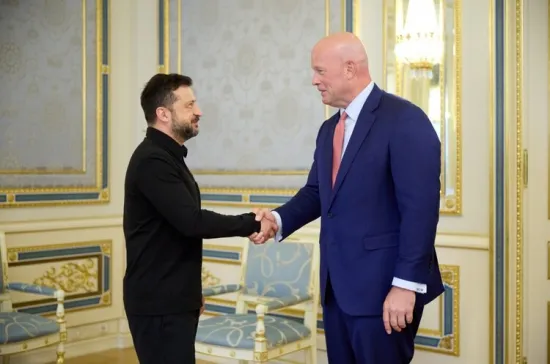
Leaders from the UK, France, Germany and Ukraine discussed the terms of peace and continued support for Kyiv

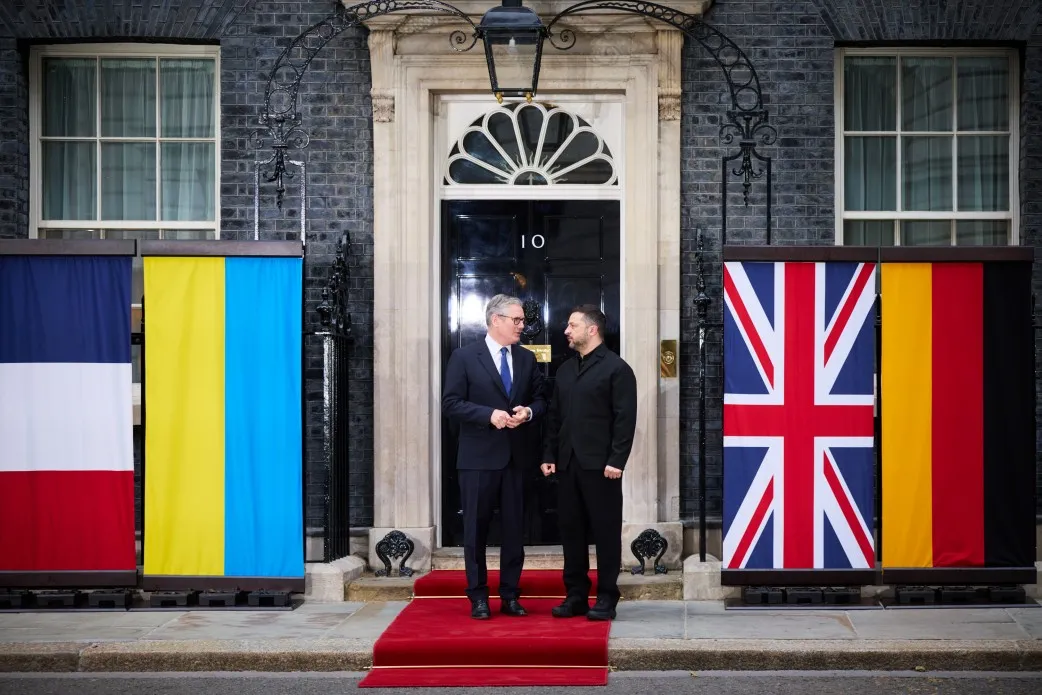
A meeting in London between Ukrainian President Volodymyr Zelenskyy, British Prime Minister Keir Starmer, French President Emmanuel Macron and German Chancellor Friedrich Merz has concluded. The talks focused on support for Ukraine, the situation on the front line and the prospects for a peaceful resolution to the war, Sky News reports.
Following the meeting, the leaders issued a joint statement in which they reaffirmed their unwavering support for Ukraine and emphasised Europe’s important role in any future settlement. They noted that all further efforts must be carried out in close coordination with Ukraine, European partners and the United States.
During the talks, the parties identified a number of principles which, in their view, should form the basis for a just and lasting peace. First and foremost is an immediate and complete ceasefire. The leaders called on Russian President Vladimir Putin to agree to a cessation of hostilities.
The statement also emphasises that the current line of contact should serve as the starting point for negotiations. At the same time, international borders must not be altered by force, and Ukraine’s right to choose its own security arrangements and alliances must be fully respected.
Separately, the parties emphasised the need to provide Ukraine with reliable and legally binding security guarantees once the ceasefire comes into effect. The document states that this includes the deployment of the Multinational Force – Ukraine on the basis of agreements previously reached in Berlin and Paris.
The leaders also stated that Russian assets would remain frozen until Russia ceases its aggressive war and compensates Ukraine for the damage caused. Furthermore, they emphasised that any issues relating to the European Union or NATO must be resolved by agreement between EU Member States and NATO allies.
The meeting participants supported Volodymyr Zelenskyy’s call for a diplomatic end to the war, as set out in his letter to the Russian leadership dated 4 June 2026. They also supported the idea of direct dialogue between Ukraine and Russia, with the active participation of the US and Europe, to achieve a ceasefire and further negotiations.
Particular attention was paid to preparations for the G7 summit in Evian, the next meeting of the Coalition of the Willing, and the NATO summit in Ankara. The parties discussed coordinating further support for Ukraine, increasing pressure on Russia’s war economy, and strengthening defence assistance to Kyiv.
The statement also emphasises the need to increase the production of interceptor missiles, jointly develop missile defence systems and long-range strike capabilities, and support the future sustainability of the Ukrainian Armed Forces.
The leaders welcomed Ukraine’s successes on the battlefield, in particular the recent liberation of territories and the use of unmanned technologies. They also condemned Russia’s large-scale missile and drone attacks on Ukrainian cities, the use of ‘Oreshnik’ missiles, and the incursion of Russian drones into NATO territory.
Following the meeting, Volodymyr Zelenskyy stated that the parties had discussed Ukraine’s defence, the situation on the front line and possible ways to intensify diplomatic efforts.
“We met in the important E3-Ukraine format. We had a substantive discussion about our defence. I briefed them on the situation on the battlefield and Russian losses. For five months running, the aggressor has been losing over 30,000 troops killed and wounded. It is important that our assessments coincide with those of our partners: Russia is not winning on the battlefield, and our precision strikes and diplomatic strikes are significantly limiting its ability to expand its aggression,” the President stated.
According to Zelenskyy, the role of Europe in the negotiation process was discussed separately.
“It has always been a priority for Ukraine that Europe’s position and voice in the negotiations be strong. I thank the UK, France and Germany for their support and willingness to help. We agreed that our teams will work on the next steps,” the head of state noted.
The President also thanked Keir Starmer, Emmanuel Macron and Friedrich Merz for their support of Ukraine.