An ‘unexpected strike’ is imminent: the aircraft carrier USS George H.W. Bush is heading for Iran with additional troops

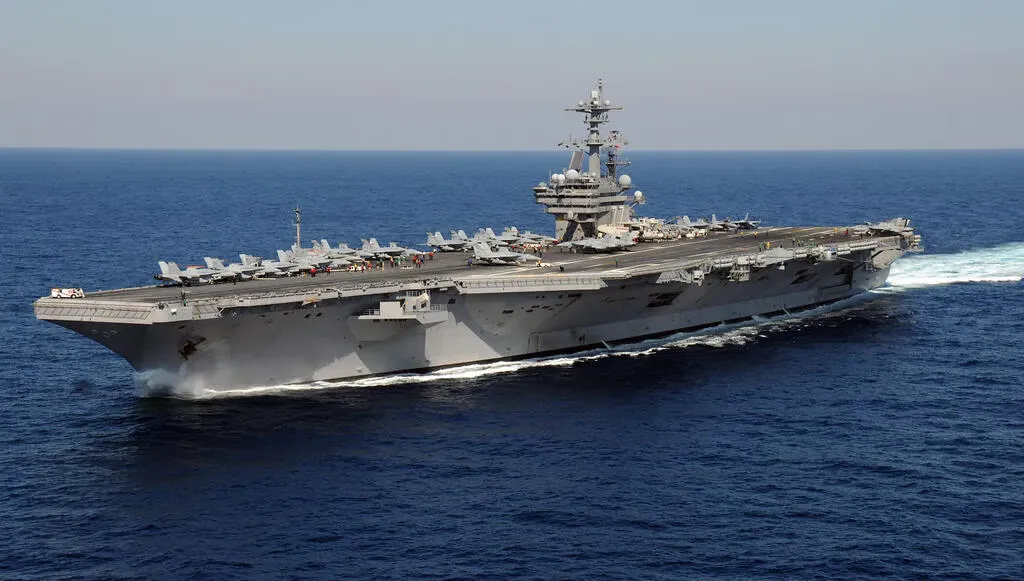
Additional forces to put pressure on Iran
The aircraft carrier USS George H. W. Bush, three missile-equipped destroyers and around 6,000 troops are heading to the Middle East. According to Newsweek, they are set to join at least 24 warships and over 50,000 US troops already in the region.
Some of these troops are specially trained to capture territory in hostile environments. The additional deployment comes after Donald Trump stated that he had agreed to Pakistan’s request to extend the pause in strikes against Iran, to allow time for peace talks or the preparation of a new proposal.
Meanwhile, Iran states that it will not negotiate under American threats. One of the Iranian side’s advisers described the extension of the ceasefire as “a ploy to buy time for a surprise strike”. The report also states that the US is maintaining the blockade of Iranian ports, and that a new use of force remains a possibility.
On Tuesday, Donald Trump stated that the US is “ready” to resume a large-scale bombing campaign and that American forces are “eager to fight”. The arrival of another aircraft carrier gives him greater scope to continue strikes or even to escalate to a ground invasion scenario.
What firepower is being deployed to the region
Each aircraft carrier, including the USS George H. W. Bush, carries thousands of troops, dozens of fighter jets and stocks of precision-guided weapons. The aircraft carrier does not operate alone, but alongside two or three destroyers capable of launching long-range missiles, including Tomahawks, at targets deep within Iranian territory, as well as intercepting enemy weapons.
The three destroyers can collectively launch just under 300 missiles to defend the aircraft carrier and to strike targets such as depots or command centres in Iran. The aircraft carrier itself does not launch missiles, but its deck can carry up to approximately 90 aircraft equipped with precision-guided weapons. Upon the arrival of the USS George H. W. Bush, all of this will constitute a fully-fledged carrier strike group.
Aircraft carrier rotation
The USS Gerald R. Ford, the world’s largest aircraft carrier, has returned to the Red Sea following repairs in Croatia, which were required after a fire on board last month. Last week, the ship set a record for the longest deployment by an aircraft carrier since the end of the Vietnam War in 1975, having spent over 300 days at sea. This, it is noted, reflects the strain following nearly eight weeks of conflict with Iran.
The USS George H. W. Bush is approaching the region after a long route around Africa. It is expected to arrive in the coming days. Upon the ship’s arrival, three of the four US aircraft carriers currently in service will be engaged in the war against Iran.
The USS Abraham Lincoln arrived in the region in January. Elite US Army troops, as well as around 5,000 marines with two Amphibious Ready Groups, were later deployed there. Former US Navy Rear Admiral Joe Sestak told Newsweek that aircraft carriers are typically deployed for six months, sometimes seven or eight, but the USS Gerald R. Ford, he said, had been “very hard on the ship”.
Maximum pressure
The new aircraft carrier strike group will not only partially relieve the burden on the USS Gerald R. Ford, but also reinforce Donald Trump’s toughest statements regarding Iran. He has threatened strikes against Iran’s civilian infrastructure, including bridges and power stations, and the United Nations has warned of a possible breach of international law in the event of such attacks.
Joe Sestak said that the arrival of the USS George H. W. Bush strike group in the region lends weight to these warnings. Former US Navy Vice Admiral Robert Merrett told Newsweek that such a deployment could also indicate the White House’s hope that increasing the number of ships, sailors and missiles in the region would help bring about a diplomatic solution more quickly. He also said that the new ships could join the naval blockade of Iranian ports.
US ships blocking the Strait of Hormuz could escort vessels attempting to pass through and deploy helicopter teams onto them to halt their progress. Indeed, according to the report, this week US military personnel landed from helicopters onto two vessels linked to Iran. Despite the continuation of the ceasefire, the US is maintaining the blockade of the Strait of Hormuz.
A brief window of truce and the movements of the USS George H. W. Bush
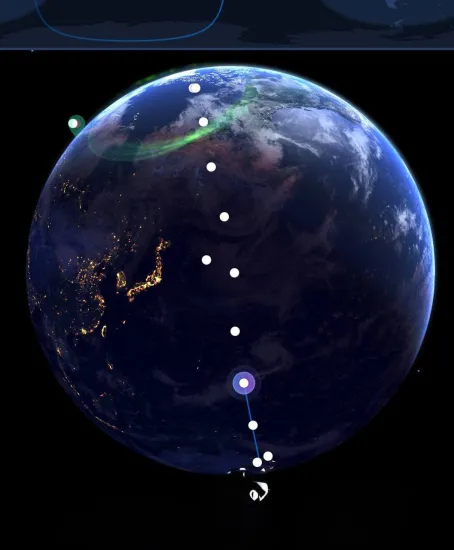
According to Flightradar24, a Bell Boeing CMV 22B Osprey with the call sign CHOSEN2 had earlier that day been flying near the Comoros Islands at an altitude of around 8,500 feet and a speed of approximately 470 kilometres per hour. This aircraft, identified by registration number 169470, is used by the US Navy to transport personnel, mail and cargo between shore-based bases and aircraft carriers at sea.
According to assessments by OSINT accounts, notably MenchOsint, which linked this aircraft to the aircraft carrier USS George H. W. Bush and concluded that the strike group is north of Madagascar and heading towards the Arabian Sea. At the time of publication, there had been no official statement from the US Department of Defence regarding the aircraft carrier’s exact location or its mission.
A similar situation had previously occurred with another US Navy strike group, when a CMV 22B Osprey operating with the USS Abraham Lincoln transmitted its coordinates whilst flying over the Arabian Sea, thereby revealing the aircraft carrier’s general location. The authors of the article note that this demonstrates how modern open-source intelligence tools make it possible to track movements that were previously difficult to detect without specialised military sensors.