NATO has pledged €70 billion in military aid to Ukraine in 2026

This is stated in the final declaration of the NATO summit in Ankara.
The declaration states that the allies remain united in their support for Ukraine as it defends its freedom, sovereignty and territorial integrity.
The document specifically emphasises that European NATO members and Canada are already funding the bulk of security assistance to Ukraine through bilateral and multilateral mechanisms.
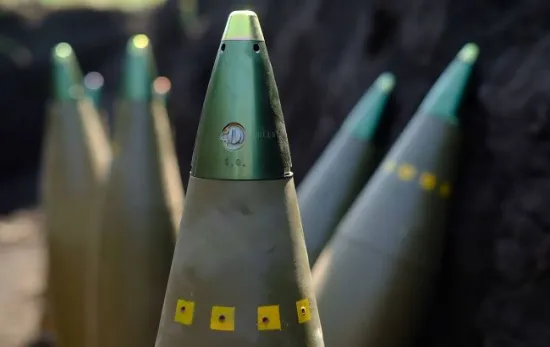
For 2026, the allies have pledged 70 billion euros for military equipment, assistance and training for Ukraine. They have also confirmed their intention to maintain at least the same level of assistance in 2027.
This does not refer to a one-off payment to Ukraine, but to the total volume of military support from the allies for 2026. The declaration does not specify exactly what share each country is to provide.
In effect, NATO has formalised a political commitment by the allies to make aid to Ukraine more predictable and long-term. This is important for planning arms deliveries, training military personnel and meeting the needs of the Defence Forces.
What will happen in 2027
A separate clause in the declaration concerns next year. NATO countries have stated that they intend to maintain support for Ukraine in 2027 at least at the same level as in 2026.
This means that the allies are not limiting their assistance to a single year and are committing to continued military support over the medium term.
What was said about EU funding
NATO also welcomed the European Union’s decision on multi-year funding for Ukraine through the Ukraine Support Loan mechanism.
This is important because NATO’s military aid complements the EU’s financial mechanisms. Together, they should provide Ukraine with greater stability in the war against Russia.
How NATO will strengthen its own defence
The final declaration is not limited to Ukraine. The allies have also announced over $50 billion in new defence procurement.
NATO countries plan to ramp up arms production, strengthen the defence industry, and develop air and missile defence, unmanned systems, modern technologies, artificial intelligence, and space and cyber capabilities.
This is directly linked to Russia’s war against Ukraine, as the Alliance describes Russia as a long-term threat to Euro-Atlantic security.
What else the allies confirmed
The summit participants reaffirmed their commitment to Article 5 of the Washington Treaty. This enshrines the principle of collective defence: an attack on one ally is regarded as an attack on all.
NATO also reaffirmed its unity, solidarity and readiness to strengthen the defence of the entire Euro-Atlantic area.
Follow us on Telegram.