Pakistan secretly has allowed Iran to station military aircraft at its airbases during the conflict with the US

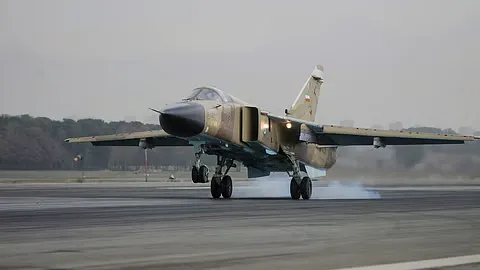
Pakistan has allowed Iran to station military aircraft at its airbases, despite Islamabad’s claims of playing a mediating role in the negotiations between Tehran and Washington. This was reported to CBS News by US officials familiar with the situation.
According to them, Iran has also sent civilian aircraft to neighbouring Afghanistan. The officials did not specify whether any military aircraft were among them.
Sources note that these movements may have been part of an attempt to protect the remnants of Iranian military and aviation resources against the backdrop of an escalating conflict, whilst Islamabad officially advocated de-escalation.
According to US officials, a few days after Donald Trump announced a ceasefire with Iran in early April, Tehran sent several aircraft to the Noor Khan airbase in Pakistan. It is located near the garrison town of Rawalpindi and is considered a strategically important military facility.
Among the equipment that arrived at the base was an Iranian RC-130 aircraft. This is a reconnaissance variant of the Lockheed C-130 Hercules transport aircraft.
US Central Command referred a request for comment from CBS News to representatives in Pakistan and Afghanistan.
A senior Pakistani official dismissed the claims regarding Nur Khan Air Base. In a comment to CBS News, he stated that the base is located “right in the centre of the city”, so “a large fleet of aircraft cannot be hidden from the public”.
According to an Afghan civil aviation official, a civilian aircraft belonging to the Iranian airline Mahan Air arrived in Kabul shortly before the war began. After Iran’s airspace was closed, the aircraft remained at Kabul Airport.
Later, when Pakistan launched air strikes on Kabul in March amid tensions with the Taliban government over allegations of support for the Tehrik-e-Taliban Pakistan group, the Afghan authorities decided to move the aircraft to Herat Airport near the Iranian border.
A spokesperson for the Afghan Civil Aviation Authority stated that this was the only Iranian aircraft remaining on Afghan territory.
Taliban spokesman Zabihullah Mujahid denied the presence of Iranian aircraft in the country. Commenting to CBS News, he said: “No, that is not true, and Iran has no need to do so.”
The report also notes that Pakistan’s dependence on Chinese military aid has increased significantly over the past decade. Research by the Stockholm International Peace Research Institute showed that between 2020 and 2024, China supplied around 80% of Pakistan’s major weaponry.
Islamabad has sought to balance between the parties to the conflict, presenting itself to Washington as a mediator, whilst at the same time avoiding steps that could worsen relations with Tehran or Beijing.
In recent years, China has strengthened military and economic cooperation with both Pakistan and Iran, and has publicly supported Islamabad’s role in indirect contacts between Tehran and Washington.
Iran’s state broadcaster reported that Tehran’s new proposal to end the war involved the US paying war reparations, recognising Iranian sovereignty over the Strait of Hormuz, and lifting American sanctions.
These conditions were made public after Donald Trump described the Iranian counter-proposal as “absolutely unacceptable”. The US president did not specify which provisions had prompted such a reaction.
Against this backdrop, Donald Trump is preparing for a visit to Beijing for talks with Xi Jinping. The conflict over Iran is expected to be one of the key topics, alongside disputes over trade and Taiwan.
Meanwhile, local skirmishes continued in the Strait of Hormuz area. The United Arab Emirates stated that Iranian drones had again attacked the country’s territory following several strikes earlier this week.
Last week, CBS News reported that three US destroyers came under attack whilst passing through the Strait of Hormuz, following which the US launched strikes on two Iranian ports near the strait.