Patriot systems in the Ukrainian Armed Forces: how they work and whether they can be replaced

Зміст
Read ThePublic’s article to find out how the Patriot air defence system works, about its variants, and about the systems that could replace it.
Patriot systems: what is known about them
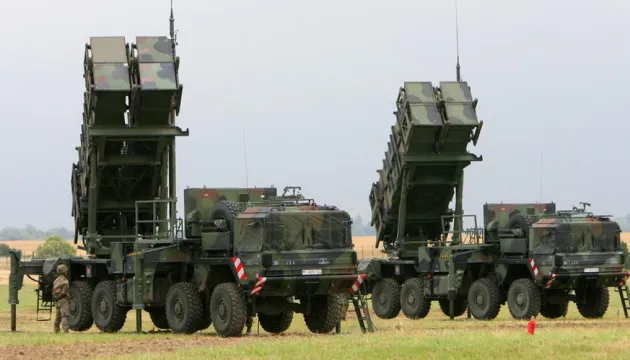
The Patriot system is a mobile surface-to-air missile defence system developed by Raytheon Technologies. It is considered one of the most advanced air defence systems in the US arsenal and has been in service since the 1980s.
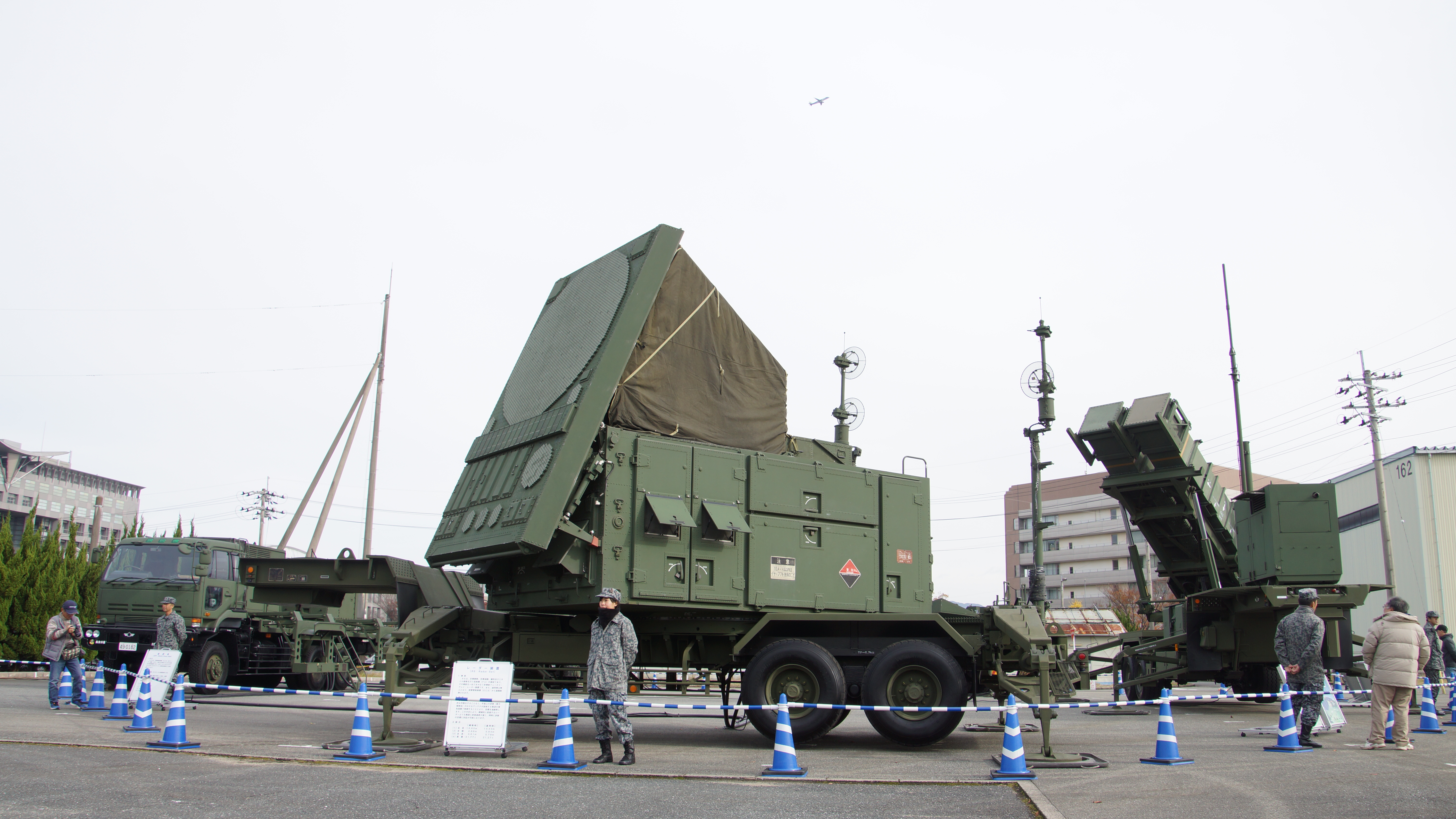
A typical battery includes radar and control systems, a power unit, launchers and support vehicles. The system is capable of intercepting aircraft, tactical ballistic missiles and cruise missiles.
Patriot Air Defence System: how the system works
In 2015, NATO stated that the system’s radar has a range of over 150 km. Although the Patriot was not originally designed to intercept hypersonic weapons, in May 2023 the US confirmed that Ukraine had used it to shoot down a Russian ‘Kinzhal’ missile, which, according to Moscow, is hypersonic.
In general, the air defence system has different capabilities depending on the type of interceptor missile. For instance, the first PAC-2 interceptor missile uses a fragmentation-explosive warhead that detonates near the target, whilst the PAC-3 family of missiles uses more precise technology that strikes the target directly.
Over the past 10 years, the Patriot has intercepted more than 150 ballistic missiles in combat operations, according to Raytheon’s website.
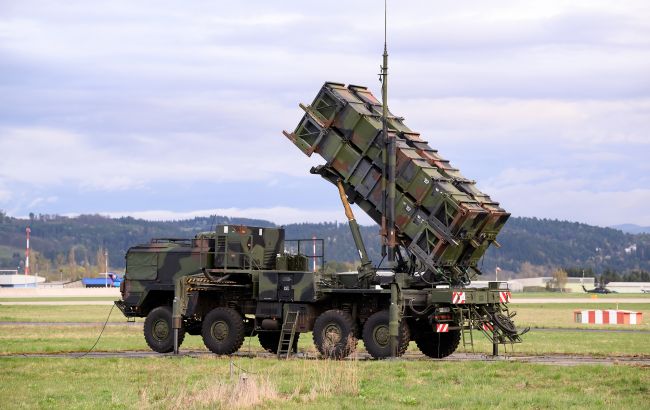
How the Patriot system is used in Ukraine
According to Raytheon, the company has built and delivered over 240 Patriot missile systems. In total, they have been delivered to 19 countries, including the US, Germany, Poland, Ukraine, Japan, Qatar, Saudi Arabia and Egypt.
According to the Centre for Defence Policy, Ukraine has received the latest upgrade to the Patriot air defence system – the PAC-3 – designed to intercept and destroy ballistic missiles, including Iskanders, the hypersonic air-launched ‘Kinzhal’ missile and the hypersonic anti-ship ‘Zircon’ missile, with which Russia is attacking Ukraine.
Furthermore, the Patriot can simultaneously track up to 50 targets and engage 5 of them, including cruise missiles such as the Kh-101, Kh-155 and Kalibr at a range of 80 kilometres, and bombers and transport aircraft at a range of up to 180 kilometres.
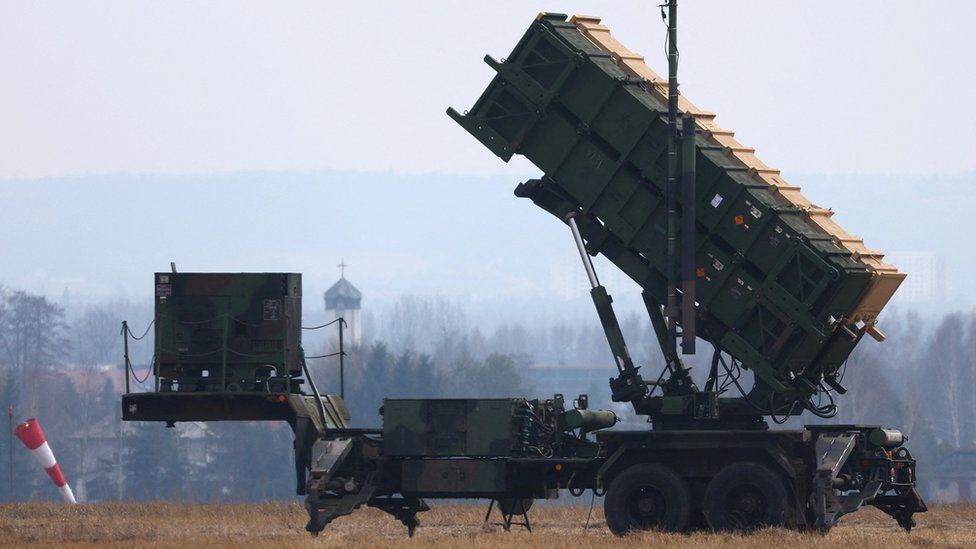
A single Patriot PAC-3 battery can comprise up to 8 launchers, each designed to carry 4 MIM-104 missiles of various types, GEM-T (missiles with enhanced guidance) or 16 ERINT missiles (extended-range interceptor missiles).
The air defence system can track targets travelling at speeds of up to 2,200 m/s at ranges of up to 180 km. The Patriot battery is linked to the AWACS system – a NATO programme that provides airspace surveillance for the Alliance and is connected to the Pentagon’s military satellites, which are capable of ‘detecting’ ballistic missile launches whilst they are still on Russian territory.
How much do Patriot systems cost?
According to the Centre for Strategic and International Studies, a single new Patriot battery costs over $1 billion, comprising $400 million for the system and $690 million for the missiles in the battery. According to CSIS, the cost of Patriot interceptor missiles is estimated at approximately $4 million per missile.
When the Patriot systems arrived in Ukraine
The history of supplying Patriot systems to Ukraine is quite a long one. Even before Russia’s full-scale aggression, in December 2021, the Ukrainian authorities had requested them from the US. However, the White House administration did not go ahead with the deliveries due to fears that this might be perceived by Russia as a provocation.
It was only on 21 December 2022 that the US officially announced its decision to provide Patriots to Ukraine, and subsequently – on 5 January 2023 – Germany joined the White House initiative.
Aviation expert Kostyantyn Kryvolap noted in a comment to RBC-Ukraine that the uniqueness of the Patriots for Ukraine lies in the fact that they are the only weapon with which the Ukrainian Armed Forces can intercept ballistic weapons and destroy cruise missiles at fairly long ranges.
“When we talk about intercepting ballistic weapons, we’re talking about a range of around 25–30 kilometres, whereas the Patriot can detect cruise missiles at a distance of 160 kilometres, and the missile can, in principle, reach them at that range,” Kryvolap noted.
Are there any alternatives to the Patriot air defence system?
Konstantin Kryvolap also emphasised that it is quite difficult to find an alternative to the Patriot systems. Whilst the SAMP-T system can still cope reasonably well with intercepting cruise missiles, it performs much worse when it comes to intercepting ballistic missiles.
“There is also the ‘David’s Sling’ system. This is a joint development between the United States and Israel. In some respects, this system is even better than the Patriot system, yet it costs about a third of the price, and the missiles are a third cheaper,” the expert added.
The US also has the ground-based THAAD anti-missile system for high-altitude exoatmospheric interception of ballistic missiles. According to various sources, the range of this radar system extends from 1,000 to 2,000 km.
Follow us on Telegram