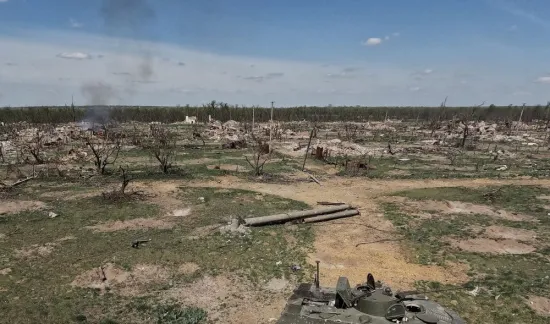
The Russian offensive in Donbas has slowed down due to drones and casualties

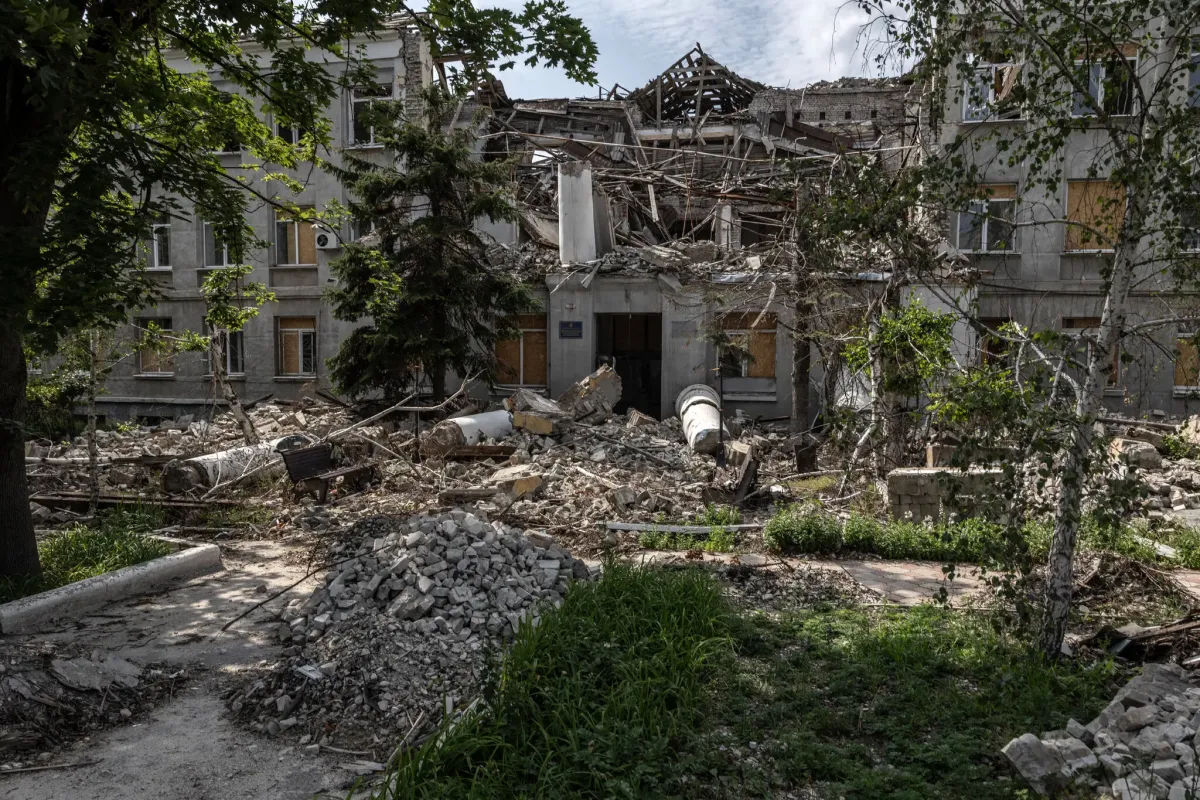
Russian President Vladimir Putin is attempting to convince US President Donald Trump that Russian troops are allegedly marching towards an inevitable victory in Ukraine. In line with this stance, Moscow claims that Kyiv must hand over the entire Donbas region to Russia in order to avoid defeat.
However, the situation on the battlefield looks different. Following its advance at the end of last year, the Russian army has slowed down significantly. In certain sections of the front, it has been losing ground. This is reported by ThePublic, citing The New York Times.
At the average rate of advance since the start of this year, it would take Russia more than three decades to fully capture the Donbas. It is control over the entire region that the Kremlin cites as one of the conditions for ending the war.
The offensive may intensify in the summer
The slowdown may be temporary. It is partly due to seasonal factors. Russian troops usually step up their activities in the summer, when the weather is better and the foliage provides more cover from drones.
Ukrainian officials have warned in recent days that Moscow is preparing for new offensive actions and stepping up operations along the front line.
At the same time, Russia is entering this phase following a series of setbacks. These include the loss of access to Starlink, which helped the Russian military control drones, as well as restrictions on Telegram in Russia, which have hampered communication between troops.
Drones have changed the nature of combat
The Russian army has yet to find an effective way to carry out large-scale offensives on a battlefield saturated with drones.
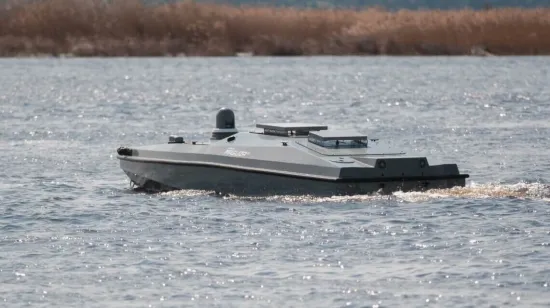
Massed armoured attacks across the front line are almost a thing of the past. Instead, the war is increasingly turning into a contest between Ukraine and Russia in the production, use and defence against drones.
In certain sectors of the front, Ukraine has gained the upper hand in recent months thanks to technological advancements, increased production and a change in tactics. Russia, for its part, is trying to catch up with Ukraine and is expanding its own drone units following the emergence of the elite Rubicon unit.
Due to drones, Russian troops have changed their approach to attacks. They now more frequently attempt to gradually infiltrate positions in small groups, often on foot. This expands the so-called grey zone, where military personnel from both sides are present and control over the territory remains unclear.
Dara Massicott, a senior research fellow at the Carnegie Endowment for International Peace, noted that such actions do not yield quick results.
“The best they can do is employ infiltration tactics and strike at support networks deep behind the front line, targeting Ukrainian drone teams and logistics. But this does not lead to rapid advances. They are effectively stuck,” she said.
Moscow is trying to exert pressure through negotiations
The stalemate on the front line is intensifying economic and political pressure on the Russian authorities. Putin’s approval ratings have fallen to their lowest level since the start of the war. The situation is being affected by high military spending, economic problems and the shutdown of mobile internet, which the authorities explain as necessary to counter Ukrainian drones.
Late on Saturday evening, Putin spoke of the possibility of the war coming to an end.
“I believe the matter is nearing its conclusion, but it remains a serious matter,” he said.
At the same time, Moscow continues to make tough demands. Kremlin adviser on international policy Yuri Ushakov stated that Russia sees no point in further peace talks until Ukraine withdraws its troops from Donbas.
Ukraine refuses to hand over these territories. Meanwhile, talks are ongoing regarding the possible transformation of part of the region into an international demilitarised zone.
Russia is advancing more slowly
Data from the three main groups monitoring the situation on the front line – the Institute for the Study of War, the Black Bird Group and DeepState – indicate a slowdown in Russian advances this year.
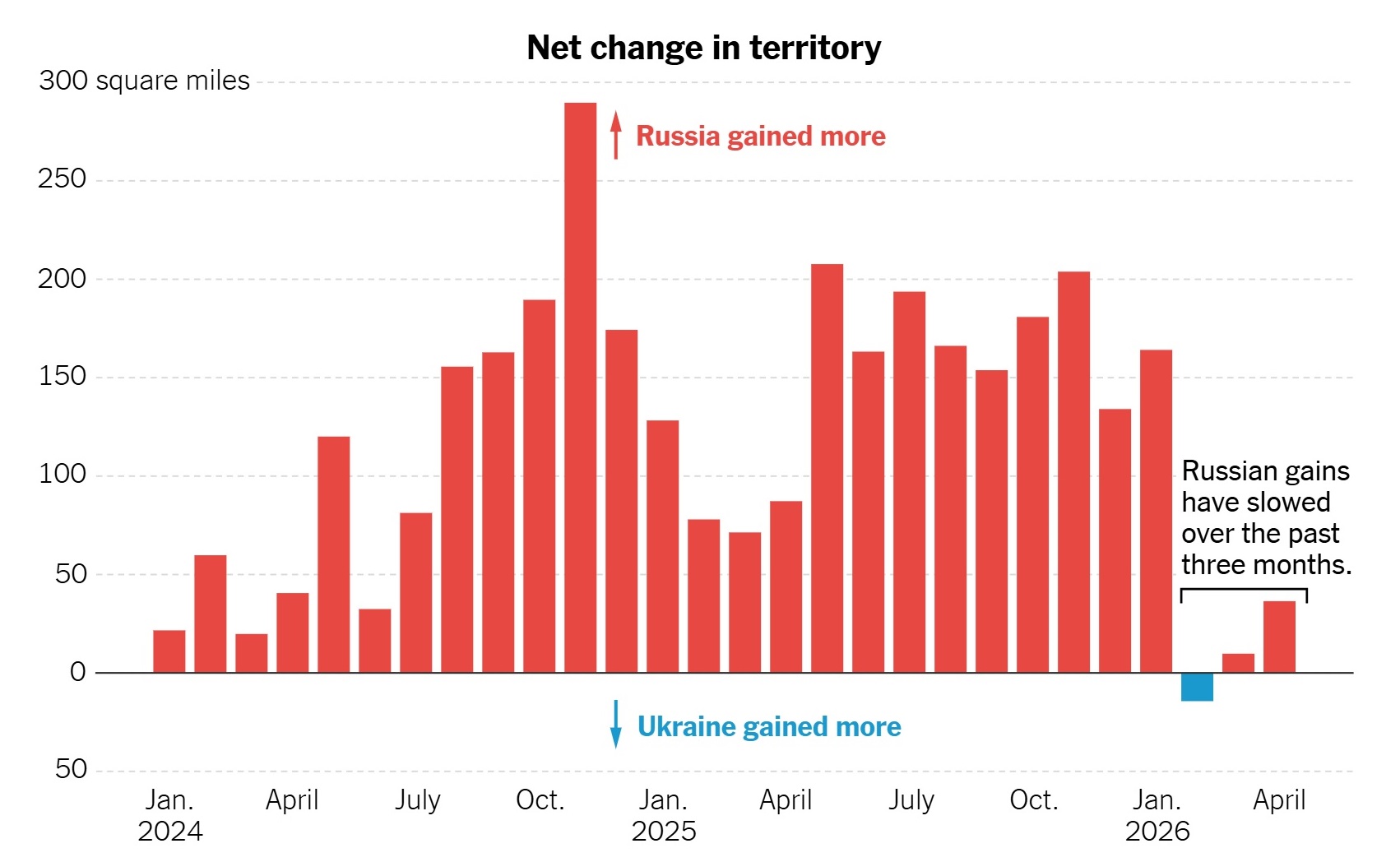
The data presented does not take into account operations carried out by Ukraine in 2024 in Kursk (Russia). Source: Black Bird Group. Josh Holder/The New York Times
Two of these groups have recorded months in which Russia suffered net territorial losses. At the same time, due to the expansion of the grey zone, assessments of control over specific territories may vary.
According to Black Bird’s estimates, Russia’s limited gains over the past three months have been its worst performance on the battlefield in Ukraine since 2023.
Even minor advances come at a heavy cost to the Russian army. According to estimates by the Russian publications Mediazona and Meduza, around 352,000 Russian soldiers had been killed in the war by the end of last year. This is more than six times the number of American soldiers killed during the Vietnam War.
Against the backdrop of rising casualties, Russia also failed to meet its recruitment targets in the first few months of the year, according to US and European officials. This raises the question of how long the Kremlin will be able to wage war without a new mobilisation.
Small-group tactics and the grey zone
Russian soldiers describe the dangers of operations in areas where every move is tracked by Ukrainian drones.
One 24-year-old Russian soldier, who fought in Donbas and later deserted, said that his unit had spent nearly a month trying to establish a foothold in one of the settlements near Pokrovsk. Assault groups attempted to enter the settlement, but were wiped out by Ukrainian drones.
After that, the commander ordered them to infiltrate the area in pairs. According to the soldier, such groups entered day after day, keeping their distance from one another so as not to become a common target, and gradually built up their presence.
Due to the realities of the grey zone, wounded Russian soldiers often remain in disputed territory, where their units cannot retrieve them. The soldier also recounted that his unit attempted to deliver water and energy bars by drone to a wounded comrade who was dying of dehydration.
Ukraine also faces challenges
The Ukrainian army is also facing difficulties, including a shortage of personnel and desertion. Drones help to hold back the numerically superior Russian army, but the territories Russia loses often become part of the grey zone rather than immediately coming under Ukraine’s full control.
Emil Kastehelmi, a military analyst at the Finnish firm Black Bird, noted that many factors complicating the Russian offensive also create problems for Ukraine.
Ukraine is attempting to raise the cost of the war for the Kremlin by striking oil infrastructure and other targets deep within Russia, as well as by increasing Russian troop casualties.
Defence Minister Mykhailo Fedorov stated that Ukraine’s goal is to kill or seriously wound 50,000 Russian soldiers every month. According to him, the current figure stands at around 35,000.
New escalation expected in Donbas
The Ukrainian military reports that Russian army activity in Donbas has increased recently. This may indicate an attempt to accelerate their advance.
Senior Lieutenant Maksym Bakulin, a Ukrainian officer in the Donetsk region, said that Russian infiltration operations have become more effective. He said that for about three weeks, the spring foliage had helped Russian troops move covertly, whilst drier weather had allowed them to use motorbikes again instead of moving on foot.
“There hasn’t been a ‘massive push’ yet,” said Bakulin, but added, “people are talking about it and we need to be prepared for it.”