Russia is losing the war against Ukraine on three fronts

Russian military casualties
According to estimates by Western analysts, Russia is losing around 35,000 troops killed and wounded every month, reports Bild.
The publication cites figures from the Russian opposition projects Meduza and Mediazona, which estimate that around 352,000 Russian soldiers will have been killed by the end of 2025. Of these, around 217,800 have been identified by name.
Taking into account the wounded, Russia’s total losses, according to journalists’ estimates, could reach 1.2 million people. This is about three per cent of the male population of conscription age that was in the country before the start of the full-scale war.
At the same time, as Bild notes, the Kremlin is currently able to make up for the losses with new contract soldiers, but the size of the army is no longer increasing.
The situation on the front line
For the first time since October 2023, Russia has begun to lose territory.
According to an analysis by The Economist, since the start of 2026, the Russian army has managed to capture around 220 square kilometres of Ukrainian territory, which accounts for 0.04% of Ukraine’s total area.
At the same time, Ukraine has regained control of around 189 square kilometres in recent months.
Security expert Christian Melling told Bild that the situation on the front line remains unstable.
“It remains to be seen whether Ukraine will be able to hold on to these territories. This could change relatively quickly,” he said.
Melling also noted that the current war remains a war of attrition, where advances are very slow.
Strikes on Russian territory
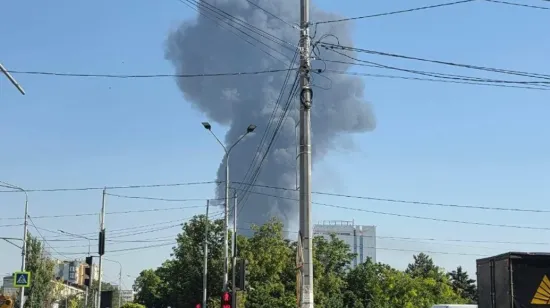
Bild also highlights the regular strikes by Ukrainian drones on Russian territory.
Ukrainian drones are attacking oil refineries, military facilities and infrastructure in the Russian rear. The article mentions one of the largest attacks since the start of the war, during which over 600 drones were intercepted over Russia.
According to Christian Melling, the war is becoming increasingly tangible for residents of Russia, particularly in the Moscow region.
“Moscow is crucial to Putin’s stability,” the expert noted.
Some observers suggest that if the Kremlin fails to find a response to the slowdown in the offensive and the strikes on Russian territory by the summer, this could affect the further course of the war.
At the same time, Melling believes it is too early to speak of a turning point.