Russian Starlink is already in orbit: Flash has assessed the threat to Ukraine

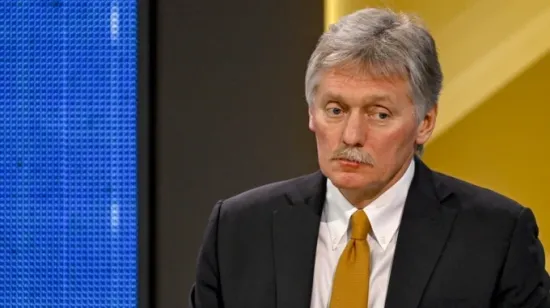
Sergey Flesh wrote about this on Facebook.
What is known about the Russian equivalent of Starlink
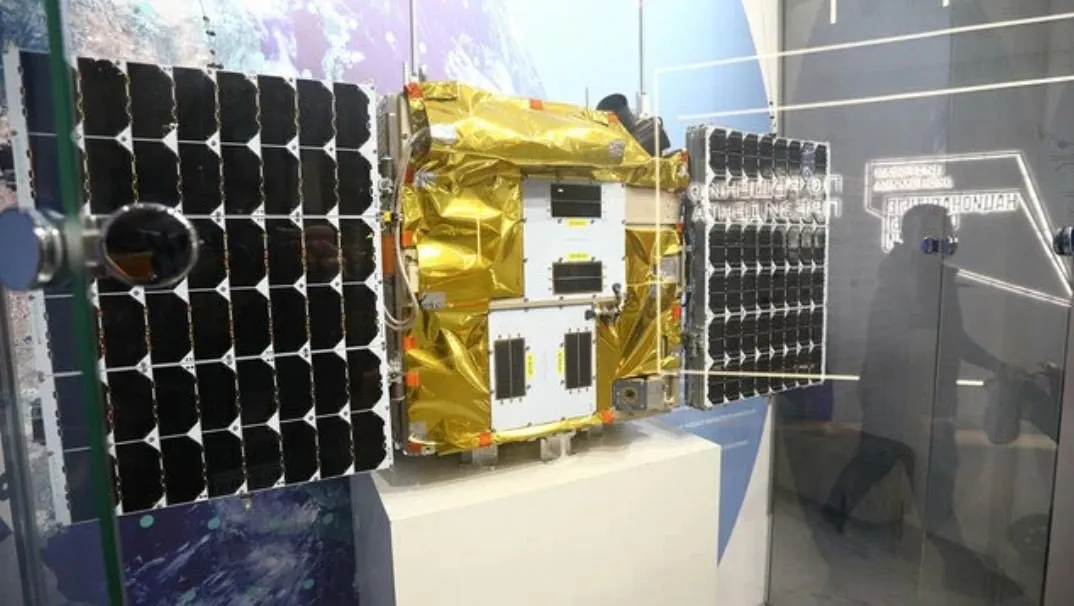
Russia is developing its own equivalent of Starlink – the “Bureau 1440” satellite communications system.
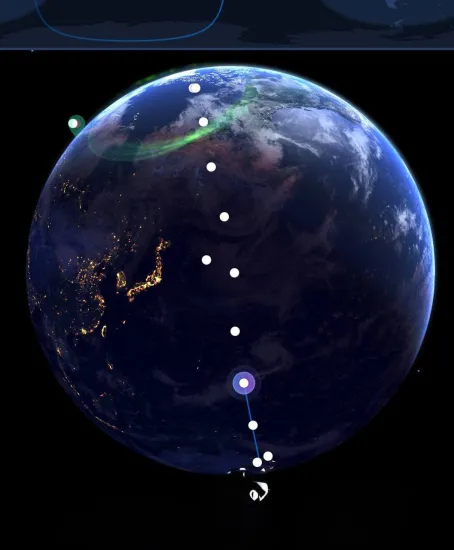
According to Serhiy Flesh, the first 16 “Rassvet” satellites are already in orbit. They are currently operating in test mode.
However, this is not enough for full and stable data transmission. According to Flesh’s estimates, at least 200–250 satellites need to be launched for this.
Russia, he said, plans to launch another 300 satellites into orbit in the coming years, and then another 700.
Is there already a military threat?
Flash emphasised that, at present, the project shows no confirmed signs of military use. This is precisely why he explained that Ukraine is not yet taking active measures against this system.
At the same time, he does not rule out theoretical risks.
According to him, the existing satellites are already capable of providing high-speed data transmission for a limited time – approximately 6–10 minutes – when flying over Ukrainian territory.
Theoretically, this could be used for military purposes. However, due to the small number of satellites in orbit, Russia does not yet have a stable communications system for such tasks.
Can satellites help “suicide bombers”?
According to Flash’s assessment, Russia could theoretically attempt to use such satellites to plan attacks or communicate with drones.
In particular, he suggested that the Russians could, in theory, attach relevant solutions to “Shaheds”. But this is currently difficult to implement due to the insufficient number of satellites in orbit.
Put simply, the threat hasn’t gone away, but it doesn’t yet look like a fully operational system capable of massively replacing Starlink for the Russian army.
Why Russia has set about creating its own Starlink
Starlink does not officially operate in Russia, yet the Russian military has used its terminals on the front line and to launch drones over Ukraine. Such devices were smuggled into Russia via third countries.
In late January, Ukraine appealed to SpaceX to restrict the Russians’ use of Starlink. Following this, reports emerged of Russian terminals being blocked on the front line. hromadske notes that Beskrestnov linked these restrictions to problems in the command and control of Russian troops.
In response, Russia began to promote its own satellite communications system more actively.
What Western media are saying about “Rassvet”
WIRED reported that in March, the Russian company Bureau 1440 launched the first 16 “Rassvet” broadband internet satellites into low Earth orbit. The launch took place from the Plesetsk Cosmodrome using a “Soyuz-2.1b” rocket.
According to WIRED, the project is intended to provide satellite internet at speeds of up to 1 Gbps for user terminals with a latency of up to 70 milliseconds. At the same time, experts point out that the system is still far from stable operation: for large-scale deployment, Russia needs mass production of satellites and affordable terminals.
WIRED also notes that the launch was not carried out by Roscosmos, but by the Russian Ministry of Defence from Plesetsk. This raises questions about the system’s potential military significance.
Why this matters for Ukraine
For Ukraine, the Russian equivalent of Starlink is not an immediate disaster, but a long-term threat.
Starlink has become a critically important communications tool in the war. If Russia can establish its own robust satellite network, this will potentially enhance its capabilities in command and control, drones, reconnaissance and data transmission.
For now, according to Flash’s assessment, the system is in its early stages. But the very appearance of the first satellites means that Russia is attempting to address one of its vulnerabilities – its dependence on foreign satellite services.
What’s next
According to publicly available data, the commercial launch of the ‘Rassvet’ service is planned for 2027, and by 2030 Russia aims to significantly expand its satellite constellation. Hromadske reported on plans to increase it to 292 satellites by the end of 2030, whilst the total target is 383 satellites.
Flash believes it is too early to respond to the project with active measures at this stage, as there are only 16 test satellites in orbit. However, Ukraine must monitor the system’s development, as it will be much more difficult to influence it once it has been deployed on a large scale.
As reported by ThePublic, Ukraine regained 400 km² of territory after disabling Starlink for the Russian military.
Follow us on Telegram