Since the start of the war, Ukraine has attacked Russian oil refineries more than 150 times

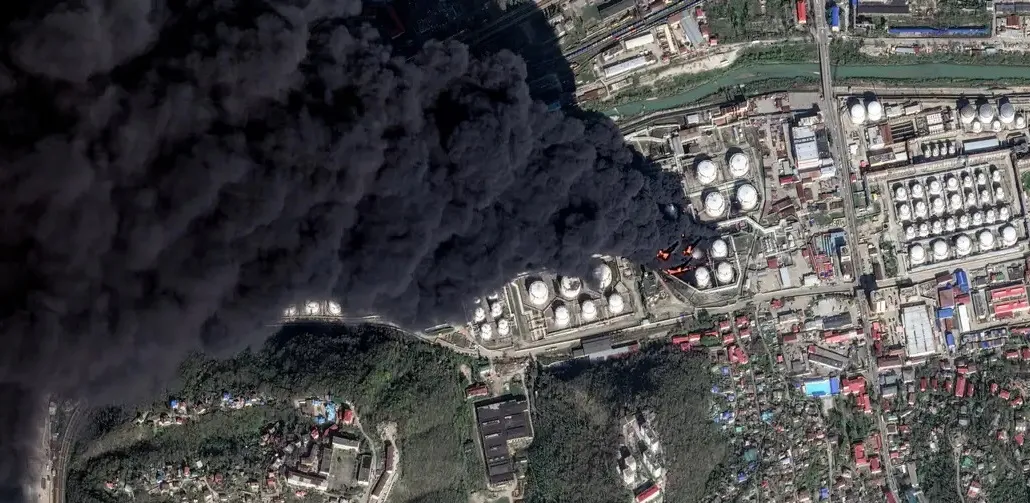
On 21 May, Ukrainian drones attacked the Syzran oil refinery in the Samara region of the Russian Federation.
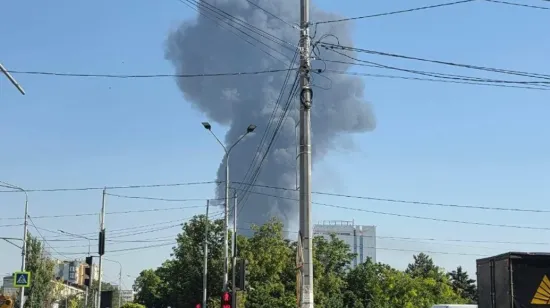
The regional governor did not specify that the strike had targeted the refinery. However, monitoring Telegram channels geolocated eyewitness footage showing black smoke over the city and confirmed that it was the Syzran oil refinery that was on fire.
This is the eleventh attack on the facility since the start of the full-scale war. The previous strike on the plant was recorded on 18 April 2026. The Syzran Oil Refinery suffered the most attacks in 2025, when it was struck eight times.
According to estimates by the publication ‘Vot Tak’, Ukraine has attacked Russian oil refineries at least 158 times since the start of the war. Twenty-four out of 33 facilities with a capacity of over 1 million tonnes of oil per year have come under attack.
No attacks on refineries were recorded in the first year of the war. In 2023, four strikes were carried out; in 2024, the number rose to 34; and in 2025, it reached 88. In the first five months of 2026, Ukrainian drones have already attacked Russian oil refineries 32–33 times, which is more than during the same period in 2025.
The Ryazan and Saratov oil refineries have been the most frequent targets. Each facility has been attacked 15 times since the start of the war.
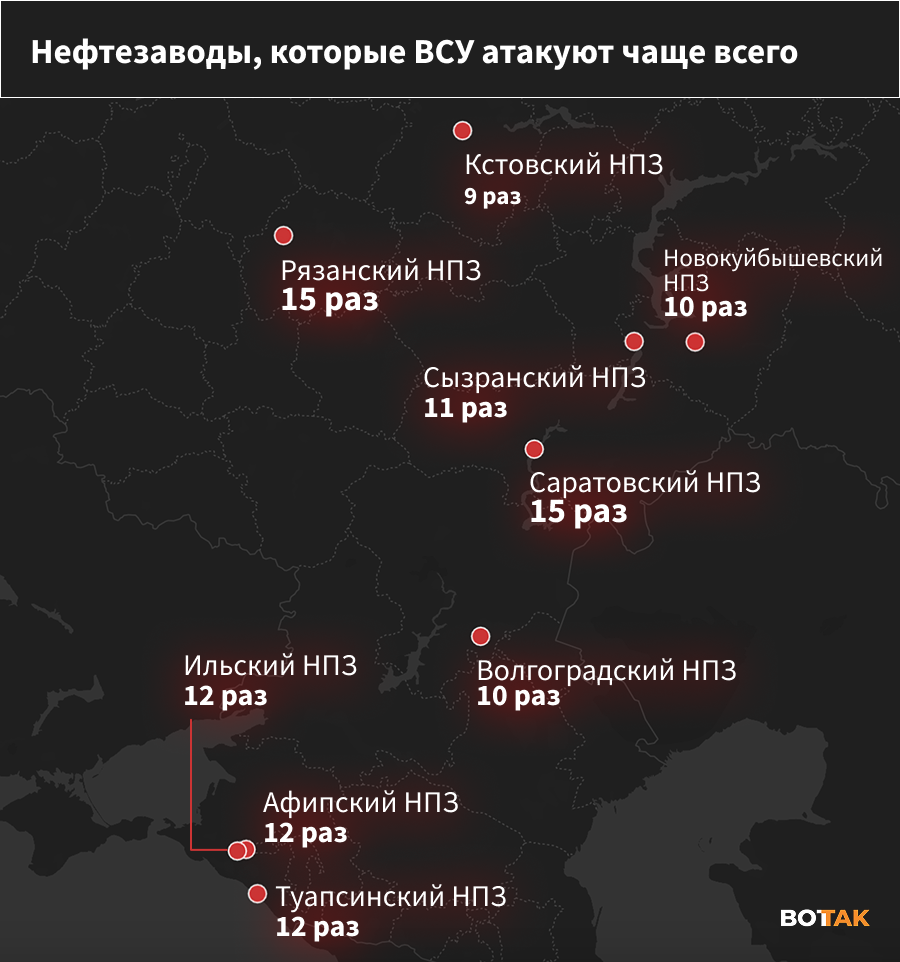
The Ryazan refinery processes around 17 million tonnes of oil per year and is one of the largest in the European part of Russia. The Saratov refinery produces approximately 7 million tonnes of oil annually.
The list of the most frequently attacked refineries also includes the Afipsky, Ilsky and Tuapse refineries in the Krasnodar Krai. Each of them has been hit 12 times. The refining capacity of these facilities is around 7–9 million tonnes of oil per year.
Following the strike on the Syzran refinery, this facility also joined the top five most-targeted oil refineries in the Russian Federation. Its capacity is around 7 million tonnes of crude oil per year.
In late April 2026, Ukrainian forces attacked the LUKOIL-Permnefteorgsintez facility in Perm for the first time. This refinery has a capacity of around 13 million tonnes of crude oil per year and is among the ten largest in Russia.
A second attack on the plant took place on 7 May. Following this, Reuters, citing a source in the Russian oil and gas industry, reported that the Perm refinery had suspended operations and that repairs could take several weeks.
Following the strikes on the Perm refinery, Russia has almost no large oil refineries with a capacity of over 10 million tonnes of crude oil per year that have not been attacked. The only exceptions are the Omsk and Angarsk refineries, located beyond the Urals.
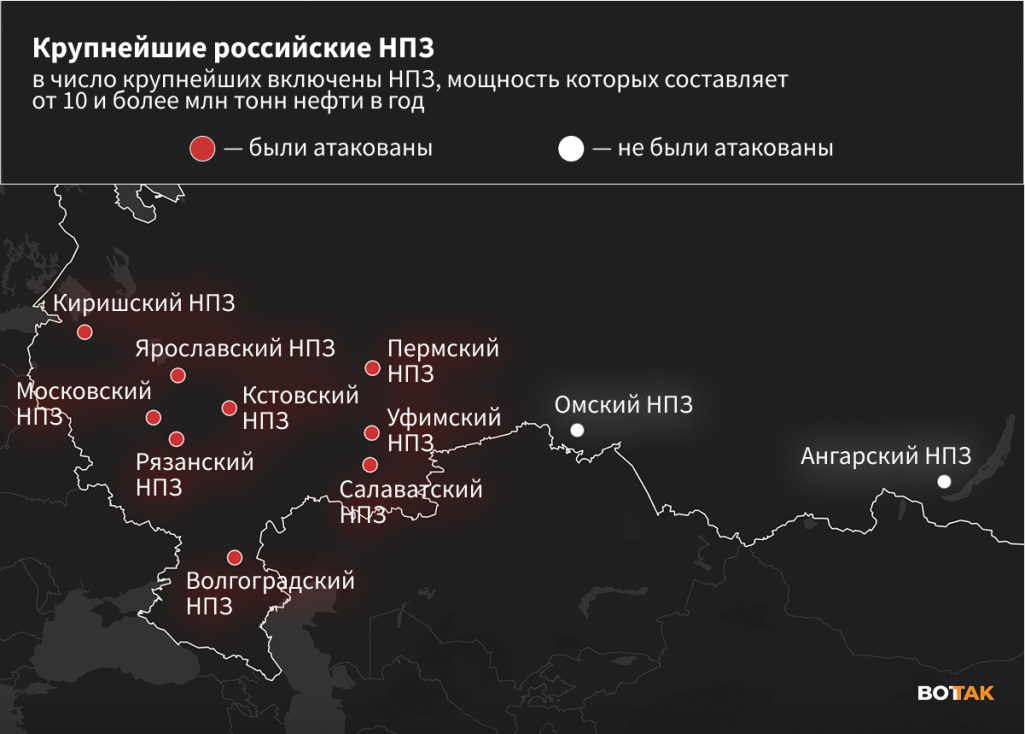
The Omsk refinery is the largest in Russia and produces around 21 million tonnes of petroleum products per year. The Angarsk refinery has a capacity of approximately 10.2 million tonnes of oil per year.
The strikes on refineries are part of Ukraine’s strategy aimed at reducing Russian oil revenues and creating a fuel shortage within the Russian Federation. Ukrainian President Volodymyr Zelenskyy has repeatedly referred to such attacks as Ukraine’s ‘long-range sanctions’.
According to Reuters, due to the constant attacks, almost all major oil refineries in central Russia, which account for over 30% of the country’s oil refining capacity, have been forced to cut back or suspend operations.
The agency also reported that between January and May, oil refining volumes at 16 Russian plants fell by 700,000 barrels per day compared to last year.
Volodymyr Zelenskyy, citing data from Ukraine’s Foreign Intelligence Service, stated that oil refining volumes in Russia had fallen by 10% in recent months.
Bloomberg reported that this figure had fallen to its lowest level since 2009, standing at 4.69 million barrels per day.