The US Navy will not be able to replicate Ukraine’s experience with maritime drones

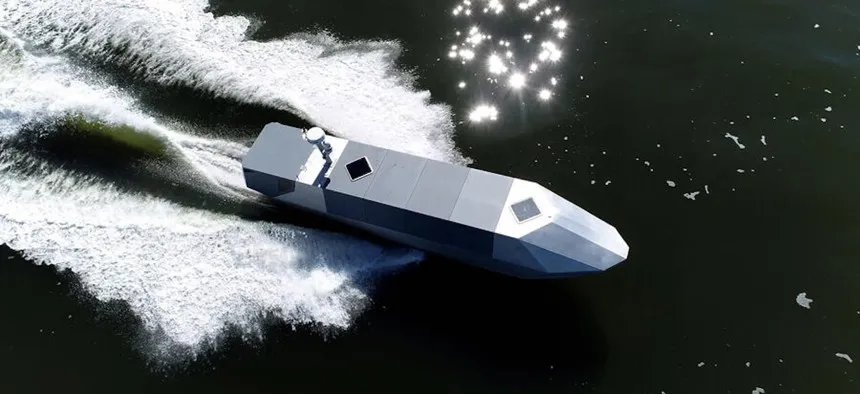
The US Navy has stated that Ukraine’s destruction of a significant portion of Russia’s Black Sea Fleet has served as an example of new approaches to the use of robotic systems on land, at sea and in the air. At the same time, according to Rear Admiral Doug Sasse, head of the Navy’s analytical unit, the United States cannot simply apply this experience in the Pacific Ocean or the Red Sea. He explained that in a confined water area such as the Black Sea, drones can reach targets quickly, whereas in the open ocean they are under constant surveillance, reports Defence One.
Sasse also noted that operations in the Red Sea have demonstrated the importance of having crews on board ships, even against the backdrop of the active use of strike drones. According to him, the US Navy is currently focusing on integrating unmanned systems into the fleet alongside manned vessels. This presents additional challenges, as such platforms must operate alongside aircraft carrier strike groups, cover long distances, have a long endurance, and remain relatively inexpensive.
Last week, the US Navy took delivery of its first 145-tonne Sea Hawk unmanned trimaran, which is set to be deployed as part of the Theodore Roosevelt strike group in the Pacific. By 2030, according to Captain Garrett Miller, thousands of small unmanned vessels and a significant number of aerial drones could appear in the region.
Rear Admiral Derek Trink emphasised that unmanned systems are already being used to enhance situational awareness on the battlefield, but not to deliver strikes. He noted that manned ships are essential for tasks related to maritime control. According to him, even with the development of robotic platforms, the control system will remain under human control, and commanders will bear responsibility for the use of all systems.
The US Navy is also considering the possibility of deploying various types of drones on existing ships in special containers. At the same time, with the emergence of new unmanned vessels, particularly medium-sized surface platforms, the fleet’s appearance will gradually change, although decision-making will remain in human hands.