The US and Iran have exchanged demands regarding a ceasefire, but their positions remain far apart

What is known about the US plan
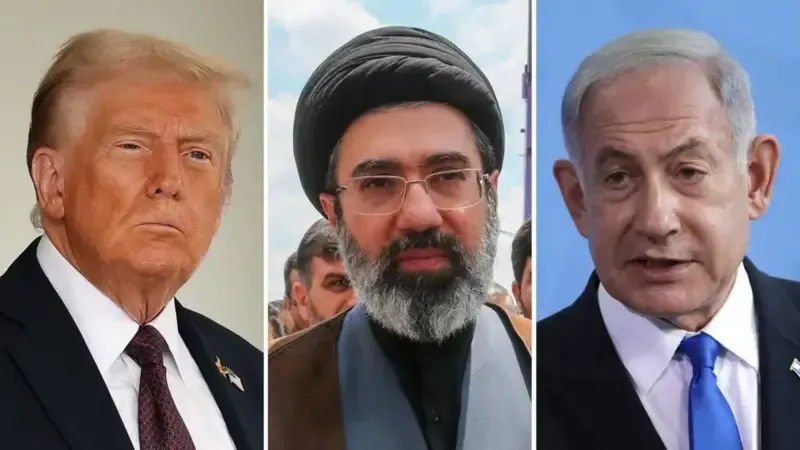
US President Donald Trump has presented a 15-point plan to end the war against Iran. It was delivered to Tehran via Pakistan, which has declared its readiness to host peace talks.
According to sources, the document provides for a 30-day ceasefire during the negotiations. The proposals also include the dismantling of nuclear facilities in Natanz, Isfahan and Fordow, the transfer of enriched uranium stocks to the IAEA, and Iran’s renunciation of uranium enrichment on its territory.
Certain clauses relate to restrictions on Iran’s missile programme, the cessation of support for allied forces in the region, and attacks on energy infrastructure. The plan also provides for the opening of the Strait of Hormuz, the lifting of sanctions against Iran, and US support for electricity generation at the Bushehr nuclear power plant.
The details of the plan have not been officially confirmed by either side. At the same time, there are reports that the US is preparing for the possible deployment of up to 3,000 troops to the Middle East.
How US demands have changed
Some of the demands, particularly regarding Iran’s nuclear programme, remain unchanged. The US previously attacked sites in Natanz, Isfahan and Fordow during the previous conflict.
Other objectives have changed. During the current war, the US and Israel also promoted the idea of regime change in Iran, yet such a demand is not mentioned in the 15-point plan.
Iran’s position
Iran refuses to hold talks with the US. Military leaders state that they cannot negotiate with a country that has attacked Iran twice whilst diplomatic contacts were ongoing.
Ebrahim Zolfaghari, a representative of Iran’s Joint Command, stated on state television
: ‘People like us will never come to an agreement with people like you. Not now. And never.’
Despite this, the Iranian side has set out conditions for ending the war. President Masoud Pezeshkian has spoken of the need for Iran’s rights to be recognised, for reparations to be paid, and for international guarantees that there will be no further attacks.
Other demands include the lifting of all sanctions, the closure of US military bases in the region, and the establishment of a new system of control over transit through the Strait of Hormuz.
Are negotiations possible?
Despite mutual statements, there are reports of indirect contacts via intermediaries. According to sources, Iran is prepared to consider proposals that could ensure a long-term resolution of the conflict.
Analysts believe that both sides are under significant pressure. The US faces criticism over the war’s impact on the economy and energy markets, whilst Iran is facing internal and external challenges.
Egypt, Saudi Arabia, Pakistan and Turkey are playing a mediating role, maintaining contacts with Tehran.
At the same time, the parties’ demands remain substantially different, which complicates the process of reaching agreements.
The context of the war
The war, which began on 28 February whilst negotiations were ongoing, has already resulted in significant casualties and economic consequences. According to official Iranian figures, as of Tuesday, 1,500 people had been killed and a further 18,551 wounded.
Following the outbreak of hostilities, Iran announced the closure of the Strait of Hormuz, subsequently allowing a limited number of vessels to pass through.
These events have caused oil prices to rise to over $100 per barrel, compared to around $65 before the war began.