The EU has stated that Russia has attempted to influence the parliamentary elections in Armenia

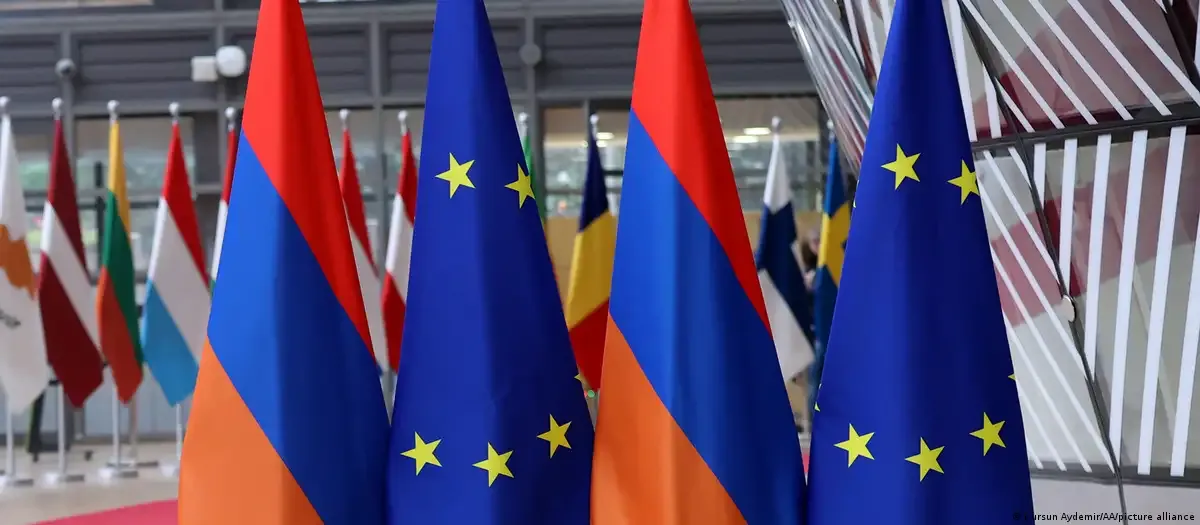
The European Union has accused Russia of attempting to influence the upcoming parliamentary elections in Armenia and of exerting pressure on the country through economic and information-related means.
This was stated on 1 June in Brussels by Anitta Hipper, a spokesperson for the EU’s foreign policy service, according to DW. She said the timing of such actions was no coincidence.
“It is clear that the timing is not coincidental. Russia is seeking to damage Armenia’s economy and influence the outcome of the parliamentary elections,” said Hipper.
She emphasised that Armenia, as a sovereign, democratic and independent state, has the right to determine its own foreign policy course and choose its partners.
According to the EU representative, Brussels supports Armenia’s democratic resilience in the face of hybrid threats, foreign disinformation campaigns, interference and attempts to undermine trust in democratic institutions.
A similar position was expressed by European Commission spokesperson Anwar El Anouni. He stated that the European Union has observed signs of external influence through information operations and economic pressure, the aim of which may be to influence the upcoming parliamentary elections in Armenia.
The European Commission also emphasised that it would continue to support Armenia in countering external pressure and attempts at destabilisation.
European Commission Chief Spokesperson Paula Pignot stated that the development of cooperation between the European Union and Armenia is evidence of support for the democratic choice of Armenian society.
The statements by EU representatives came after Russian President Vladimir Putin and the leaders of Belarus, Kazakhstan and Kyrgyzstan called for a referendum to be held in Armenia on the choice between possible accession to the European Union and continued participation in the Eurasian Economic Union.
On 29 May, following a meeting of the Supreme Eurasian Economic Council in Astana, Russia, Belarus, Kazakhstan and Kyrgyzstan called on Armenia to hold a nationwide referendum on the country’s future foreign policy course as soon as possible.
Armenian Prime Minister Nikol Pashinyan rejected this proposal. He stated that there are currently no grounds for holding a referendum, as Yerevan has not yet submitted an official application for EU membership and is not close to obtaining candidate status.
According to Pashinyan, until the choice between the European Union and the Eurasian Economic Union becomes inevitable, Armenia will continue to operate within the framework of the EAEU.
At the same time, the Prime Minister noted that he is counting on building new relations with Russia, which should be successful, as ties between the two countries remain open and sincere.
Earlier this year, the Armenian government approved a draft law on launching the process of accession to the European Union. On 12 February, the country’s parliament adopted the relevant document, and on 4 April, President Vahagn Khachaturian signed the law on the start of Armenia’s accession to the EU.