The EU is preparing new sanctions against Lukoil, Rosneft and Russia’s shadow fleet

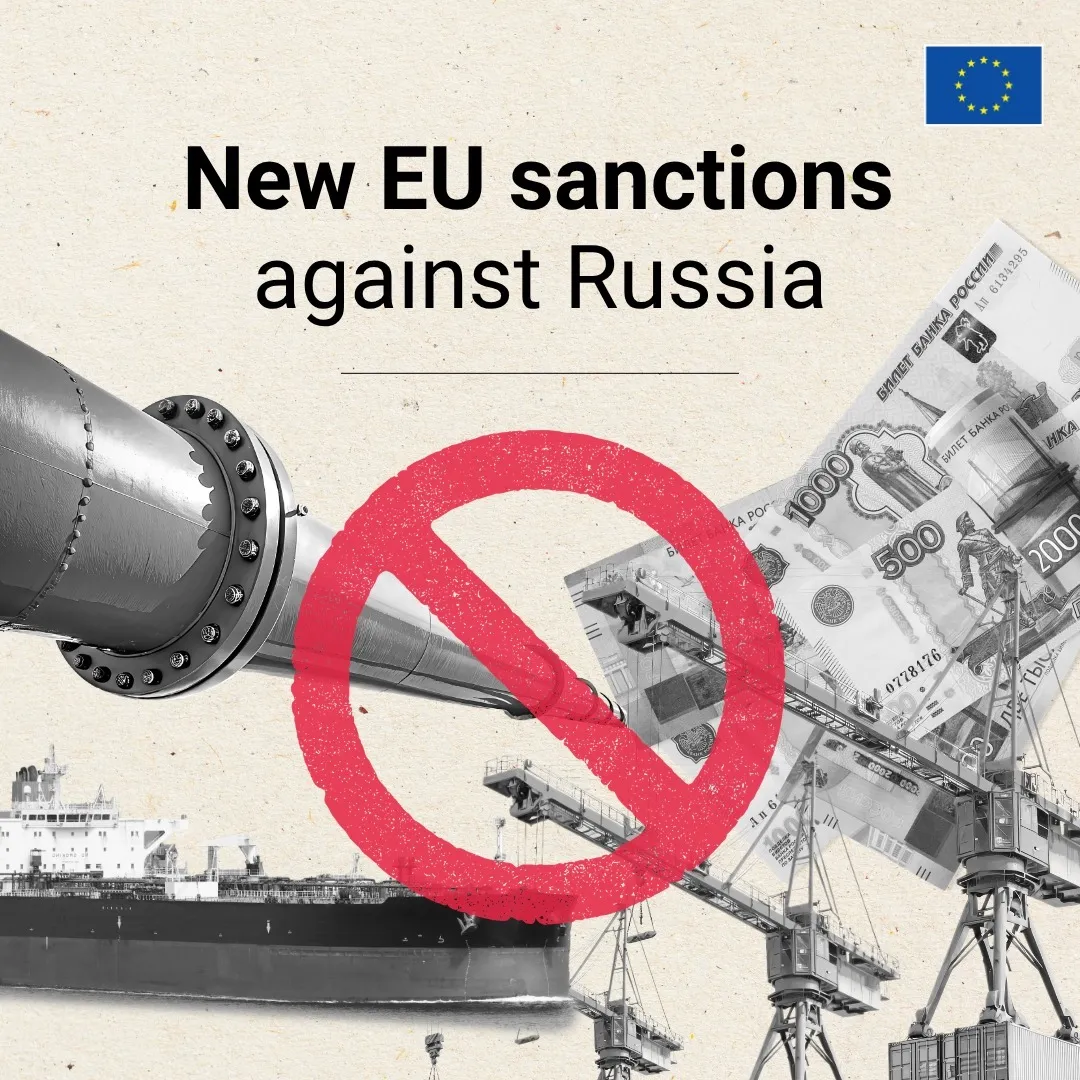
The European Union intends to finalise the 21st package of sanctions against Russia by the end of next week. This was reported to Politico by three EU diplomats and officials.
According to the publication’s sources, the European Commission could present the proposed restrictions as early as next week. The new package is set to further increase pressure on Russia and will target its oil revenues, banks and shadow fleet.
One official, speaking on condition of anonymity, stated that Ukraine could find itself in a stronger position after the summer. According to him, appointing a special envoy for peace talks at this stage could weaken the pressure on Russia just as Ukraine begins to turn the situation to its advantage.
One of the key proposals is to maintain the current price cap on Russian oil. The current price cap expires this summer, and without a further decision, it will be raised automatically. EU countries are insisting on maintaining the current level to prevent an increase in Moscow’s oil revenues.
At the same time, according to diplomats, a complete ban on Russian oil and the proposed ban on maritime transport are currently unlikely.
The new sanctions are expected to target the Russian energy companies Lukoil and Rosneft. The package may also include additional restrictions on shadow fleet vessels and related services.
Patriarch Kirill, head of the Russian Orthodox Church and an ally of Vladimir Putin, may also be included on the sanctions list. A previous attempt to impose sanctions against him was blocked by Hungary.
Ukraine’s Ambassador to the EU, Vsevolod Chentsov, stated that Ukraine expects the restrictive measures to be extended to new shadow fleet vessels and related infrastructure. He also emphasised the need to resolve the issue regarding Rosatom, which Kyiv considers part of Russia’s military machine.
Earlier, Bloomberg reported that the European Union is considering including restrictions on around 20 more shadow fleet tankers, which Russia uses to transport oil, in the new sanctions package.