The EU’s 21st package of sanctions against Russia may be postponed until the autumn: what will happen to the oil price cap?

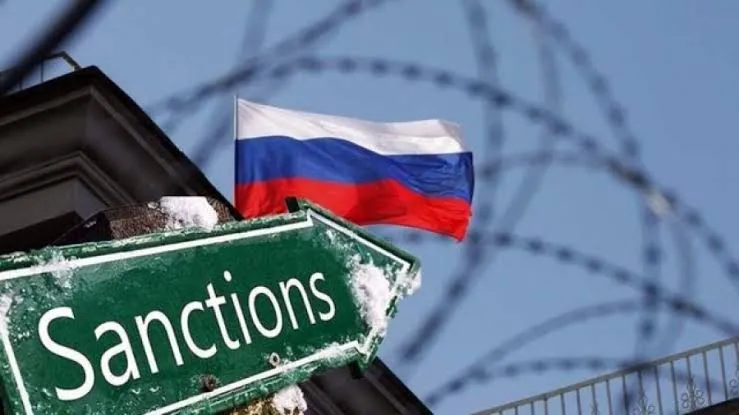
This is reported by ‘European Truth’, citing sources within the EU.
In that case, the price cap on Russian oil could be taken out of the wider sanctions package and adopted separately on 14 July to prevent the current ceiling from being raised automatically.
Why the sanctions package may be postponed
According to the publication, on 8 and 10 July, the Committee of Permanent Representatives of the EU Member States is set to attempt to agree on the 21st package of sanctions against Russia. The Irish EU Presidency hopes to finalise it at these meetings so that the package can be adopted on 13 July during the EU Foreign Affairs Council in Brussels.
At the same time, some European diplomats are taking a more cautious view of the prospects. If there are no signs of a compromise by the middle of the week, the EU may move to ‘Plan B’: freezing the oil price cap separately, and returning the remaining sanctions to the agenda after the summer holidays.
Reasons for the lack of agreement
Among the contentious issues remain sanctions against the Russian fishing industry, a ban on Russian combatants entering the EU, and individual restrictions against Russians.
Sanctions against Kirill, Patriarch of the Russian Orthodox Church, have become a particular stumbling block. Bulgaria had previously stated that it would block the 21st package due to his inclusion on the sanctions list. Subsequently, according to ‘European Truth’, Italy also put forward similar arguments.
Why there is a push to adopt the oil price cap separately
The main deadline for the EU is 15 July. It is on this day that the next update to the price cap on Russian oil is due to take place.
The current limit stands at $44.1 per barrel. It was set on 15 January 2026. The mechanism provides for a review every six months based on the following formula: the average oil price over the previous six months minus 15 per cent.
Due to the sharp rise in global prices, the next price cap calculated using the current formula could rise to around $75 per barrel. This would provide Russia with additional revenue to fund the war against Ukraine.
This is precisely why EU countries, despite disagreements over a broader sanctions package, are considering a separate decision to freeze the current cap.
For how long might the cap be frozen?
The European Commission proposed freezing the oil price cap for six months. However, maritime states, notably Greece, Malta and Cyprus, are insisting on a shorter period due to the dependence of their budgets on maritime transport and related services.
According to “European Truth”, the freeze period may ultimately be reduced to three to four months.
What is known about the 21st sanctions package
European Commission President Ursula von der Leyen presented the 21st package of sanctions against Russia in early June. The European Commission proposed new restrictions in the energy, finance and trade sectors, as well as tighter controls to prevent the circumvention of sanctions.
Separate measures were proposed against Russia’s ‘shadow fleet’, financial structures, companies from third countries, dual-use goods and mechanisms that help Moscow generate revenue or circumvent existing restrictions.
For now, the main priority for the EU is to prevent the automatic increase in the oil price cap on 15 July. If no compromise is reached on the entire package, this decision alone may be adopted separately.
Follow us on Telegram.