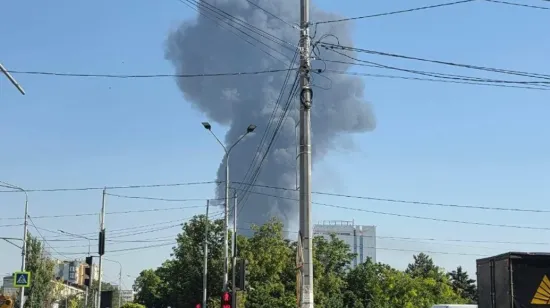
The Ukrainian Armed Forces are deploying swarms of drones and stepping up their use of robotic systems in the war against Russia

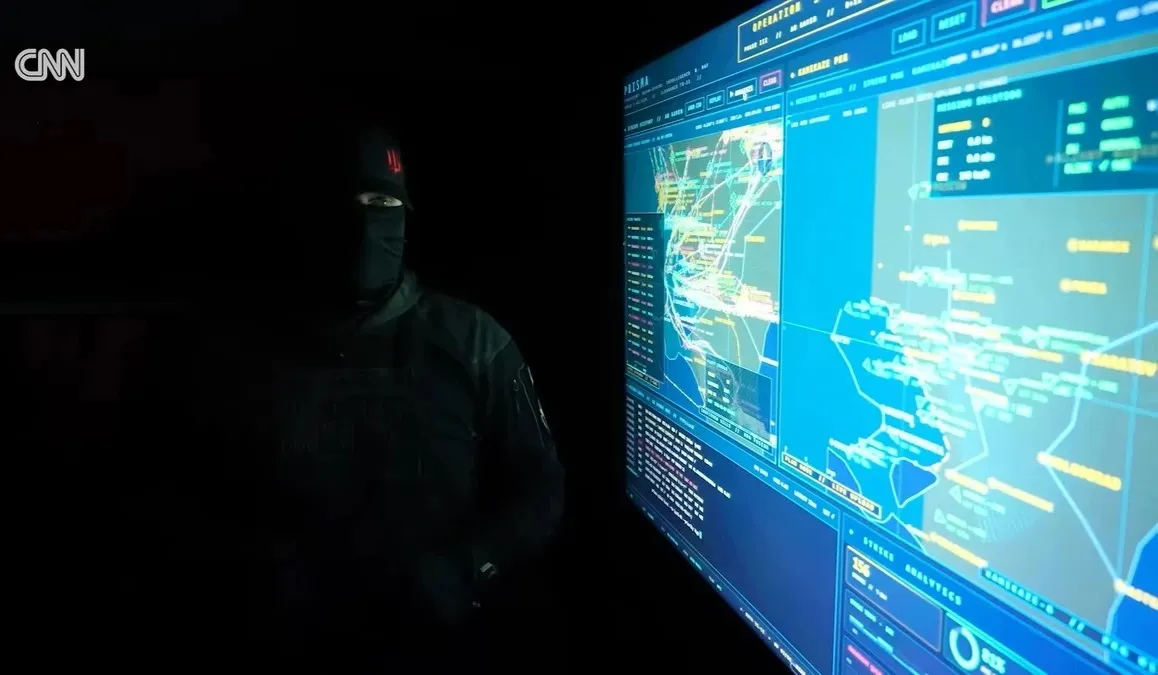
Ukraine is using hundreds of decoy drones in long-range strikes on Russian territory. This was revealed in a CNN report by the commander of the Deep Strike unit of the Main Intelligence Directorate of the Ukrainian Ministry of Defence, who goes by the call sign Vector.
Journalists showed the process of preparing the drones for launch. Some of the drones are equipped with warheads, whilst others are launched without them.
“These are decoys. We send out hundreds of them. Some are empty, some carry a combat payload. It’s small, but enough to destroy air defence systems,” said Vector.
The report also featured decoy drones and a jet-powered drone which, according to the Ukrainian military, appears as a missile on Russian radar.
The unit commander also spoke about the long-range strike command and control system. According to him, one of the main advantages is the decentralised structure of operations.
“Laptops are our greatest advantage and the reason why it is so difficult for Russia to destroy this programme, as we are dispersed. We have no centralised hubs; we operate from dozens of locations. Furthermore, this software allows us to operate thousands of drones,” he noted.
According to Vector, the software enables the simultaneous coordination of thousands of drones.
CNN reports that Ukraine has significantly expanded its capabilities for long-range strikes on Russian territory and is increasingly using unmanned systems to wear down Russian air defences.
According to the TV channel, on the night the report was being prepared, Ukraine planned to launch around 200 attack drones from several sites.
Robots are increasingly carrying out combat missions on the front line
In eastern Ukraine, robotic systems are playing an increasingly significant role in combat operations. The Ukrainian military is conducting some operations without the presence of troops on the ground, controlling the equipment remotely.
In April, Ukrainian President Volodymyr Zelenskyy announced the first capture of a Russian position using only robots and drones. He also reported that since January, unmanned systems had carried out 22,000 missions.
The NC13 unit of the Third Assault Brigade uses ground robots carrying large explosive charges. According to the military, 2,300 soldiers would have been required to achieve the same result in 164 attacks carried out with human involvement.
The unit’s deputy commander, codenamed Bar, noted that during the fighting in Donbas he could not have imagined such technologies, but is convinced that their availability could have saved more of his comrades.
Unit commander Mykola ‘Makar’ Zinkevych stated that modern warfare has changed significantly.
“In the past, war was more, shall we say, masculine. Skills, training and discipline were what mattered. Now, technology decides everything. There is no going back,” he said.
One of the key figures in this new direction is a 22-year-old engineer with the call sign Gora. She works on the hardware and software for robotic systems.
According to her, it is not the machines themselves that matter most, but the people who plan operations and ensure coordination between the equipment and the operators.
The Ukrainian military also uses robotic platforms to mount heavy machine guns, deliver ammunition, water and food, and evacuate the wounded.
One such robot can remain concealed in vegetation for several days and fire remotely. Another type of robotic platform is used to transport supplies to the front lines.
In the Druzhkivka area, the military demonstrated the process of preparing such a robot for its next mission. After being loaded with ammunition, the machine set off for the front line under the remote control of an operator who was many kilometres away from the route.
The war is changing conditions of service at the front
At the same time, Ukrainian soldiers continue to serve long tours of duty at the front lines.
Soldiers from the 24th Separate Mechanised Brigade, with call signs Crow and Creepy, spoke about their time on the front line, having served for 344 and 334 days respectively.
Crow noted that thoughts of his wife and children kept him going.
“The only thing that helped me hold on was my children and my wife. Otherwise, I would have gone mad long ago,” he said.
According to him, during his entire time at the front, he had no opportunity to speak to his wife in person and sent her messages via radio.
Another soldier, Creepy, spoke of constant drone attacks and the difficult conditions of defending the positions.
As the soldiers recalled their experiences, the sound of an FPV-type drone could once again be heard flying over Kramatorsk.
According to CNN, drones and robotic systems have become an integral part of the war and continue to change the nature of combat operations.