The Unmanned Systems Forces have announced that they have struck seven vessels belonging to the Russian Federation’s shadow fleet and air defence installations

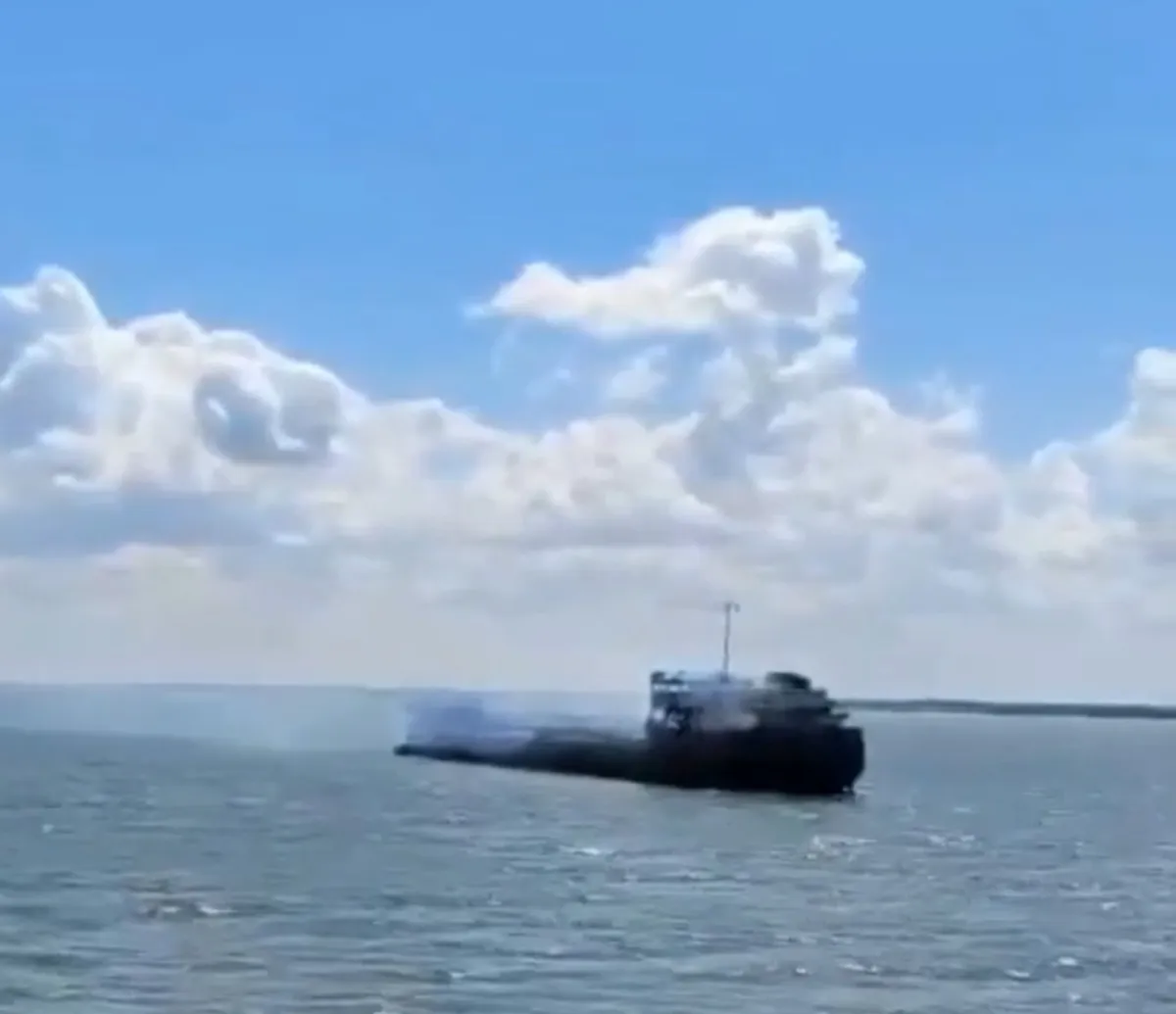
Robert ‘Madyar’ Brovdi, Commander of the Unmanned Systems Forces, reported that on the night of 20 July, Ukrainian units struck seven vessels belonging to Russia’s shadow fleet in the Sea of Azov and the Black Sea, six air defence systems on Russian territory and seven energy facilities in the temporarily occupied territories, notably in Crimea.
According to him, three tankers and four dry cargo ships were struck as part of Operation ‘MoLoChKa’. In total, since the beginning of July, the Unmanned Systems Forces have reported striking 183 vessels of the shadow fleet, of which 119 were in the Sea of Azov and 64 in the Black Sea.
As part of Operation ‘PPOpad’, according to the command, six elements of the Russian air defence system were destroyed. These included the ‘Tor M2’ anti-aircraft missile system, the ‘Nebo U’ radar stations, ‘Kasta 2E2’, ‘Gamma S1M’ and two ‘Nebo SV’ stations, located in Yeysk, Primorsko-Akhtarsk and Kamyshevatsky. The Unmanned Systems Forces stated that all six targets had been destroyed.
In total, since 1 July, according to the command, 25 air defence systems have been struck during Operation ‘PPOpad’, including 12 anti-aircraft missile systems, 12 radar systems and one electronic warfare system.
It is also reported that during Operation ‘Crimean Switch Off’ last night, seven power distribution centres and substations were struck in Yalta, Morske, Pryvitne, Luchyste and other settlements in the temporarily occupied territories. According to the Unmanned Systems Forces, since the beginning of July, the total number of energy facilities struck as part of this operation has reached 103.
Separately, the commander reported that, according to estimates by the Unmanned Systems Forces, the Kerch ferry crossing has lost 75 per cent of its capacity. He said that three out of five ferries have been destroyed, whilst two have lost their ability to move under their own power and are now operating as barges towed by tugs.