The US has helped around 70 ships pass through the Strait of Hormuz amid the war with Iran

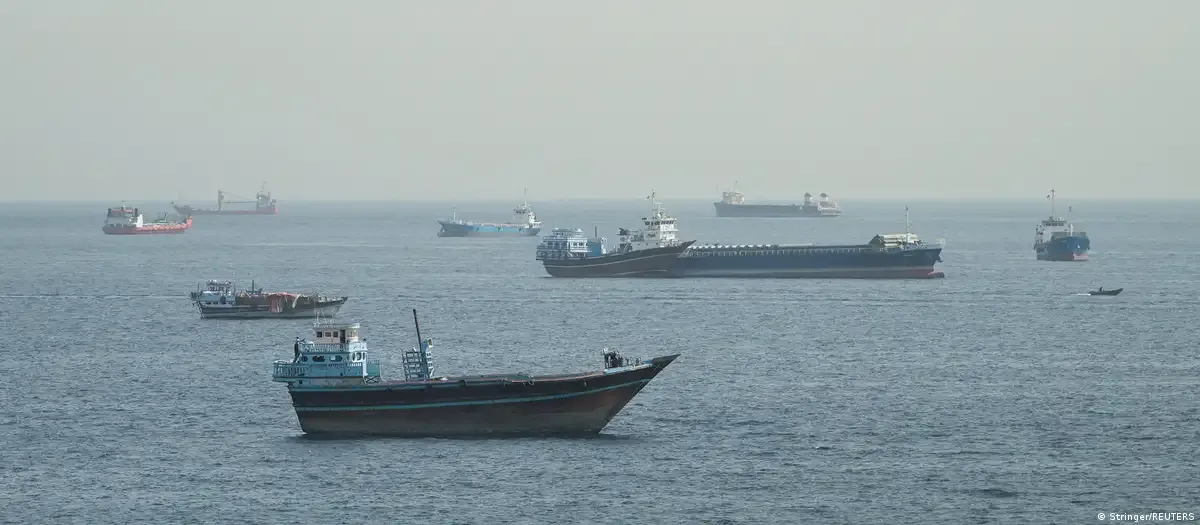
In recent weeks, the US military has been helping to coordinate the passage of commercial vessels through the Strait of Hormuz, which remains one of the key maritime routes for global energy trade, according to the NYTimes.
According to US officials, US Central Command has helped approximately 70 commercial vessels pass through the strait over the past three weeks, travelling to and from the Persian Gulf. Most of them switched off their transponders whilst passing through to avoid detection.
Officials did not specify the types of vessels or their exact routes. However, one of the sources noted that at least one of the routes passed at a distance from the Iranian coast. According to US officials, vessels approaching the Iranian coast without Tehran’s approval could be at risk of drone or missile attacks.
Maritime analysts believe that the routes coordinated by the US run closer to Oman’s territorial waters.
Before the US-Israeli strikes on Iran in late February, over 100 commercial vessels passed through the Strait of Hormuz daily. Current passages coordinated by the US, averaging around three vessels a day, do not indicate a full resumption of shipping.
Despite the risks, such routes allow some shipowners to continue operating and avoid the need to obtain permission from Iran or pay transit fees. Due to the conflict, energy supplies to global markets have been significantly reduced.
At the end of May, US officials stated that Washington and Tehran were close to an agreement that could ensure the opening of the Strait of Hormuz. Before the war began, a fifth of global oil supplies and a significant proportion of natural gas were transported through it.
At the same time, on 31 May, reports emerged that US President Donald Trump had tightened the conditions of a potential framework agreement to resolve the conflict.
In early May, Donald Trump announced the launch of the military operation Project Freedom, designed to help ships pass through the Strait of Hormuz. The operation was subsequently brought to a swift conclusion. Following this, US Central Command continued to coordinate the passage of ships, though without direct naval escort.
US Central Command spokesman Tim Hawkins stated that US forces continue to maintain contact and coordinate with commercial vessels seeking to pass safely through the Strait of Hormuz.
Despite this, the risk of attacks by Iran remains. The US believes the threat is less than Tehran claims, but information regarding the passage of vessels under US coordination is deliberately not being widely publicised.
In May, a container ship came under attack whilst transiting the strait during the Project Freedom operation. The French company CMA CGM stated that it had coordinated its actions with the US, but Central Command reported that the vessel had failed to comply with some of the recommended requirements.
Noam Raidan, a senior fellow at the Washington Institute for Near East Policy, noted that the number of ship transits under US coordination turned out to be higher than she had expected. At the same time, it is difficult to independently verify this data due to transponders being switched off.
In mid-April, the US also introduced a ban on vessels that had visited Iranian ports. According to Central Command, 116 vessels were diverted in the Gulf of Oman. The US claims that these measures have significantly restricted Iranian oil exports.
At the same time, Iran retains significant influence over the situation in the Strait of Hormuz. Many vessels continue to use routes close to the Iranian coast, suggesting that their passage is being coordinated with Tehran.
According to data from Kpler, of the 895 transits through the Strait of Hormuz between 1 March and 19 May, just over half followed a route close to Iran. Around 40% of transits took place via unknown or so-called ‘dark’ routes.
Negotiations between the US and Iran on a possible deal are ongoing. According to US officials, one of Washington’s key demands remains Tehran’s abandonment of plans to develop nuclear weapons. The Iranian side, meanwhile, states that a final agreement to end the war has not yet been reached.