Trump and Xi Jinping concluded their summit in Beijing without reaching any major agreements

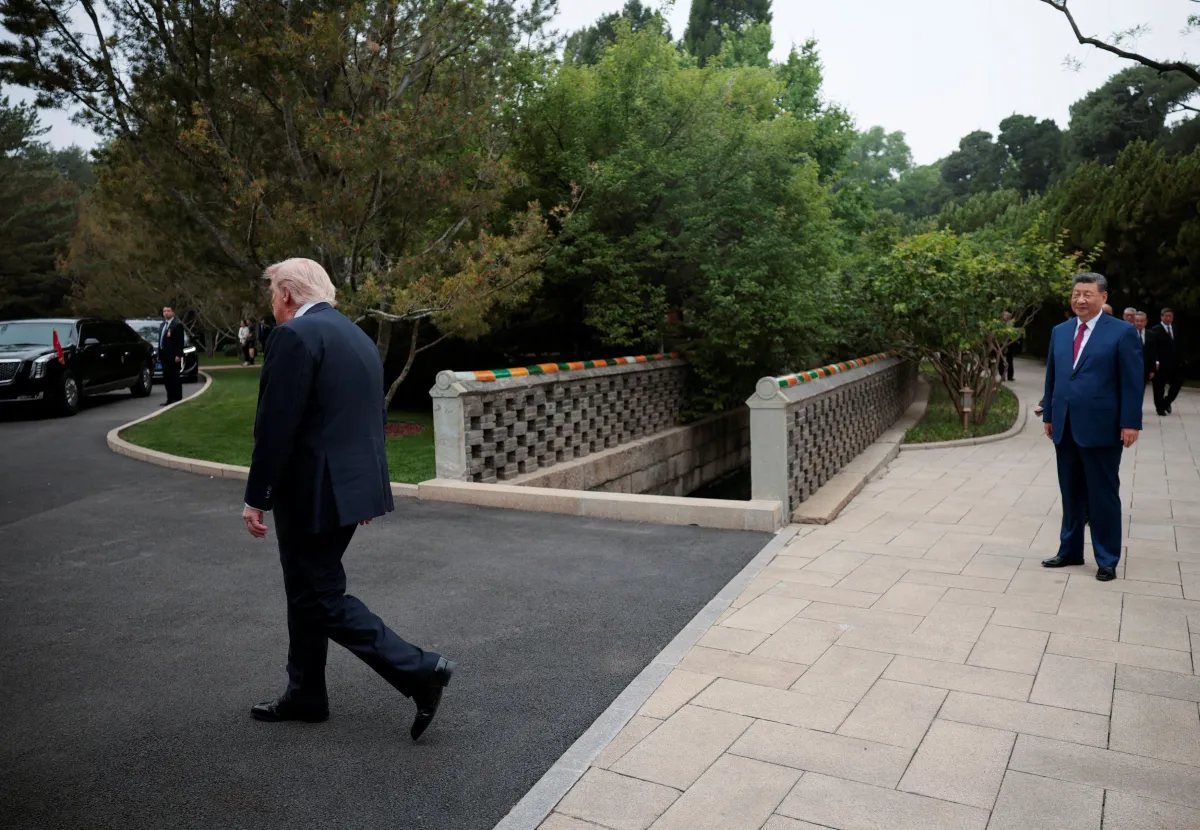
According to The Wall Street Journal, the second day of talks between US President Donald Trump and Chinese President Xi Jinping was intended to show whether the parties were capable of moving beyond diplomatic gestures to concrete decisions.
Despite the warm atmosphere and official ceremonies, the parties did not conclude any major agreement. Significant differences remain between Washington and Beijing regarding trade, technology, Iran and Taiwan.
The US and China assessed the results of the talks differently
The Chinese side described the Taiwan issue as the main topic of bilateral relations.
According to the Chinese Ministry of Foreign Affairs, Xi Jinping told Trump that an incorrect resolution of the Taiwan issue could lead to “clashes or even conflict” between the US and China.
This statement was not mentioned in the White House statement. Instead, the US side focused on agreements regarding the openness of the Strait of Hormuz, the purchase of US agricultural products, and the fight against the supply of fentanyl precursors.
Boeing and energy became part of the talks
After the summit, Donald Trump stated that the talks had gone “wonderfully”. According to him, China agreed to order 200 Boeing aircraft.
“Today he agreed on one thing: he will order 200 aircraft. 200 large aircraft,” Trump said in an interview with Fox News.
However, Reuters, citing sources, reports that the purchase of 500 aircraft was discussed during the talks, so the actual volume of the agreement turned out to be less than expected.
Trump also stated that China had agreed to buy American oil.
“They have agreed to buy oil from the United States. They will come to Texas. We will send Chinese ships to Texas, Louisiana and Alaska,” said the US president.
The issue of Iran remained a subject of dispute
Iran was a separate topic of the talks. Trump stated that the US and China share a common position on preventing Tehran from acquiring nuclear weapons and on the need to keep the Strait of Hormuz open to international shipping.
At the same time, Beijing took a more cautious stance and called for the continuation of diplomatic talks.
It was previously reported that Iran had submitted its own 14-point plan for resolving the conflict to the US. According to the Tehran Times, Washington has completely rejected Tehran’s proposals.
Iran proposed a two-stage format for the negotiations, with the first step being the cessation of hostilities. Donald Trump described Tehran’s actions as a ‘game’ after receiving the Iranian response.
Taiwan remains the main point of tension
The Wall Street Journal notes that despite the official cordiality between the parties, the Taiwan issue remains the most dangerous element in US-China relations.
US senators had previously called on Trump to approve a $14 billion military aid package for Taiwan.
Analysts suggest that China may use the prospect of a new visit by Xi Jinping to Washington as a lever to curb US arms supplies to Taiwan.
The summit has only temporarily eased tensions
According to US analysts, Beijing is seeking a more predictable policy from the US, without new tariffs, sanctions or decisions that China views as crossing its ‘red lines’.
Ultimately, the summit in Beijing only temporarily reduced the risk of a sharp escalation between the world’s two largest economies, but did not resolve key disagreements on trade, security and geopolitics.