Ukraine has paved the way for long-range strikes against Russia by destroying frontline air defences

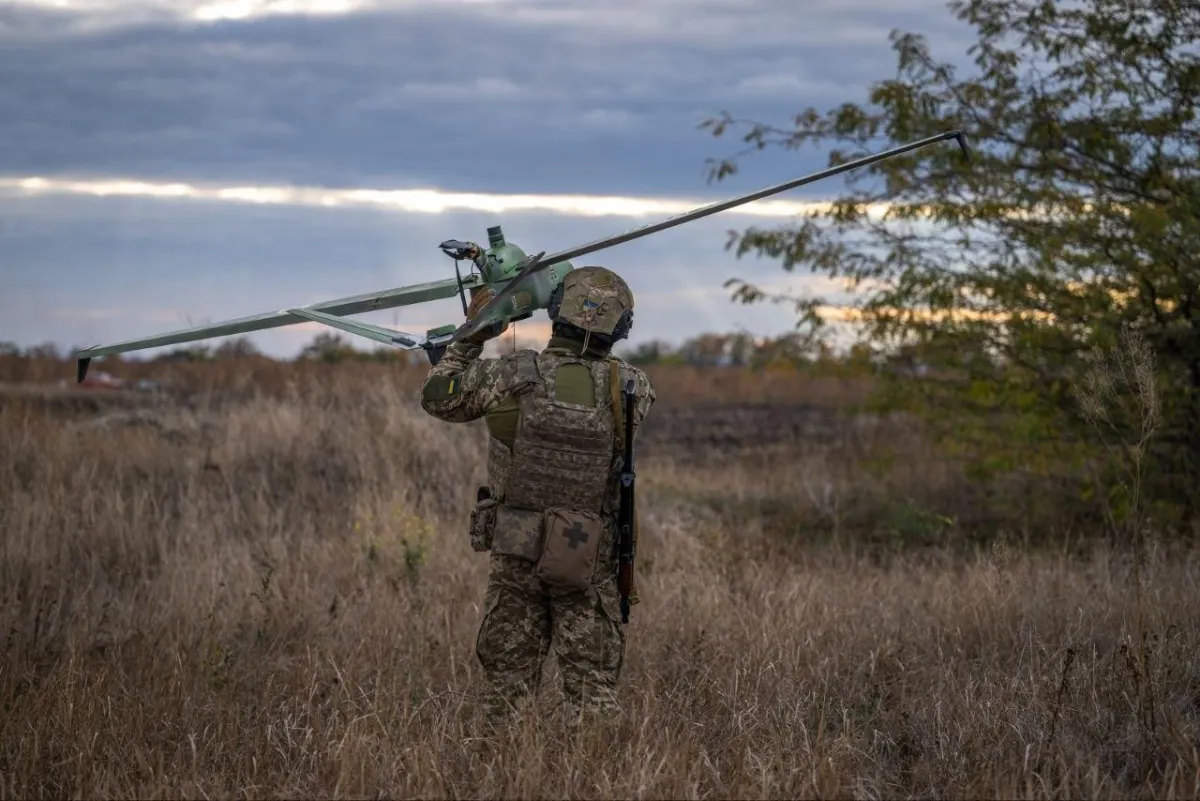
In recent months, the Ukrainian Armed Forces have directed more resources towards striking targets located approximately 30 to 200 km from the front line. According to Reuters, such attacks enable the destruction of air defence systems, logistics facilities and the Russian army’s rear infrastructure.
The agency’s sources, including Ukrainian commanders, drone specialists and military analysts, note that strikes on radars, air defence systems and frontline support facilities have paved the way for long-range attacks on Russian oil refineries, ports and military enterprises.
Robert Brovdi, commander of Ukraine’s Unmanned Systems Forces, told Reuters that “medium-range strikes are now playing a decisive role” in carrying out long-range attacks at distances of up to 2,000 km.
President Volodymyr Zelenskyy had previously reported that the number of medium-range strikes had doubled compared to March and quadrupled compared to February.
The Wall Street Journal described this as “arguably the most significant shift in the course of hostilities this spring”. The publication notes that Ukraine is increasing its use of medium-range drones, notably the FP-2, “Chaklun V” and the American Hornet.
The head of the UAV unit of the 1st Corps of the Ukrainian National Guard “Azov” told the publication that active work on development and increasing the number of trained operators is yielding results.
According to Robert Brovdi, his units have destroyed at least 129 air defence systems in Russian-occupied territories this year. He claims that as a result, the Russian army is facing a shortage of modern systems and is forced to use outdated complexes and radar stations.
The commander of the 7th Battalion of the 414th Separate Unmanned Systems Brigade said that his unit mainly engages targets at a distance of up to 100 km from the front line. He identified radar installations and the “Buk”, “Tor” and “Pantsir” air defence missile systems as the most important targets.
Bloomberg notes that drones have changed the nature of warfare to such an extent that the front line may no longer be the main place where the outcome of hostilities is decided.
Mykola Beleskov, a senior adviser at the National Institute for Strategic Studies in Kyiv, stated that there are currently only about three Ukrainian soldiers per kilometre of the front line in the most forward positions.
According to him, Ukrainian forces have learned to effectively contain Russian troops using drones, and the front line itself has hardly changed since the end of winter.
At the same time, Ukraine, which previously suffered massive attacks by Russian missiles and drones on its cities and energy infrastructure, is now itself striking energy and military targets on Russian territory.