Ukraine is already testing humanoid robots on the front line

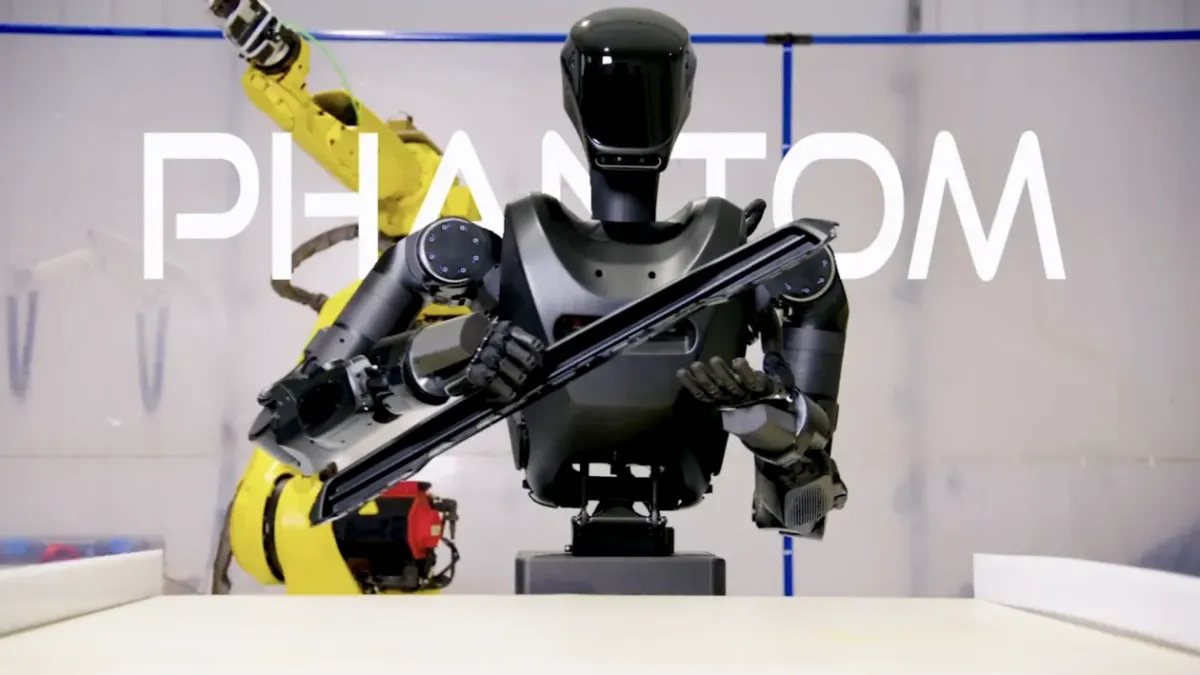
San Francisco-based Foundation Future Industries is developing dual-purpose autonomous humanoid robots for use in heavy industry and the military, according to CNBC.
The company’s CEO, Sanket Pathak, stated that the main aim of the project is to use robotics to perform tasks that are dangerous for humans, rather than for domestic or service needs.
According to him, the technology is already approaching a level where robots can replace humans in high-risk jobs.
Unlike many other companies working on humanoid robots, Foundation openly considers the possibility of military applications for its developments.
Pathak plans to scale up production to thousands of units this year and begin trials involving the US military over the next 18 months.
First trials in Ukraine
Following the bankruptcy of fintech company Synapse in 2024, Sanket Pathak founded Foundation alongside former Tribe Capital head Arjun Seti and Cobalt Robotics co-founder Mike LeBlanc.
Earlier this year, the company attracted attention after sending two Phantom MK-1 robots to Ukraine for demonstration trials. Foundation described this as the first known instance of humanoid robots being deployed in a combat zone.
The tests were conducted with the support of the US government and in collaboration with Ukrainian officials. The main focus was on logistical tasks in hazardous areas.
Ukraine became one of the first testing grounds due to the active use of robotic systems and artificial intelligence during the war with Russia. Ground robots are already being used in combat conditions to deliver cargo, as well as drones for reconnaissance and strike operations.
According to Pathak, the MK-1 trials confirmed the robots’ ability to carry out cargo delivery and evacuation tasks in areas where military personnel are at risk.
However, the current version has a number of limitations. The robot can carry around 20 kilograms of cargo, lacks sufficient water protection and has limited battery life.
This year, the company plans to send the new Phantom 2 model to Ukraine. According to the head of the Foundation, it will have twice the payload capacity compared to the previous version.
The Ukrainian Ministry of Defence declined to comment on the project. The US Department of Defence also did not respond to journalists’ enquiries.
Contracts with the US and the role of Eric Trump
Foundation hopes to use the results of the Ukrainian trials for further cooperation with the US military.
The company has already secured government research contracts totalling $24 million to test the potential use of robots in the fields of inspection, logistics and weapons handling for the US Army, Navy and Air Force.
According to Pathak, discussions with government officials have moved from the research phase to questions regarding the scaling up of robotic systems.
The company plans to begin the practical application of its technologies within the US military over the next 12–18 months.
Eric Trump, the second son of the current US president, has also joined the Foundation. He has taken up the post of chief strategy advisor.
This decision has attracted the attention of Democratic Senator Elizabeth Warren, who stated that the company’s government contracts amount to “corruption in plain sight”.
The Foundation reported that Eric Trump had been an investor in the company even before he began working as an adviser and shares the vision for the development of manufacturing in the US.
Competition with artificial intelligence and China
The company actively links its developments to the technological competition between the US and China.
Sanket Pathak stated that the Foundation’s goal is to create robots for the US military that will outperform their Chinese counterparts.
Although a number of American companies are already working on autonomous robotic systems for military purposes, the Pentagon has not yet reported the use of humanoid robots in combat missions.
China is also actively supporting the development of this sector, primarily for industrial and economic use. At the same time, Chinese military researchers are exploring the potential for using humanoid robots in the military sphere.
Previously, the Chinese army demonstrated robotic dogs with artificial intelligence features and humanoid robots controlled by the operator’s movements.
The debate surrounding the future of military robots
Proponents of such technologies believe that humanoid robots can be effective in urban combat environments, where there are staircases, basements, narrow passages and other infrastructure designed for human movement.
Kateryna Bondar, a senior research fellow at the Wadhwani AI Centre at CSIS, noted that autonomy and the similarity to human movements could provide certain advantages in specific scenarios.
At the same time, experts highlight the high complexity and cost of producing such systems.
The use of autonomous decision-making in combat conditions also raises certain questions.
Pathak stated that in most cases, the use of weapons would involve human participation in the decision-making process, but in certain situations, robots may operate autonomously due to time constraints.
Melanie Sisson, a senior fellow at the Brookings Foreign Policy programme, emphasised that the experience of the war in Ukraine has demonstrated the importance of rapid, low-cost and scalable production of technology, whilst the development of humanoid robots is a complex and expensive process.
At the same time, most experts agree that the role of robotic systems with artificial intelligence in future wars will only grow.
Toby Walsh, Chief Scientist at the AI Institute at the University of New South Wales, stated that ground, air and underwater robots will gradually replace humans in many military tasks. At the same time, he said, the expectation of humanoid robots in the style of science fiction films remains, for now, more a matter of science fiction.