The war is beginning to take its toll on the Russian economy: the media have identified signs of decline

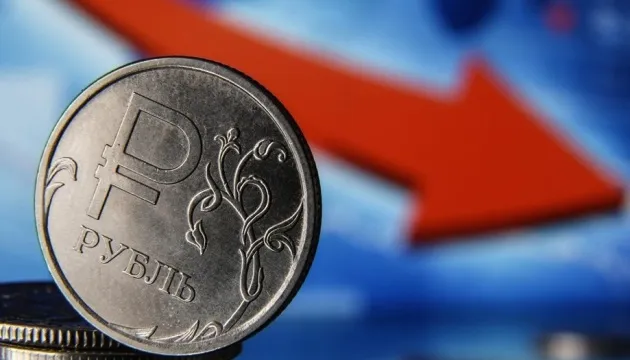
The Russian military economy has been operating under sanctions for four years, but appears increasingly unstable.
This is according to an editorial column in The Washington Post.
To back this up, the authors recalled Russian dictator Vladimir Putin’s statement regarding negative trends since the start of the year in three key sectors, including construction.
It is noted that in 2022, the Kremlin managed to stabilise the economy through a combination of control, coercion and intimidation. Foreign investors were unable to withdraw capital and were forced to leave their assets behind or sell them at a loss. At that time, Russia increased defence spending and put pressure on companies to expand production for the war effort. The Kremlin also put pressure on businesses, demanding they limit price rises. According to the central bank, inflation currently stands at 5.9 per cent.
“All these measures, which hinder economic growth, have allowed the economy to stay afloat in the medium term. But now the constraints and damage caused are beginning to show,” the article states.
The authors explain that capital blocked within Russia cannot generate profits. Instead, companies have been hoarding cash or transferring it abroad using less transparent methods.
Furthermore, to fund a full-scale mobilisation, Putin has repeatedly raised taxes. In particular, he increased value-added tax to 22 per cent and made it mandatory for small businesses to pay it, pushing three-quarters of small and medium-sized enterprises to the brink of bankruptcy. And to ensure everyone pays their taxes, the Kremlin plans to increase fines by 15 times for businesses that do not use cash registers.
The publication noted that Russia is experiencing a labour shortage for the first time in its modern history. Many skilled workers have left the country to avoid conscription. Others have been forced to take jobs in the arms industry.
“Putin has responded to the bad economic news in the way autocrats usually do – by attempting to stifle the free flow of information. The Kremlin has curtailed the publication of key indicators, such as trade flows and corporate finances. Thousands of websites have been blocked. And since the media is largely under state control, there is virtually no accountability or independent oversight,” the article states.
Drawing on the Russian experience, the authors conclude that “the modern economy can function under conditions of war and isolation, but not indefinitely”.
As a reminder, intelligence reports previously indicated that Russia is concealing catastrophic economic losses caused by sanctions.
Follow us on Telegram