Trump’s visit to China will be a test for the trade truce between the US and Beijing

Trump’s visit to China
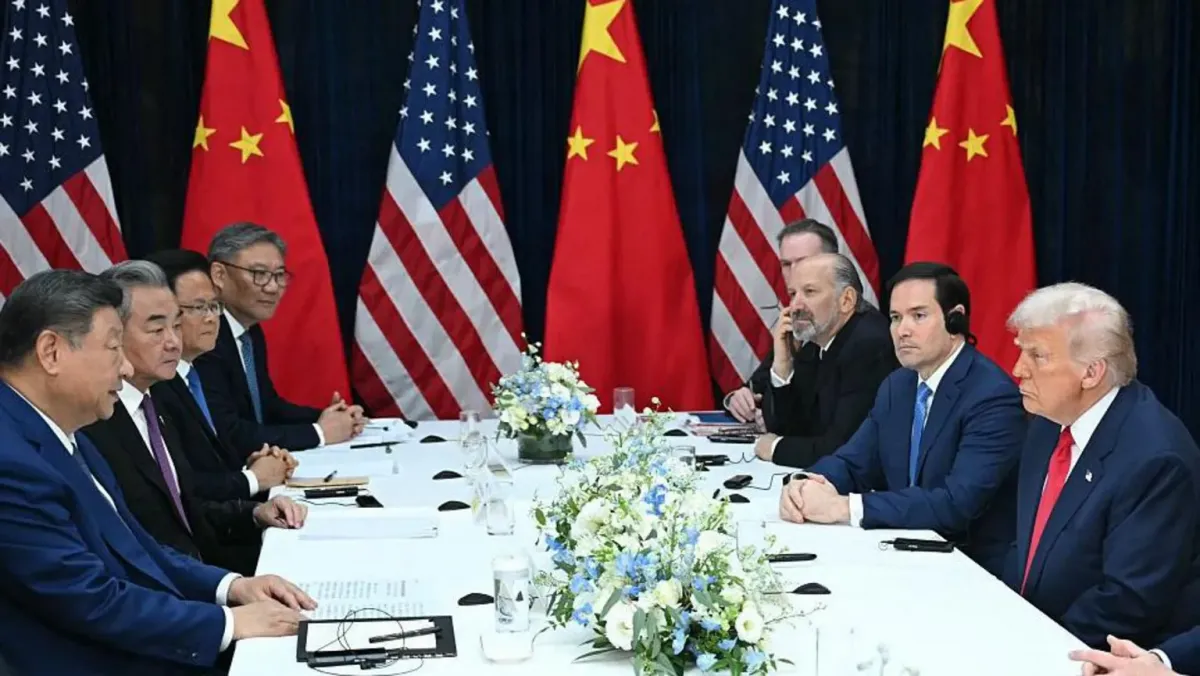
Beijing has confirmed that US President Donald Trump will visit China from 13 to 15 May to meet with Chinese President Xi Jinping.
This will be the first visit by a US president to China in almost ten years, reports the BBC.
Along with Trump, executives from a number of major US companies, including Boeing, Citigroup and Qualcomm, are expected to travel to China. It is anticipated that deals with Chinese companies may be signed during the trip.
The talks are also seen as an important test for the trade truce between Washington and Beijing.
How the trade war began
In 2018, Donald Trump announced the imposition of tariffs on $250 billion worth of Chinese imports. Many analysts consider this moment to be the start of the trade war between the US and China.
That same year, Trump imposed tariffs on other US trading partners, including Mexico, Canada and European countries.
In 2025, after returning to the White House, Trump tightened his tariff policy. The US imposed 20 per cent tariffs on China, accusing Beijing of facilitating the flow of fentanyl into the US.
On what was dubbed ‘Liberation Day’, Trump announced an additional 34 per cent tariff on Chinese goods. As a result, the total tariff rate between the two countries exceeded 100 per cent.
China responded with its own restrictions, including tariffs on American agricultural products.
A truce following the meeting between Trump and Xi
Following a face-to-face meeting between Donald Trump and Xi Jinping in South Korea in October, the parties agreed to suspend some of the tariffs.
Beijing also temporarily lifted export restrictions on rare-earth metals, which are critical for the production of electronics and military equipment.
In response, Washington partially withdrew tariffs related to the supply of components for the production of the synthetic opioid fentanyl.
The escalation of reciprocal tariffs was also suspended, and restrictions on the sale of certain advanced semiconductors to China were eased.
What the parties will discuss
Despite last year’s agreements, there is still no final resolution to the trade dispute between the US and China.
China continues to invest heavily in manufacturing, robotics and the development of its own microchips, seeking to reduce its dependence on Western companies.
At the same time, the Trump administration is likely to insist on an increase in Chinese purchases of American goods, particularly soya and aviation components.
The negotiations will also take place against the backdrop of issues with Trump’s tariff policy within the US. The US Supreme Court overturned the tariffs announced on ‘Liberation Day’, after which the administration temporarily imposed a 10 per cent duty on all countries under a different law.
The Iran issue
The conflict surrounding Iran could be a separate topic of discussion.
China is the largest buyer of Iranian oil, although Beijing also obtains a significant portion of its imported oil from Russia.
China has stated the need to protect energy security and supply chains against the backdrop of the protracted conflict.
At the same time, Washington and Beijing have significant differences in their views on Iran.