The fourth anniversary of the tragedy following the air strike on the Mariupol Drama Theatre

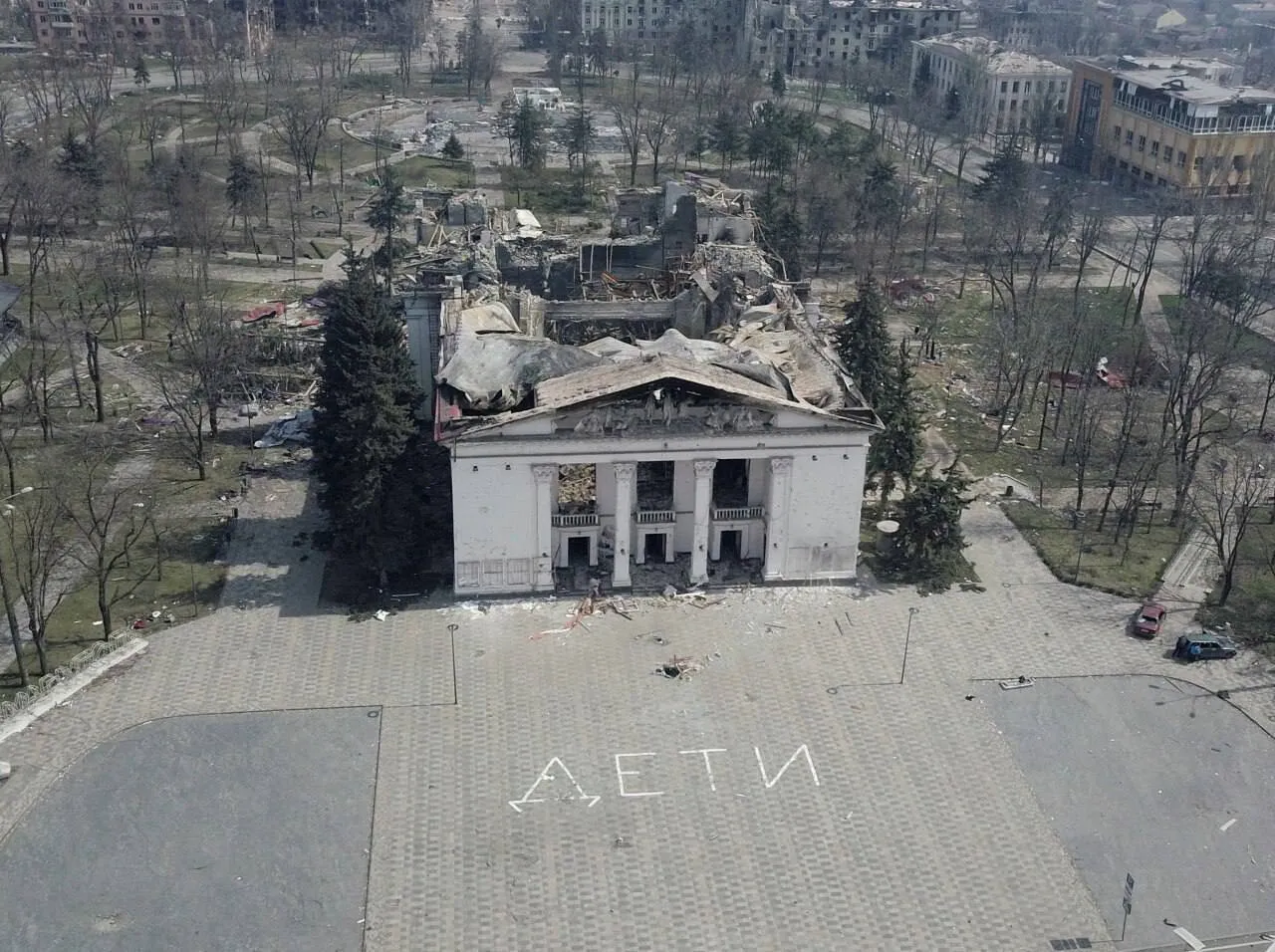
16 March 2026 marks four years since the air strike on the Mariupol Drama Theatre. In March 2022, the theatre building served as a shelter for civilians during the siege of the city.
According to available information, at around 10:00 on 16 March 2022, a Russian aircraft dropped two 500-kilogram bombs on the building. At the time of the strike, hundreds of people were inside the theatre, taking shelter from the shelling.
In front of the building, the word ‘CHILDREN’ was written in large letters on the tarmac, clearly visible from the air.
As a result of the strike, the central part of the building was destroyed. The entrances to the shelter were also blocked. It has not been possible to establish the exact number of casualties. According to various estimates, between 300 and 600 civilians were killed.
The international human rights organisation Amnesty International has recognised this strike as a war crime.
On the fourth anniversary of the tragedy, commemorative events were held in various cities across Ukraine and abroad. In Rivne, Kryvyi Rih and Ivano-Frankivsk, events were held in memory of the victims.
In Kryvyi Rih, near the Shevchenko Academic Theatre, the word ‘CHILDREN’ was spelled out in candles.
“Four years ago, the Russians committed a horrific act by dropping a bomb on the heart of Mariupol – the drama theatre, where over a thousand people were taking shelter. The occupiers acted deliberately, knowing there were no military personnel there. In memory of those innocently killed, we gather every year near the Kryvyi Rih Drama Theatre,” said Volodymyr Kurskyi, head of the “I Am Mariupol” centre in Kryvyi Rih.
Symbolic commemorative events are also planned abroad. In Milan, the word “CHILDREN” is to be recreated as a sign of solidarity with Mariupol.
Among those who were in the theatre during the air strike was Lyudmila, a resident of Mariupol. Together with her husband, she remained in the building after the planned ‘green corridor’ failed to materialise.
“I was standing with my back to the window, and suddenly — a shockwave. Glass rained down, and I was buried under it. When I came to, I couldn’t breathe, and it was pitch black. I felt blood on my head,” she recalls.
After the tragedy, the couple tried to make their way out of the besieged city on foot. They navigated checkpoints and stayed with various people until they reached Zaporizhzhia. The couple now lives in Dnipro and receives support at the “YaMariupol” centre.