Will Donald Trump be able to strike a better deal with Iran than Barack Obama?

Iran’s nuclear programme has remained one of the key sources of tension in its relations with the US for over two decades. Washington believes that Tehran is seeking to develop nuclear weapons, whilst Iran denies this and insists on its right to pursue a civilian nuclear programme.
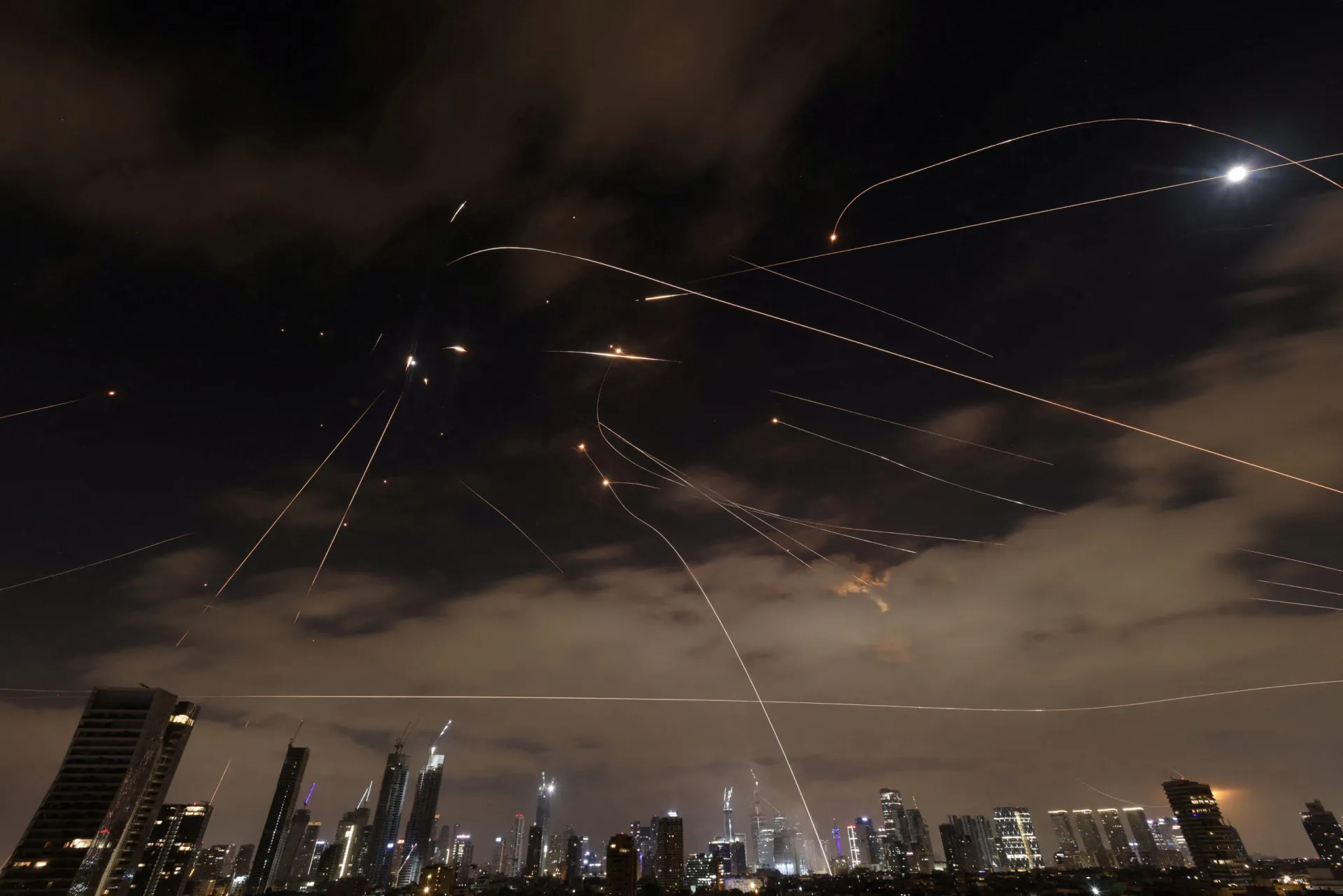
US President Donald Trump cited preventing Iran from acquiring nuclear weapons as one of the reasons for the decision to launch strikes on the country on 28 February, in conjunction with Israel. A ceasefire was subsequently reached, and negotiations may resume shortly, reports Deutsche Welle.
A return to the 2015 agreement
In 2015, the US and Iran, together with Russia, China and the European Union, concluded the Joint Comprehensive Plan of Action. The agreement provided for restrictions on Iran’s nuclear programme in exchange for the lifting of sanctions.
In 2018, the US withdrew from the agreement. Donald Trump has repeatedly stated that he could achieve a better outcome than Barack Obama’s administration. At the same time, it remains to be seen whether a new, broader understanding is possible under the current conditions.
What the 2015 agreement achieved
After 20 months of negotiations, the parties agreed on restrictions on Iran’s nuclear programme. The time required to produce material for nuclear weapons increased from a few months to approximately one year.
The International Atomic Energy Agency was granted extensive access for inspections, and sanctions against Iran were eased. The agreement came into force in January 2016 following confirmation of its implementation.
However, the restrictions were temporary, and some of them were due to expire in 10 or 15 years.
Limitations of the agreement
The document did not cover Iran’s missile programme or its role in regional conflicts, in particular its support for groups such as Hezbollah.
This became a source of criticism in the US. Opponents believed that the agreement merely postponed the threat and did not curb Iran’s broader strategic ambitions.
From diplomacy to war
After the US withdrew from the agreement, Iran adhered to its terms for a time, but subsequently began to gradually scale back its commitments. The country increased its uranium enrichment levels, installed new centrifuges and restricted cooperation with inspectors.
By 2024, the time required to produce material for nuclear weapons had been reduced to weeks or even days. Despite this, there was no confirmation of a decision to build nuclear weapons.
Negotiations continued into 2025 and 2026, but broke down following US and Israeli strikes on Iran on 28 February. After 40 days of fighting, the parties agreed to a ceasefire on 8 April. New negotiations are planned to resume in Islamabad.
Current disagreements
The main point of contention concerns the duration of the restrictions. The US insists on a 20-year ban on nuclear activities, whilst Iran agrees only to five years.
Questions also remain unresolved regarding the monitoring of facilities, the fate of enriched uranium stocks and the number of permitted centrifuges.
Why the talks have become more complicated
Experts note that in 2015 there was a basic level of trust between the parties, which has now been lost. Both sides have adopted tougher stances.
Iran retains the capability to respond using missiles, drones and regional allies. It can also influence shipping through the Strait of Hormuz.
Is a new deal possible
Some experts believe that a new deal could be tougher, particularly due to the destruction of part of Iran’s nuclear infrastructure.
At the same time, the political situation is significantly more complex than it was in 2015. Some experts note that the attacks did not solve the problem, but rather reinforced Iran’s conviction regarding the necessity of nuclear deterrence.
The question is not only whether a new deal can be reached, but also whether the conditions that allowed the 2015 agreement to be concluded can be restored.