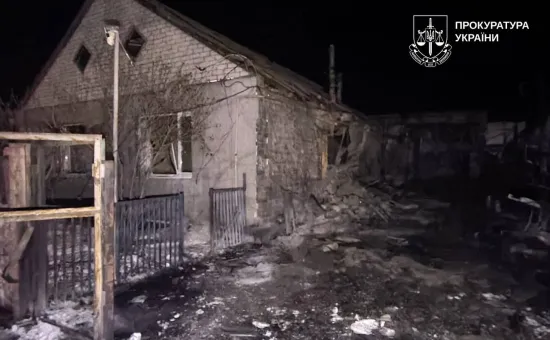
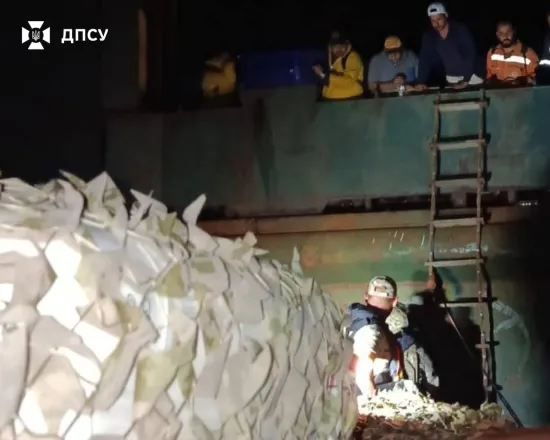
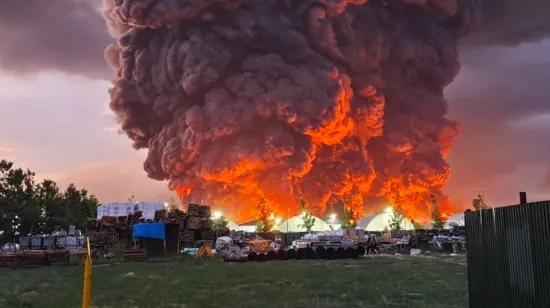
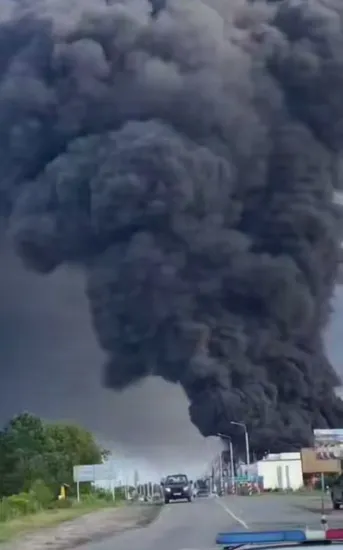
Four years ago, Russia launched a large-scale invasion of Ukraine.

Vladimir Putin announced that the goal of the invasion was to "demilitarise" and "denazify" Ukraine, while the Kremlin continues to refer to the war as a special military operation. Russian officials and state media denied preparations for an attack for several months, including on 23 February.
Hostilities began at around 4:00 a.m. on 24 February 2022 with air and missile strikes on Ukrainian air defences, depots and airfields in unoccupied territory. According to estimates by representatives of the US Department of Defence, Russia used more than 100 missiles of various types, including short- and medium-range ballistic missiles, cruise missiles and sea-based missiles. The strikes were carried out by approximately 75 bombers.
Despite this, Ukrainian aviation has partially retained its combat capability, and the troop command and control system continues to function. As of 20:00 on 24 February, the Ukrainian military had shot down seven Russian aircraft and seven helicopters. Analysts noted that Russia had not used the full potential of its air and missile forces and could launch new strikes in the coming days.
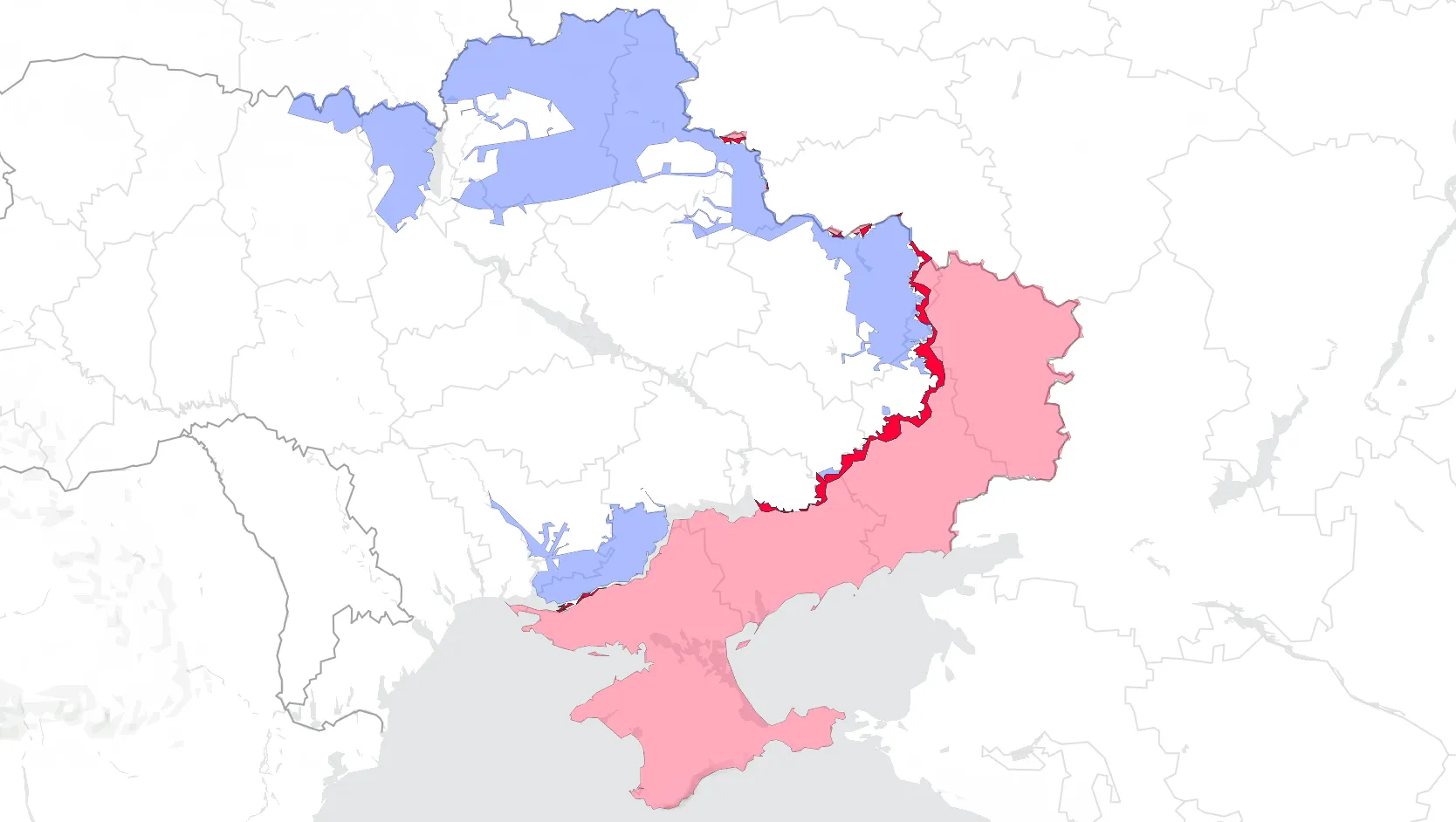
Russian troops launched an offensive in four main directions: from Belarus towards Kyiv, in the Kharkiv region, in Donbas, and from Crimea towards Kherson.
In the Kyiv direction, Russian forces advanced along both banks of the Dnipro River. As of 19:30, they had taken control of the Chernobyl Nuclear Power Plant exclusion zone. Ukrainian units stopped the advance of elements of the 36th Combined Arms Army near Chernihiv and captured a reconnaissance platoon of the 74th Motorised Rifle Brigade. According to available information, Belarusian troops did not take part in the fighting.
As of 21:30, Ukrainian forces are fighting for the military airfield in Gostomel, 20 kilometres north-west of Kyiv, where Russian airborne troops have landed. Control of Gostomel is important for the possibility of airlifting reinforcements. The Russian military also failed to capture Boryspil Airport.
A frontal offensive is continuing in the Kharkiv direction, in particular by forces of the 1st Guards Tank Army. At 14:00, Russian units entered the outskirts of Kharkiv. Ukrainian troops are temporarily holding back the advance, inflicting losses on Russian equipment with Javelin anti-tank systems. Fighting is also ongoing on the roads between Russia and Kharkiv. In the Sumy region, Ukrainian forces stopped the advance northwest of Kharkiv.
In Donbas, Russian troops are attempting to encircle the Luhansk region rather than launch a direct offensive from the occupied territories. At the same time, no breakthrough has been reported along the entire line of contact. The Russian Ministry of Defence claimed to have advanced 6-8 kilometres, but the British Ministry of Defence reported that no breakthrough had taken place. As of 17:00, the Ukrainian side reported holding positions along the entire line.
Russian forces made the most progress in the south. Troops advancing from Crimea advanced at least 60 kilometres and captured Kherson, securing access to the North Crimean Canal. President Volodymyr Zelensky called this direction the most problematic. Units of the 7th Airborne Division and elements of the 58th Combined Arms Army advanced eastward toward Melitopol and westward toward Odesa.
Reports of amphibious landings in Odesa and Mariupol were not confirmed.
Analysts noted that Russia has sufficient military potential to intensify its offensive in each of these directions. At the same time, it remained unknown how much of its forces it had already deployed.
Today, 24 February 2026, marks the fourth anniversary of Russia's full-scale war against Ukraine. Thanks to the Ukrainian Defence Forces, Operation "Kyiv in Three Days" failed. We will stand firm and we will definitely win. Glory to Ukraine! Glory to the heroes!