Fedorov called for Syrskyi’s dismissal over overspending of 300 billion hryvnias, but Zelenskyy did not back him — media reports

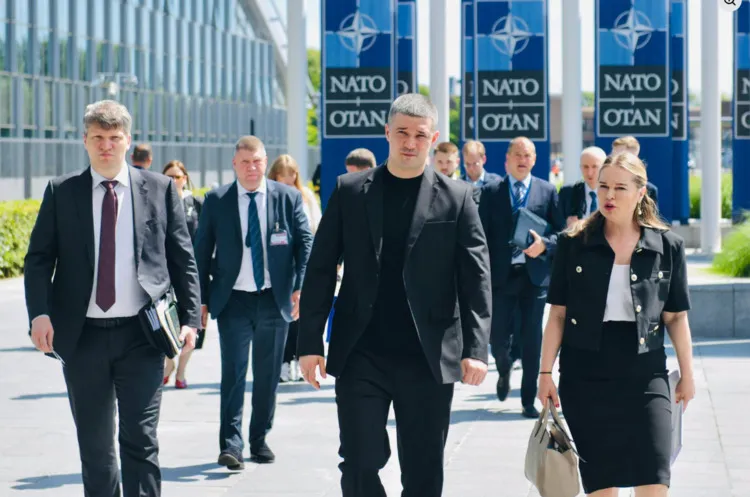
However, his policy has met with fierce resistance from the military command, and President Volodymyr Zelenskyy has refused to dismiss the Commander-in-Chief of the Armed Forces of Ukraine, Oleksandr Syrskyi, despite the large-scale financial problems uncovered during an internal audit.
This is reported by The Economist.
According to the publication, one of Fedorov’s first decisions after being appointed defence minister in January was to commission a large-scale audit of the Ministry of Defence and the combat brigades.
The audit revealed overspending of approximately 300 billion hryvnias (around $6.6 billion).
Following this, the minister:
- initiated polygraph tests for officials;
- dismissed some officials who refused to undergo the tests or failed them;
- began to switch arms procurement to a system of open tenders.
According to Fedorov himself, it was only through open procurement that the cost of 155-mm artillery shells was reduced by approximately 16 per cent almost immediately.
The Economist reports that the most acute disagreements arose between Fedorov and the Commander-in-Chief of the Armed Forces of Ukraine, Oleksandr Syrskyi.
The publication claims that the minister tried to secure Syrskyi’s dismissal, but was unable to persuade the president to support such a personnel decision.
At the same time, the conflict became publicly apparent even at meetings of the High Command.
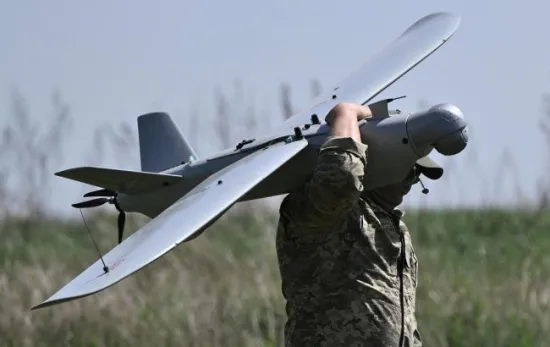
The authors describe a meeting in early July where the military command criticised Fedorov for purchasing missiles and ammunition, to which the minister replied that without his emergency decisions on funding drone production, Ukraine would not have been able to carry out its current campaign to isolate occupied Crimea at all.
One of the publication’s sources said that these were “two different coordinate systems” which were finding it increasingly difficult to see eye to eye.
The 35-year-old Fedorov joined the Ministry of Defence with a reputation as a successful reformer, having previously created the state-run ‘Diya’ app and been one of the founders of Ukraine’s ‘drone army’.
However, according to The Economist, some generals believe he lacks military experience.
Some of the magazine’s interviewees compare Fedorov to former US Defence Secretary Robert McNamara, who attempted to manage the war using management models from the civilian business sector.
Critics also reproach the minister for placing excessive emphasis on digital performance indicators and the system for evaluating combat results.
However, young officers support the changes, notes The Economist – Fedorov has many supporters among junior military personnel and in technological units.
Oleksandr Nastenko (‘Flint’), commander of one of the Ukrainian Armed Forces’ most effective assault units, told the publication that it was Fedorov who helped redirect resources towards modern technologies that actually save soldiers’ lives.
According to him, the Ukrainian army needs change and cannot remain the same as it was a few years ago.
Despite the conflicts, some reforms have already begun. These include:
- an increase in infantry pay to $7,000 a month for certain categories of service personnel;
- the introduction of contracts with clearly defined terms of service;
- the partial demobilisation of soldiers who have been on the front line the longest;
- expanding the recruitment of foreign nationals into the Ukrainian armed forces;
- the option for service personnel who have left their units without authorisation to return voluntarily, without facing criminal prosecution, during a special transitional period.
The Economist notes that the future of the reforms depends to a large extent on the stance of President Volodymyr Zelenskyy.
On the one hand, it was Zelenskyy himself who appointed Fedorov and has remained his political ally since the days of the state’s digital transformation.
On the other hand, the magazine’s sources claim that the president is not yet ready to enter into open conflict with the military leadership, and therefore did not support the attempt to replace the commander-in-chief.
At the same time, Fedorov himself told journalists that he has no intention of abandoning the reforms.
“When I started the job, the president told me to act according to my conscience. Many people criticise me, and that worries me, but I do not want to leave this post knowing that I have ever once bowed to anyone,” The Economist quotes the minister as saying.
As a reminder, ThePublic previously reported on whether Mykhailo Fedorov would retain his post as defence minister.
Follow us on Telegram