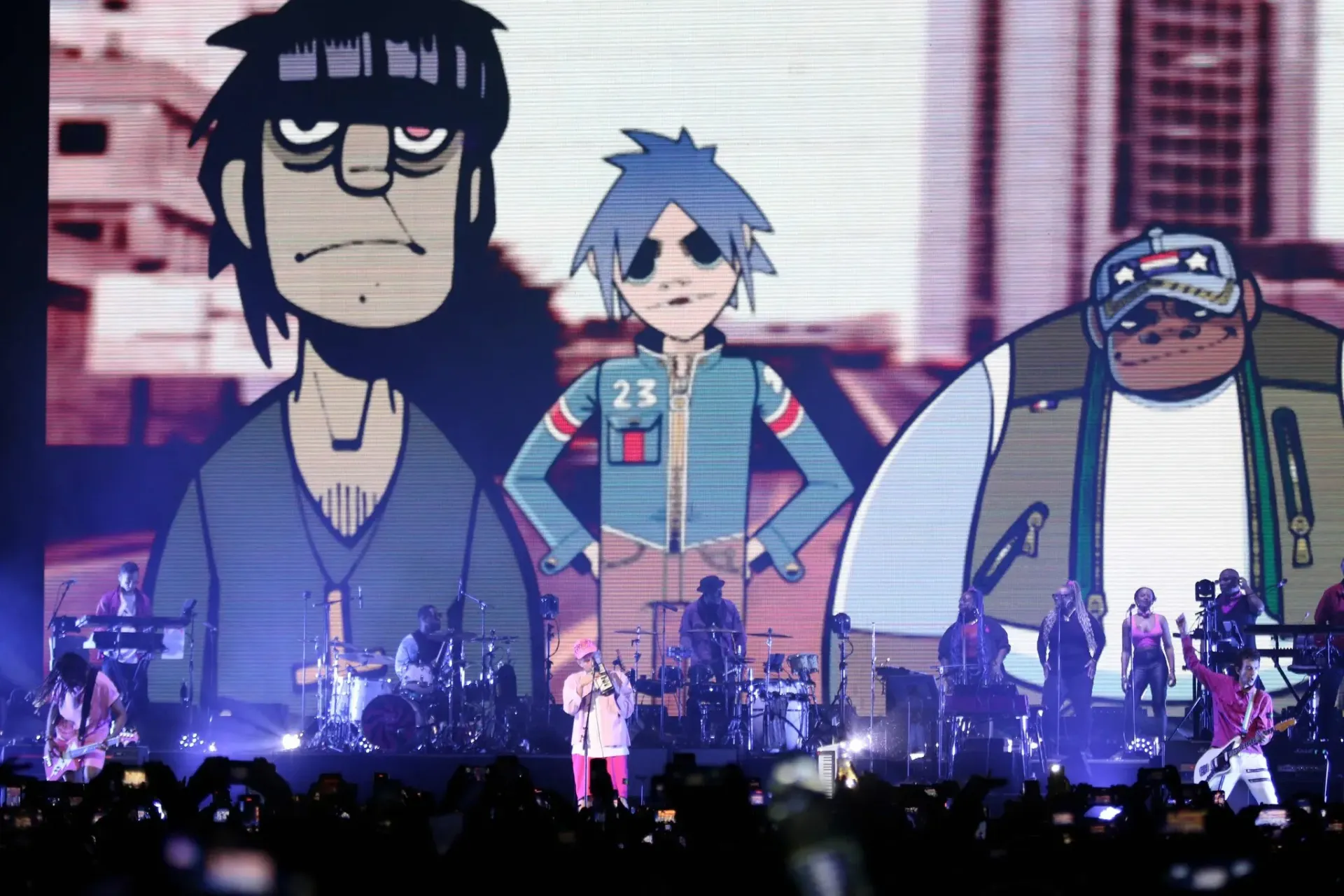
Gorillaz have released the album “The Mountain”, featuring the voices of deceased artists

The album marks the band’s ninth studio release. It was created by the project’s co-founders — musician Damon Albarn and artist Jamie Hewlett. Whilst working on the record, Albarn went through the archives and used previously unreleased material from musicians who had collaborated with the band in the past. This is according to The New York Times.
Among the artists whose voices appear on the album posthumously are rapper Proof, who died in 2006, The Fall frontman Mark E. Smith, De La Soul member David Jolicoat, and actor Dennis Hopper. On the album’s opening track, he utters the album’s title, repeating it like a mantra.
Although musician Lou Reed did not participate in the recording directly, his voice was also used in part. One of the tracks features an electronically processed excerpt from a conversation between him and Damon Albarn.
In total, over twenty artists — both living and deceased — contributed to the creation of the album “The Mountain”. The record touches on the themes of loss and memory, which, according to the creators, have become a natural part of their lives.
“Death isn’t a theme we specifically chose. It just came up on its own,” Albarn explained.
The idea for Gorillaz emerged in the late 1990s, when Albarn and Hewlett decided to create a musical project featuring fictional characters. It features animated characters: vocalist 2-D, guitarist Noodle, bassist Murdoc Niccals and drummer Russel Hobbs.
The band’s debut single, “Clint Eastwood”, released in 2001, became an international hit and made Gorillaz one of the most famous experimental projects in contemporary music.
The band also worked on the new album following trips to India, where they interacted with local musicians. Among those who contributed to the recording were singer Asha Putli and renowned sitar player Anoushka Shankar.
“The Mountain” became Gorillaz’s first album released on their own label, Kong Records. According to Jamie Hewlett, this decision involved certain financial risks, as the band self-funded the album’s production.
Damon Albarn noted that the musicians sought to highlight the importance of creative collaboration and live music.
“It’s important for young artists to be interested in something more than fame, image and the number of likes. People should play music together — and we mustn’t forget that,” he emphasised.