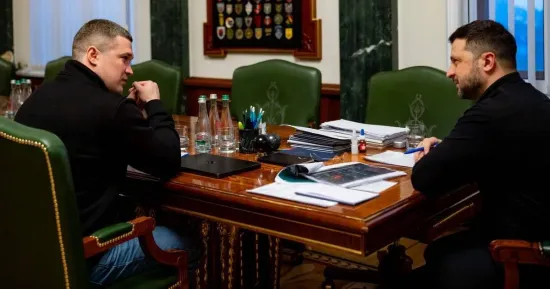
Putin’s image as a strong leader is fading as Ukraine takes the war onto Russian territory

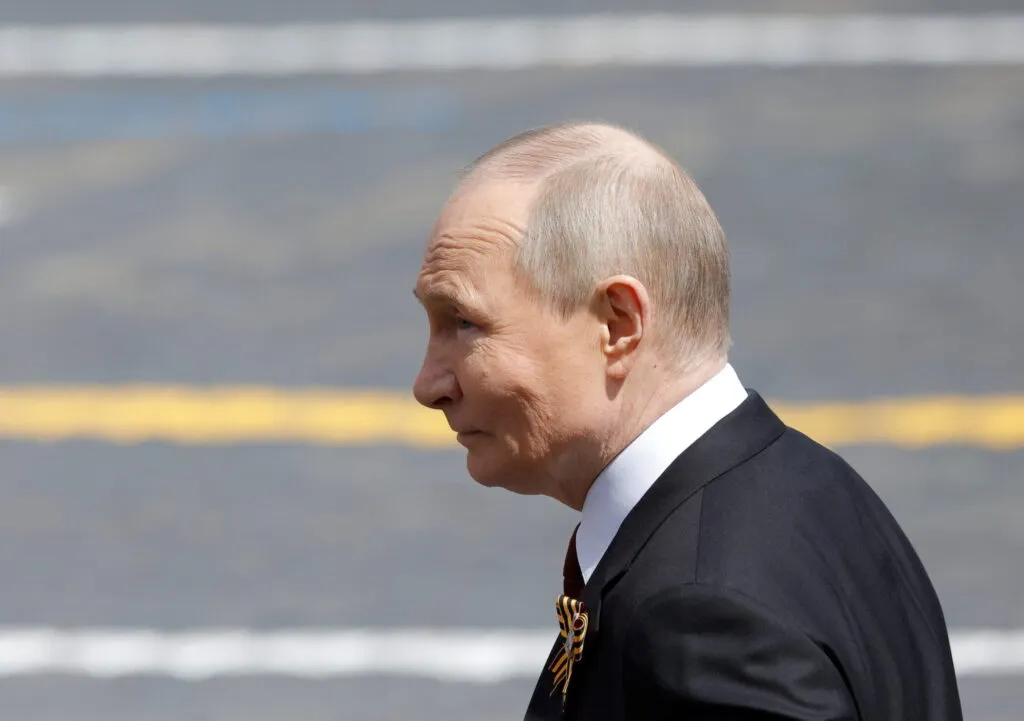
Over more than 25 years in power, Vladimir Putin has cultivated a cult of 9 May as one of the main state symbols of modern Russia. This year’s parade in Moscow took place against the backdrop of the war against Ukraine, which has now lasted longer than the Soviet Union’s war against Nazi Germany in 1941–1945.
Russia held yet another celebration without any tangible victories. Regular attacks by Ukrainian drones on Russian territory, particularly on Moscow, forced the Kremlin to request a ceasefire for the duration of the celebrations.
Due to security risks, the parade organisers scaled back the event. In Moscow, they cancelled the display of armoured vehicles and the march of military cadets. Mobile communications and the internet were also restricted in the Russian capital.
Against the backdrop of a protracted war, heavy casualties and economic problems, discontent in Russia has been growing in recent months. Russian casualties have exceeded one million, and drone and missile strikes on Russian territory have become a common occurrence.
In response, the Russian authorities have tightened their control over the information space. The security services are blocking a significant portion of online activity, following the model of China’s ‘Great Firewall’. Even supporters of the war have begun to speak openly about a possible crisis and internal conflicts within the ruling structures.
Putin’s former speechwriter Abbas Gallyamov stated that January marked a turning point, when the so-called ‘special military operation’ exceeded the duration of the ‘Great Patriotic War’.
“Putin created this cult of grandfathers, and now it has turned against him,” said Gallyamov.
Kremlin spokesman Dmitry Peskov, for his part, stated that the war had led to a “phenomenal consolidation of society around the president” and was continuing because the set objectives had not been achieved.
Russian media personality Anastasia Kashevarova wrote on Telegram that during the Second World War, Soviet troops “had already reached Berlin”, whereas the current war is dragging on.
Strikes by Ukrainian drones on Russian oil depots, refineries and military facilities have become a regular occurrence. It is estimated that around 70% of Russia’s population is within range of Ukrainian strikes.
Alexander Baunov, a senior research fellow at the Carnegie Russia Eurasia Centre, stated that Putin is increasingly less perceived as a “defender” or “superman”.
Bloggers, military commentators and public figures are increasingly speaking out about corruption, restrictions and problems within the state.
Instagram blogger and former TV presenter Viktoria Bonya, in an address to Putin, stated that the authorities do not understand the real situation in the country due to officials’ lies and the atmosphere of fear.
“People will grow tired of being afraid. They are being wound up like a spring, and one day that spring will snap,” she said.
Abbas Gallyamov stated that an increasing number of people who previously had no interest in politics are beginning to openly express their dissatisfaction with the authorities.
Former US Ambassador to Moscow John Sullivan noted that the situation in Russia could change rapidly.
“In Russia, they say that events unfold slowly, but once they start, they unfold very quickly,” he said.