In Russia, less than half of the oil refineries damaged in the drone attacks have resumed operations

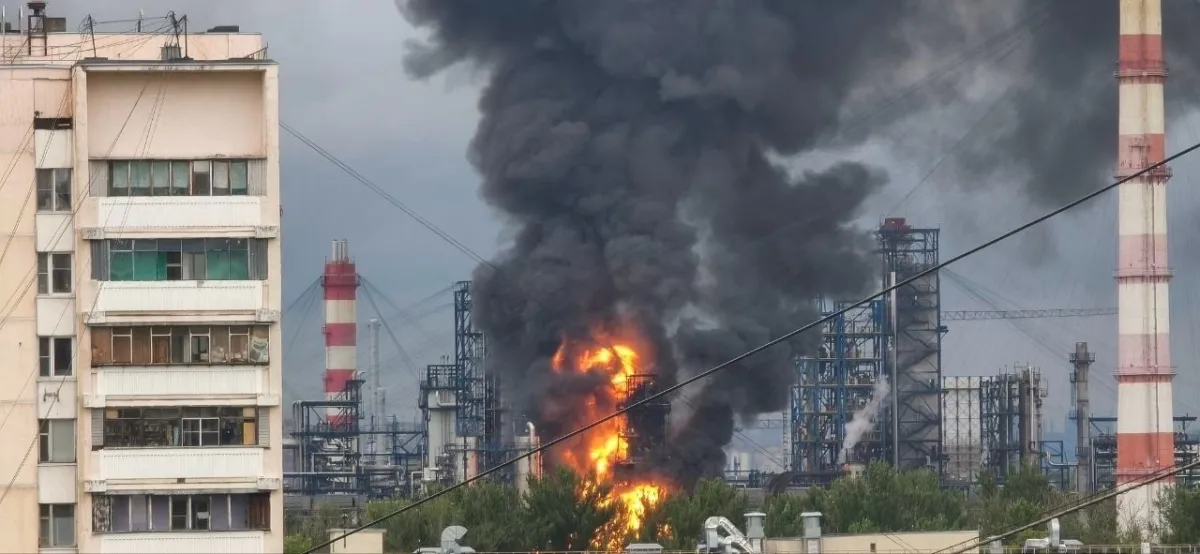
Russian oil companies have resumed operations at less than half of the refinery capacity that was damaged as a result of drone attacks in recent months.
According to Platts, following unscheduled repairs, refineries with a combined capacity of 40 million tonnes per year have resumed selling fuel on the exchange. At the same time, large facilities with a combined capacity of 45 million tonnes per year remain shut down.
In June and July, at least ten Russian refineries suspended oil processing due to drone attacks. Over the past three weeks, the following refineries have halted the receipt of feedstock: Gazpromneftekhim Salavat, Rosneft’s Syzran and Saratov refineries, as well as Gazprom Neft’s Omsk refinery and Lukoil’s Nizhegorodnefteorgsintez. Among the facilities that halted operations in June were Gazprom Neft’s Moscow refinery and Tatneft’s Taneco plant in Nizhnekamsk, both of which rank among Russia’s top five largest refineries.
According to Energy Intelligence, this caused oil refining volumes in Russia to fall to 3.5 million barrels per day, the lowest figure in the last 20 years.
At the same time, the petrol shortage is gradually easing. Recently, more production capacity has been brought online than has been taken out of service. Furthermore, oil companies are actively drawing down their petrol stocks. These have fallen to 1.5 million tonnes, down from 1.7 million tonnes at the end of June.
Earlier, Reuters industry sources reported that a full recovery of petrol and diesel production – which had fallen by 25 per cent and 40 per cent respectively – would take at least two months, provided there were no further attacks. According to their data, the Moscow refinery sustained the most damage; repairs could take until 2027, and the cost is estimated at approximately $1 billion.
Sergey Frolov, managing partner at NEFT Research, noted that high seasonal demand for fuel will persist over the next two months, so a rapid improvement in the situation should not be expected. He said that the balance between supply and demand cannot be restored immediately, and a significant increase in production will only be possible towards the end of the year, when the damaged refineries gradually resume operations.