The European Parliament calls for the ‘carbon tax’ on Ukraine to be eased

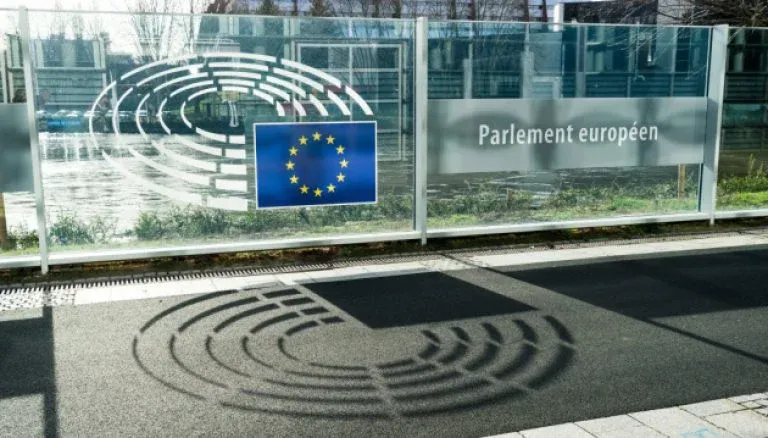
This was reported by “Kommersant Ukrainian” following a meeting of the European Parliament’s Committee on the Environment, Public Health and Food Safety.
MEPs have called on the European Commission to adopt a more lenient approach to the application of the Carbon Border Adjustment Mechanism for Ukraine.
The issue was discussed during a meeting of the European Parliament’s Committee on the Environment, Climate Change and Food Safety.
The CBAM, also known as the “carbon tax”, affects exporters of goods to the EU and involves additional payments linked to carbon emissions.
The rapporteur on CBAM, MEP Mohammed Shagim, stated that the war situation in Ukraine should be considered a force majeure.
“I cannot imagine what situation would qualify as force majeure if the war in Ukraine does not,” he said.
Peter Liese, a representative of the European People’s Party, also supported the need for a separate approach to Ukraine.
“I don’t want to open Pandora’s box, but Ukraine is truly a special case,” he said.
Liese asked the European Commission why Brussels is not currently considering the possibility of exceptions for Ukraine.
What the European Commission replied
European Commission spokesperson Maria Elena Scoppio stated that Ukraine was not on the agenda for this meeting.
She did not comment on the possibility of applying a special regime or force majeure to Ukraine.
The meeting also discussed amendments to the CBAM and the creation of a Temporary Decarbonisation Fund.
This fund is intended to serve as a financial support instrument for the green transition of manufacturers within the EU.
It is partly funded by CBAM levies from exporting countries, including Ukraine.
Why this matters for exports
Pascal Canfen, the rapporteur on the Temporary Decarbonisation Fund, expressed disappointment at the lack of a clear response from the European Commission regarding Ukraine.
He warned that the strict implementation of CBAM could strengthen the position of Russian exporters, who do not incur additional carbon costs.
During the meeting, proposals were also made to extend the CBAM to additional tariff codes to protect European companies.
European Commission representative Maria Elena Scoppio welcomed these proposals.
In early May, Western media reported that the EU was negotiating with Ukraine to exempt Ukrainian steel from the CBAM.
In February, the CBAM was cited as one of the reasons for the closure of the ArcelorMittal Kryvyi Rih foundry and mechanical plant.
As reported by ThePublic, the “Google tax” has brought in nearly 7 billion UAH to Ukraine’s budget.
Follow us on Telegram